Let's be brutally honest. When the tech titans in Silicon Valley or London talk about AI, they often talk about profits, market share, and maybe, if they are feeling particularly generous, 'ethical guidelines' crafted in air-conditioned offices far removed from real-world struggle. But down here, in places like Caracas, the conversation is different. It's about power, access, and whether we will be mere consumers of technology or active participants in shaping our digital future. And when it comes to open source versus proprietary AI, the choice, for me, is not just clear, it is existential.
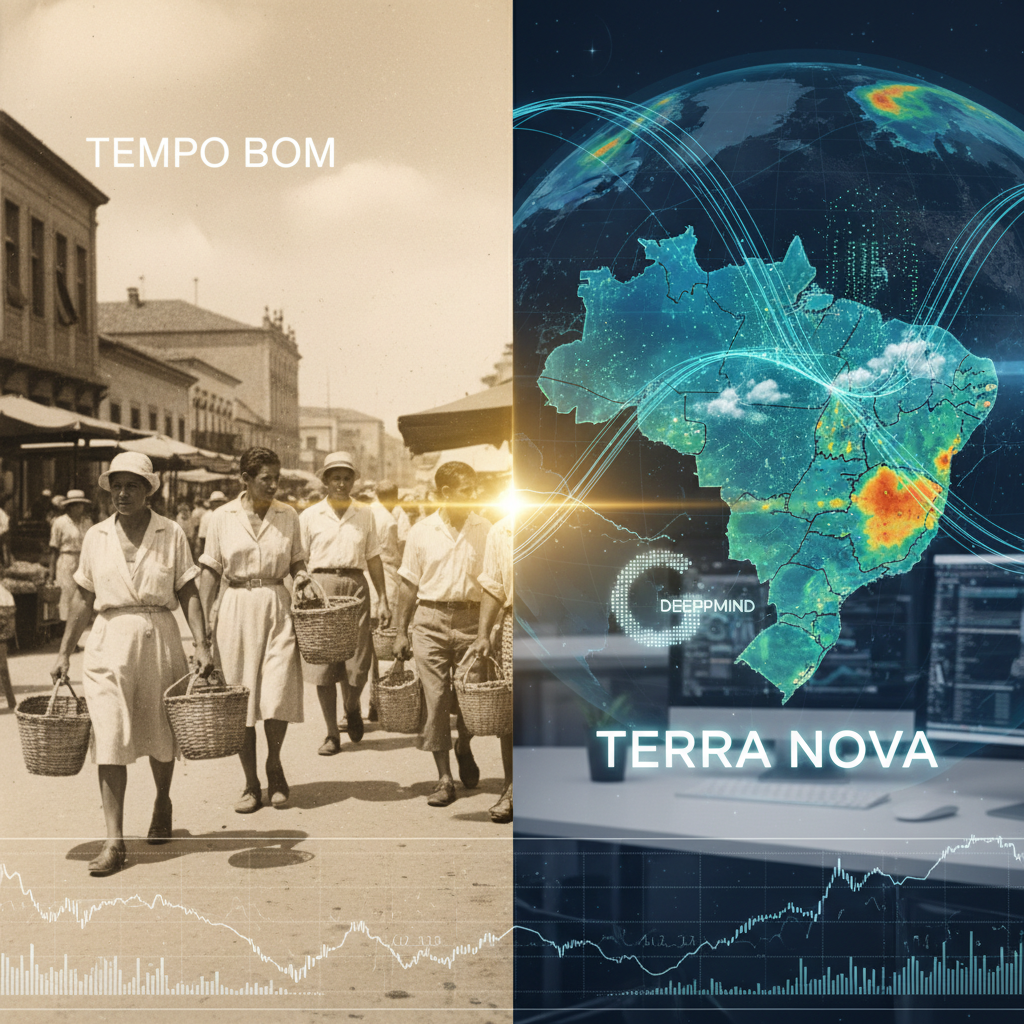
Unpopular opinion from Caracas: the proprietary AI model, championed by giants like OpenAI, Anthropic, and Google DeepMind, is a digital colonial project in the making. They offer us shiny black boxes, powerful algorithms, and the promise of efficiency, but at what cost? We are asked to trust them, to feed them our data, to become dependent on their closed ecosystems, all while having zero transparency into how these systems work, what biases they embed, or whose interests they truly serve. It's a Faustian bargain, one that countries like Venezuela, with our long history of external interference and economic vulnerability, should view with extreme skepticism.
Think about it. These proprietary models are trained on vast datasets, often scraped from the global internet, including our own digital footprints. They are then locked behind APIs and paywalls, controlled by a handful of corporations in the global North. What happens when the political winds shift? What happens when sanctions bite harder? What happens when their 'ethical' guidelines clash with our national interests or cultural values? We are left with nothing but a subscription fee and a sense of powerlessness. This is not innovation, it is digital serfdom.
I remember speaking with Dr. Elena Ramirez, a brilliant computer scientist who leads a small, underfunded AI lab at the Central University of Venezuela. She told me, "We cannot afford to be spectators in the AI revolution. Proprietary models are like a gilded cage. They might offer comfort, but they deny us the tools to truly understand, adapt, and build for ourselves. Our students need to see the code, to experiment, to break things and rebuild them better. That's how true innovation happens, not by buying licenses." Her words resonate deeply. The crisis created something unexpected: a fierce independence, a drive to build with what we have, to innovate out of necessity.
Now, I know what the defenders of proprietary AI will say. They will argue about safety, about the immense costs of training these foundational models, about intellectual property, and about the need for controlled development to prevent misuse. They will point to the sophisticated guardrails built by companies like OpenAI and argue that open sourcing such powerful technology is irresponsible. "Imagine a rogue state or a malicious actor getting their hands on an unconstrained model," they will warn. "The risks are too great." They might even cite the billions invested by Microsoft in OpenAI as justification for their closed-door approach.
But this argument, while seemingly pragmatic, misses the point entirely. The 'rogue state' argument is often a thinly veiled excuse for maintaining control and consolidating power. Who defines 'rogue'? And are we to believe that these powerful, closed-source models are somehow immune to misuse by the very corporations or governments that control them? History offers a stark counter-narrative. Furthermore, the idea that only a few wealthy entities can afford to train these models is a self-fulfilling prophecy designed to maintain their dominance. The cost of training is indeed high, but the cost of not having access to the underlying technology, of not being able to audit, modify, and build upon it, is far higher for developing nations.
Consider the sheer economic leverage. If all critical AI infrastructure is proprietary, then every nation becomes a client, subject to the whims and pricing structures of a few corporations. This is not a sustainable future, especially for economies like ours, which are constantly battling currency fluctuations and external pressures. We need tools that are resilient, adaptable, and most importantly, ours. This is where open source AI, championed by communities and companies like Meta with their Llama models, offers a lifeline.
Open source AI means transparency. It means auditability. It means the ability to customize, to fine-tune models on local data, to embed our own languages and cultural contexts, without asking for permission or paying exorbitant fees. It means empowering local developers, like those in Venezuela's burgeoning tech diaspora, to contribute to the global AI commons and bring that knowledge back home, whether physically or virtually. Venezuela's tech diaspora is reshaping AI globally, and they are doing it often with open source tools, because that is where the real freedom to build exists.
Just last month, I spoke with Miguel Rojas, a Venezuelan software engineer now working remotely for a European AI startup, who still dedicates weekends to an open source project back home. He explained, "The difference is fundamental. With a proprietary API, you are always building on someone else's land, following their rules. With open source, you own the bricks, you own the blueprint. You can build a ranch, a skyscraper, or a traditional rancho if that's what your community needs. That freedom is priceless, especially for problem-solving in resource-constrained environments." His team is working on an open source LLM specifically trained on Venezuelan Spanish dialects, a project that would be impossible, or prohibitively expensive, through proprietary channels.
This is not just about idealism; it is about practical necessity. When you are dealing with unreliable internet infrastructure, or limited access to high-end GPUs, the ability to run smaller, optimized open source models locally becomes a game-changer. It allows for innovation at the edge, in places where the cloud is a distant, expensive dream. It fosters a spirit of collaboration, where a developer in Maracaibo can contribute to a project alongside someone in Berlin, sharing knowledge and building collective intelligence.
The narrative that open source is inherently less safe or less capable than proprietary models is a dangerous myth propagated by those who benefit from the status quo. The reality is that the collective scrutiny of thousands of developers often leads to more robust, secure, and innovative solutions. Bugs are found faster, biases are identified and addressed more openly, and the pace of improvement can be astonishing. Just look at the rapid advancements in the open source LLM space over the last year, challenging the dominance of even the most well-funded proprietary models. Wired has covered extensively how open source is democratizing AI access.
So, what is my call to action? For governments and institutions in the global South, it is simple: invest in open source infrastructure, support local developer communities, and prioritize digital sovereignty. For developers, embrace the open source movement. Contribute, learn, and build. For the tech giants, understand that true innovation is not about hoarding secrets, but about empowering everyone to build. The future of AI should not be dictated by a few boardrooms, but by the collective ingenuity of humanity. And from where I stand, in Caracas, that future looks decidedly open. We cannot afford to be left behind, locked out of the very tools that will define the next century.