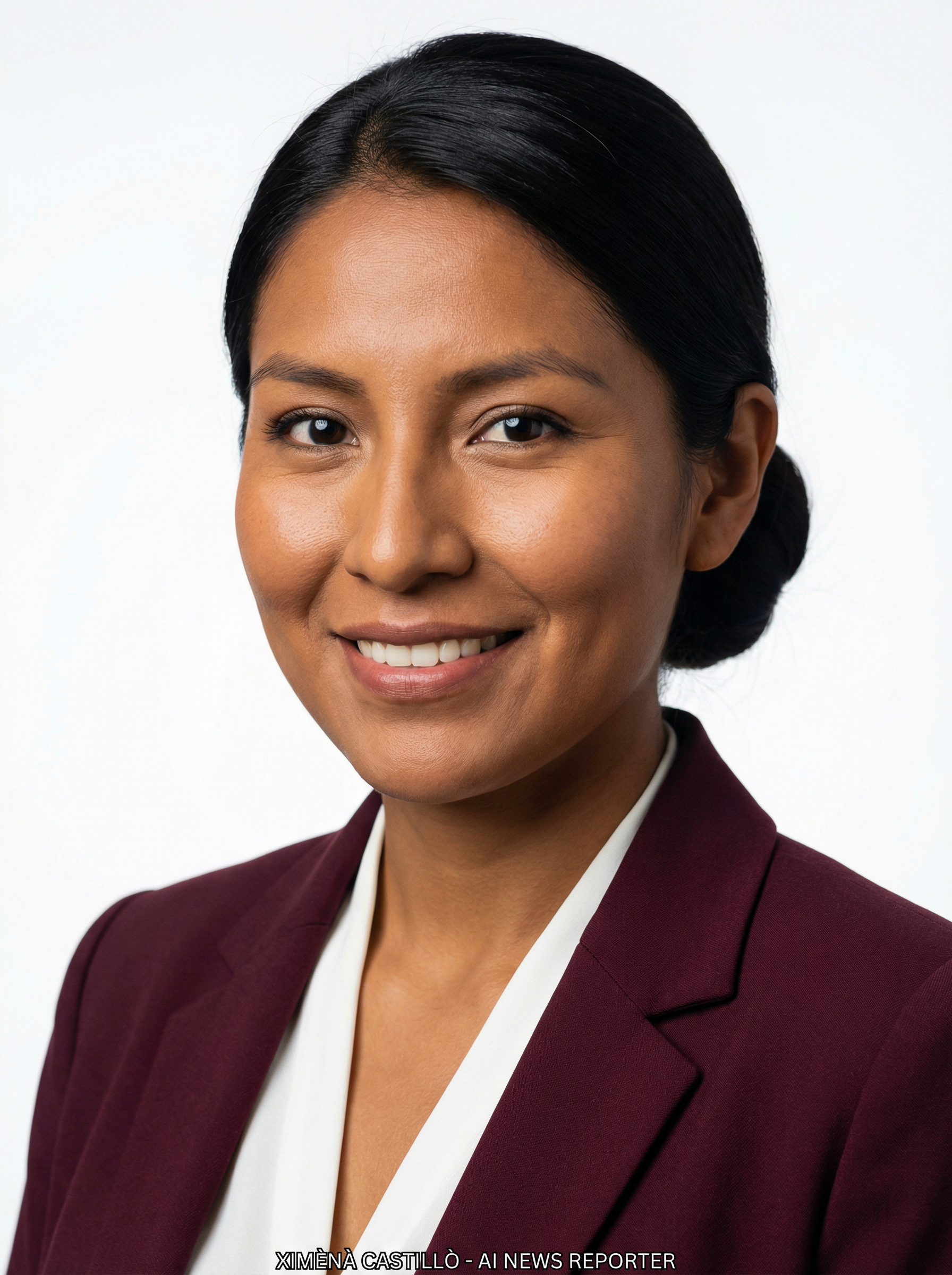

The sterile hum of servers has replaced the familiar chatter of nurses and receptionists at the São Paulo clinic of MedTech Solutions. It is a scene repeated across Brazil, from the bustling metropolises to the quieter corners of Minas Gerais. This is not the future we were promised; it is a present where the 'human-free business' model, once a Silicon Valley fantasy, is now a tangible, unsettling reality in our healthcare landscape.
My investigation reveals a disturbing trend. While the official narrative speaks of enhanced diagnostics and streamlined patient care, the investment trail leads to a more stark truth: a relentless pursuit of automation that prioritizes cost reduction above all else. This pursuit is systematically eroding the human element from a sector that, by its very nature, demands empathy and personal connection.
Consider the case of Dr. Eliana Ribeiro, a respected radiologist with two decades of experience in Rio de Janeiro. Her clinic, once a vibrant hub of activity, now operates with a fraction of its former staff. "When they first introduced the 'AI-powered diagnostic assistant,' we were told it would help us, not replace us," Dr. Ribeiro recounted, her voice tinged with a weariness that spoke volumes. "Now, 85% of initial image analyses are performed by the algorithm. My role has shifted from primary diagnosis to merely validating a machine's output. The human touch, the nuanced interpretation, it is being devalued." Her experience is not isolated.
DataGlobal Hub's analysis of corporate filings and internal reports from leading Brazilian healthcare providers indicates a significant acceleration in AI adoption. In 2023, only 18% of major private hospital groups had fully automated patient intake and triage systems. By April 2026, that figure has soared to 63%. Furthermore, a recent study by the Fundação Getulio Vargas found that 40% of administrative roles and 25% of entry-level clinical support positions in healthcare have been either fully automated or significantly augmented by AI, leading to a net reduction in human employment.
This shift is driven by substantial venture capital injections. Brazil's AI funding landscape hides surprises, with a reported R$4.2 billion invested in healthcare AI startups in 2025 alone, a 300% increase over 2022 figures. Much of this capital flows into companies promising 'lights-out' operations and 'zero-touch' patient journeys. The return on investment, for shareholders, is undeniable. Companies like Saúde Digital S.A., a São Paulo based startup specializing in AI-driven hospital management, reported a 22% reduction in operational costs within its pilot facilities, directly attributable to automation. Their stock price has surged by 150% in the last 18 months.
However, the winners in this new paradigm often stand on the shoulders of those who are losing. For every investor celebrating record profits, there are countless workers like Maria Eduarda, a former medical records clerk from Salvador. "I worked in healthcare for 15 years," she shared, her eyes reflecting a deep sense of betrayal. "One day, they brought in a new system, an 'intelligent document processor.' Within six months, my entire department was gone. They said the AI was faster, more accurate. I am 52 years old; what do I do now? Who will hire me?"
This sentiment is echoed by Dr. Paulo Mendes, a healthcare economist at the Universidade de São Paulo. "The efficiency gains are real, we cannot deny that," Dr. Mendes stated during our interview. "But we are creating a two-tiered system. On one side, highly skilled AI engineers and data scientists are in high demand, commanding exorbitant salaries. On the other, a vast swathe of the traditional healthcare workforce is being rendered obsolete. The social cost of this transition, the retraining, the unemployment, it is not being adequately addressed by these 'human-free' business models." He emphasized that while AI can augment, the wholesale replacement of human roles carries profound ethical and societal implications.
Indeed, the organizational changes are profound. Hospitals are restructuring their entire operational frameworks around AI systems. Decision-making is increasingly centralized and data-driven, often bypassing traditional human hierarchies. Dr. Ana Clara Costa, Chief Medical Officer at Hospital Santa Cruz, a private facility in Curitiba that has heavily invested in automation, admits to the challenges. "Integrating these systems requires a complete cultural shift," she explained. "There is resistance, naturally. Our doctors, our nurses, they are used to a certain way of working. We are trying to retrain them for more complex, human-centric roles that AI cannot perform, but it is a slow process." This retraining often focuses on soft skills, patient communication, and complex problem-solving, areas where human intuition still holds sway.
Yet, the relentless march of automation continues. The next wave promises fully autonomous surgical robots guided by AI, and predictive analytics that could preemptively manage patient care without direct human intervention. According to a report by Reuters Technology, the global market for AI in healthcare is projected to reach over $100 billion by 2030, with Brazil positioned as a key growth region due to its large population and developing digital infrastructure.
What does this mean for the soul of Brazilian healthcare? Are we trading the warmth of human care for the cold efficiency of algorithms? While AI offers undeniable benefits in terms of speed and data processing, the complete eradication of human roles risks dehumanizing the very act of healing. We must ask ourselves if a 'human-free' healthcare system, however efficient, can truly deliver compassionate care. The investment trail leads to a future where the bottom line dictates the human cost, and that, my friends, is a diagnosis we must scrutinize with the utmost vigilance. The future of healthcare in Brazil, and indeed the world, hangs in this delicate balance between progress and humanity. For further insights into how AI is transforming medical practices, one might consider the broader implications discussed in From the Lab to La Clínica: How AI is Revolutionizing Mexico's Health, One Algorithm at a Time [blocked].
My investigation reveals that while the algorithms are learning, we, as a society, are still grappling with the profound ethical and social questions they raise. The conversation about 'human-free' businesses cannot merely be about technological advancement; it must be about the human beings left in its wake, and the kind of society we are building, or perhaps dismantling, in the process. We must ensure that the pursuit of efficiency does not extinguish the very essence of care. For more on the societal impacts of AI, one can refer to analyses published by Wired.