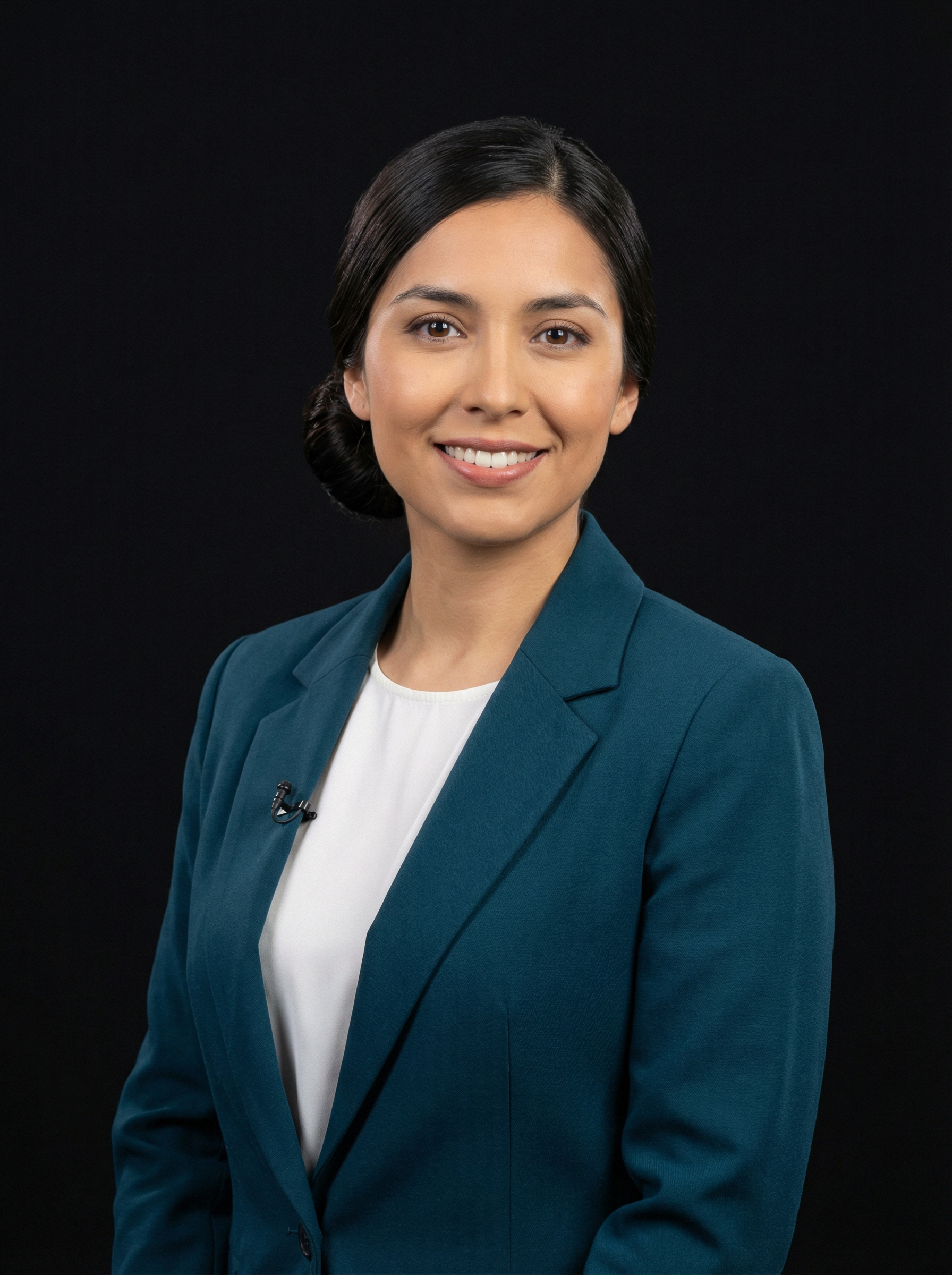
The air in Santiago, even in April, carries a certain crispness, a hint of the snow-capped Andes watching over us. It is a view that, for Sofia Reyes, 32, has always offered a unique perspective on the world, a grounding force against the dizzying heights of global technology. While Silicon Valley was busy chasing the next generative AI unicorn, Sofia was quietly building something far more fundamental, and arguably, far more necessary: a framework for trust, a digital constitution for the AI age. Her company, AndesAI, based right here in Providencia, is now a $500 million behemoth, and it is all thanks to her stubborn refusal to play by anyone else's rules.
I met Sofia in her office, a minimalist space overlooking the Parque Metropolitano, a stark contrast to the chaotic energy of her early days. She sipped a robust Carmenere, a Chilean classic, and gestured towards the cityscape. "Look, Camilà, everyone talks about AI's potential, its brilliance. But what about its manners? Its ethics? Its accountability?" she asked, her voice calm but with an underlying steel. "The global AI governance gap is not some abstract academic problem. It is a ticking time bomb, and someone needed to disarm it. Why not a Chilean? We are good at seeing what is coming over the horizon, you know, with all these mountains."
Sofia's journey began not in a garage, but in the hallowed halls of MIT, where she pursued a Ph.D. in Computer Science, specializing in algorithmic fairness. Born and raised in La Reina, a leafy Santiago commune, her parents, both civil engineers, instilled in her a deep appreciation for structure and problem-solving. "My father used to say, 'Sofia, a bridge is only as strong as its weakest bolt,'" she recounted, a faint smile playing on her lips. "I suppose I just applied that to code." Her undergraduate years at the Pontificia Universidad Católica de Chile, where she excelled in mathematics and philosophy, laid the groundwork for her unique perspective. She was always the one asking 'why' rather than just 'how'.
After MIT, a coveted research position at Google beckoned, a dream for many. She spent two years in Mountain View, contributing to the early development of what would become Google's Gemini. But the gilded cage felt restrictive. "I saw the incredible power we were building, but also the blind spots, the rush to deploy without fully understanding the societal ripples," she explained. "There was a moment, during a particularly heated internal debate about data provenance for a large language model, when I realized I couldn't effect the change I wanted from within. It was like trying to steer a supertanker with a paddle. I needed my own boat." That moment, in late 2021, was her 'garage moment', a decision to leave the comfort of Google and plunge into the terrifying world of entrepreneurship.
Her first attempt was a platform called 'EthosAI', a noble but perhaps too academic endeavor aimed at auditing open-source AI models for bias. It gained traction within research circles but struggled to find a commercial footing. "We were too early, too theoretical," Sofia admitted, taking another sip of wine. "Investors would nod politely, talk about 'long-term vision,' then fund another app that put cat ears on selfies. It was frustrating, like trying to sell fine Chilean wine to someone who only drinks soda." EthosAI burned through its seed funding, a modest $1.5 million from angel investors, and was on the brink of collapse.
The pivot came during a chance encounter at a tech conference in Austin. She met Mateo Vargas, a brilliant but cynical data privacy lawyer who had spent years battling tech giants in Brussels. Mateo, a fellow Chilean expat, shared her frustration with the lack of enforceable standards. "He told me, 'Sofia, people don't want a philosophy lecture, they want a shield. They want to know their data isn't being fed to some hungry algorithm in a black box without their consent or understanding,'" she recalled. Mateo became her co-founder, bringing the legal and regulatory muscle that EthosAI lacked. Together, they founded AndesAI in early 2023, focusing on a more practical, enterprise-grade solution: an AI governance platform that provides auditable trails, regulatory compliance checks, and transparent model documentation for businesses deploying AI.
Their initial pitch for AndesAI was met with skepticism. "'AI governance? That sounds like homework,' one VC told us," Sofia chuckled, shaking her head. But a small, forward-thinking firm, Altos Ventures, saw the writing on the wall. They led a $5 million seed round, recognizing that as regulations tightened globally, the demand for such a platform would explode. Their initial clients were mostly European financial institutions, desperate to comply with the nascent EU AI Act. "We built a product that was less about 'fixing' AI and more about making it accountable," Mateo Vargas, AndesAI's COO, told me in a separate conversation. "We give companies the tools to prove their AI is behaving responsibly, not just hoping it is. It is about trust, and trust is good business."
AndesAI's growth has been meteoric. Their Series A round in late 2024, led by Sequoia Capital, brought in $30 million at a $300 million valuation. By early 2026, they had closed a Series B of $70 million from Andreessen Horowitz (a16z), pushing their valuation to $500 million. They now boast over $100 million in Annual Recurring Revenue (ARR), serving clients across finance, healthcare, and critical infrastructure. "We are not just selling software; we are selling peace of mind," Sofia said. "In a world where OpenAI's GPT-5 and Google's Gemini are becoming ubiquitous, knowing what is under the hood, and that it is compliant, is priceless."
Building the company has not been without its challenges. Hiring top-tier AI talent to relocate to Santiago, away from the traditional tech hubs, required a unique pitch. "We sell them the Andes, the quality of life, the terroir of our innovation," Sofia explained. "Chile's tech scene is like its wine, underrated and excellent. We might not have the sheer volume of Silicon Valley, but the quality here is exceptional. And Santiago has something to say when it comes to global challenges." She fosters a culture of rigorous debate and ethical scrutiny, something she felt was missing in larger corporations. "Every line of code, every feature, is weighed against its potential impact. It is not just about performance, it is about fairness and transparency."
What drives Sofia Reyes? It is more than just building a successful company. "I genuinely believe that if we do not get AI governance right, we risk a future where these powerful tools exacerbate inequalities, erode privacy, and undermine democratic institutions," she stated, her gaze unwavering. "The Andes view of AI is different. We see the vastness, the potential, but also the precipice. We cannot afford to stumble." She envisions a future where AndesAI's framework becomes a global standard, a neutral arbiter in the increasingly fragmented world of AI regulation. "We need international cooperation, not fragmentation, and that requires common ground, common tools." She points to the growing divergence in AI policies between the EU, the US, and China as a clear indicator of the problem. "Everyone is building their own fence, but the AI models are flying over them. We need a shared airspace control tower."
And what is next for AndesAI? Expansion into Asia and Africa, regions where AI adoption is surging but regulatory frameworks are still nascent. "We are building a bridge, Camilà, not just for Chile, but for the world," she concluded, raising her glass. "A bridge of trust, built on solid foundations, just like my father taught me." Her vision is clear, her resolve unshakeable, and from the look of it, the world is finally ready to listen to what Santiago has to say about the future of AI. For more on the evolving landscape of AI regulation, you can follow developments on TechCrunch or MIT Technology Review. The conversation around global AI governance is only just beginning, and Sofia Reyes is making sure Chile has a prominent seat at the table. For a deeper dive into the ethical considerations of AI, Wired often publishes insightful pieces.