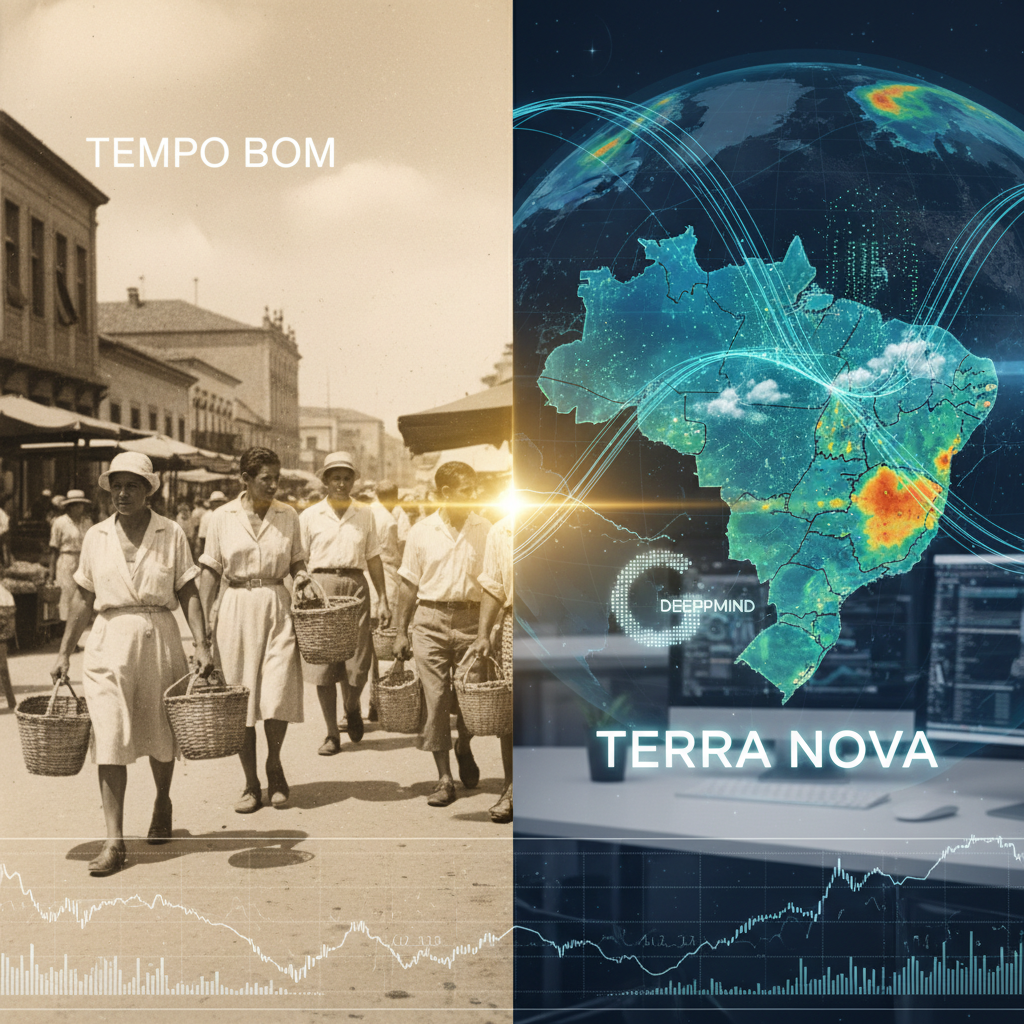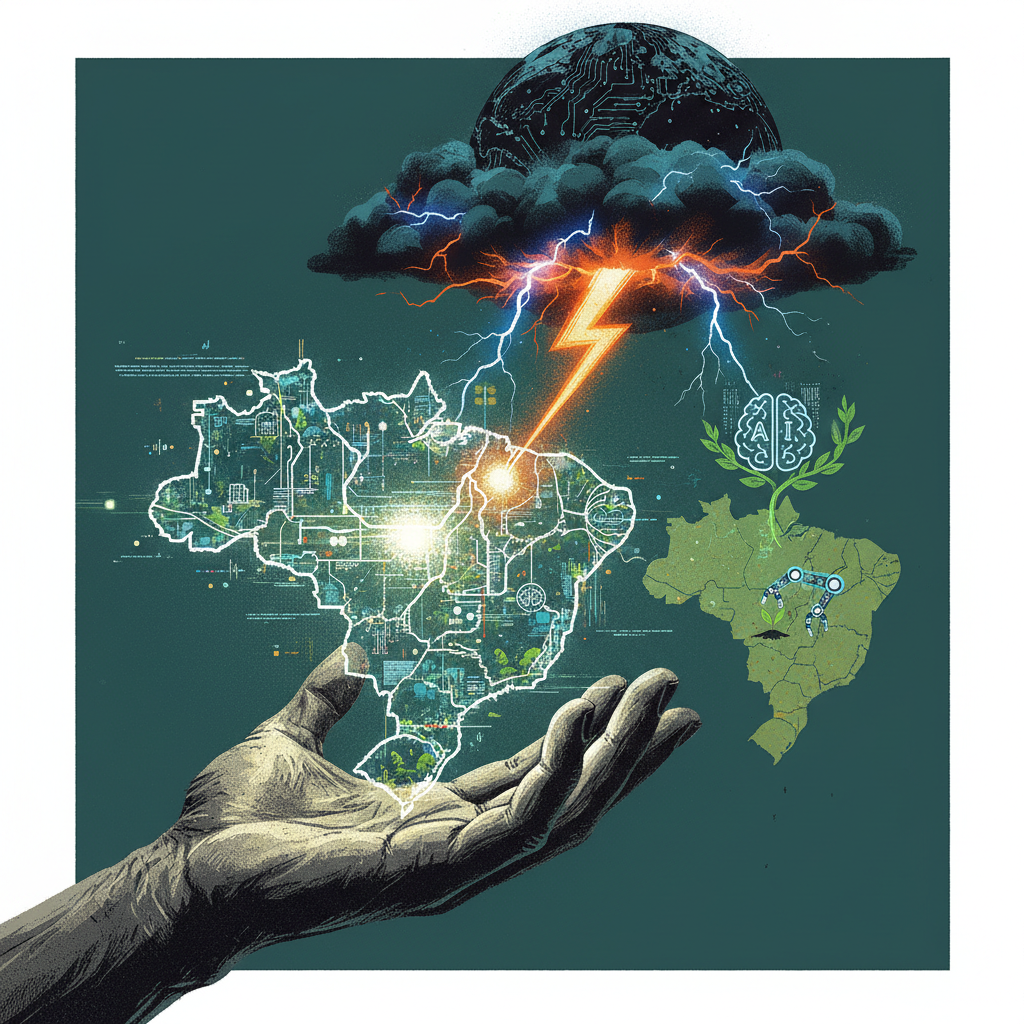

The global race for artificial intelligence supremacy is not merely a technological competition, it is a geopolitical struggle for power, influence, and economic control. From the gleaming data centers of Silicon Valley to the sprawling tech parks of Shenzhen, nations are pouring billions into research, development, and deployment, each vying for an edge. But what of Brazil, a nation often seen as a resource giant rather than a digital titan? How does this escalating AI arms race, dominated by the US, China, and the European Union, ripple through the Amazon basin and impact the future of our continent?
My investigation reveals that Brazil's AI funding landscape hides surprises, a complex web of foreign investment, nascent domestic innovation, and critical vulnerabilities. The stakes are immense. The nation that masters AI first, or at least controls its foundational infrastructure, will dictate the future of industries, defense, and even societal norms. For Brazil, a country with immense biodiversity, a vast agricultural sector, and a growing digital economy, the implications are profound.
The Risk Scenario: Digital Colonialism and Resource Exploitation
The primary risk for Brazil, and indeed for many emerging nations, is the potential for digital colonialism. As powerful external actors develop increasingly sophisticated AI models, particularly large language models and advanced robotics, the danger is that these technologies will be deployed in ways that primarily benefit their creators, not the host nations. Imagine AI-powered agricultural systems optimized for foreign markets, or surveillance technologies sold to governments that lack the capacity to audit their ethical implications. The data generated by Brazilian citizens, industries, and ecosystems could become raw material, processed and monetized elsewhere, without equitable returns or sovereign control.
This is not a hypothetical fear. We have already seen how resource extraction historically shaped our economic destiny. Now, the new 'resource' is data, and the 'mines' are our digital lives. When global tech giants like Google, Microsoft, and Meta deploy their AI products here, they collect vast amounts of data, often without clear, localized frameworks for governance or benefit sharing. The investment trail leads to a familiar pattern: foreign capital flowing in, but the ultimate control and value creation remaining concentrated abroad.
Technical Explanation: Foundational Models and Data Hegemony
At the heart of this new form of power lies the development of foundational AI models, particularly large language models (LLMs) and multimodal AI. Companies such as OpenAI with GPT, Google with Gemini, and Anthropic with Claude are building models so vast and general purpose that they underpin countless applications. These models require immense computational power, often provided by NVIDIA's advanced GPUs, and gargantuan datasets. The sheer scale of investment and infrastructure required to train these models creates an almost insurmountable barrier to entry for smaller nations or companies.
The technical advantage of these global players is not just in their algorithms, but in their access to diverse, high-quality data and their ability to attract top talent. For example, a significant portion of the world's accessible digital text and imagery, the fuel for these models, originates from developed nations. This creates a bias in the models themselves, reflecting the cultural, linguistic, and societal norms of their creators. When these models are then applied in a Brazilian context, they may struggle with Portuguese nuances, local dialects, or specific cultural references, leading to inaccuracies, inefficiencies, or even harmful biases. This is a technical problem with deeply social and economic consequences.
Expert Debate: Sovereignty vs. Collaboration
The debate among experts in Brazil and across Latin America often centers on two poles: the pursuit of AI sovereignty versus the necessity of international collaboration. Dr. Regina Braga, a leading AI ethicist at the University of São Paulo, has frequently warned about the dangers of uncritical adoption. "We cannot simply import AI solutions designed for different societies and expect them to work without unintended consequences," she stated in a recent seminar. "Brazil must develop its own capacity to understand, adapt, and even build foundational models that reflect our unique cultural and ethical values. Otherwise, we risk embedding foreign biases into the very fabric of our digital future." Her position emphasizes the need for robust domestic research and development, perhaps even a national AI strategy akin to those seen in China or the EU.
Conversely, figures like Dr. Carlos Eduardo de Almeida, a prominent venture capitalist focused on AI startups in São Paulo, argue for strategic engagement. "The reality is, Brazil cannot build an OpenAI or a Google DeepMind overnight," de Almeida told me during an interview. "Our path to AI leadership must involve smart partnerships, attracting foreign investment, and leveraging global platforms while focusing our domestic efforts on niche applications where we have a competitive advantage, such as agriculture, biodiversity monitoring, or localized healthcare solutions." He advocates for a more pragmatic approach, focusing on integrating and adapting global AI tools rather than attempting to replicate them from scratch.
These perspectives highlight a fundamental tension: how to harness the undeniable power of global AI advancements without ceding control over our data, our values, and our future. This is a conversation that resonates deeply in a country that has long struggled with balancing foreign economic influence with national development.
Real-World Implications for Brazil
The implications for Brazil are already tangible. In agriculture, AI-powered precision farming tools, often developed by US or European companies, are being adopted rapidly. While these promise increased yields and efficiency, they also generate vast datasets about Brazil's land, climate, and agricultural practices. Who owns this data? Who benefits from its analysis? Similarly, in healthcare, diagnostic AI tools are improving access and accuracy, but the underlying models may not be trained on diverse enough populations, potentially leading to misdiagnoses for specific ethnic groups or conditions prevalent in Brazil.
Moreover, the AI arms race extends to talent. The global demand for skilled AI engineers and researchers is immense. Brazil faces a constant brain drain, with many of its brightest minds lured by the significantly higher salaries and cutting-edge research opportunities offered by tech giants in the US and Europe. This exacerbates the challenge of building indigenous AI capabilities. The investment trail leads not only to capital but also to human resources, a critical component of any nation's technological future.
Even in the realm of national security, the implications are stark. The development of advanced AI for defense, surveillance, and cyber warfare by global powers means that nations without their own robust AI defense capabilities could become strategically vulnerable. This is not about building autonomous weapons, but about securing critical infrastructure and protecting against sophisticated cyber threats, which are increasingly AI-driven.
What Should Be Done: A Sovereign Path Forward
Brazil must forge a proactive, multi-faceted strategy to navigate this complex landscape. First, there is an urgent need for robust regulatory frameworks. The proposed Brazilian AI Law, currently under discussion, is a crucial step. It must prioritize data sovereignty, ethical guidelines, and transparency, ensuring that AI deployed within our borders adheres to our national values and legal principles. This includes clear rules on data ownership, algorithmic accountability, and the right to human oversight. The European Union's AI Act provides a useful, though not perfect, blueprint for comprehensive regulation, and Brazil can learn from its strengths and weaknesses.
Second, significant investment in domestic AI research and development is paramount. This means not only funding universities and research institutions but also fostering a vibrant ecosystem of Brazilian AI startups. Initiatives like FINEP's (Financiadora de Estudos e Projetos) support for innovation are vital, but they must be scaled up dramatically. We need to create incentives for our talent to stay and build here, perhaps through tax breaks, grants, and dedicated AI research hubs. Developing specialized LLMs trained on Portuguese and Brazilian cultural data, for example, could offer a competitive edge in specific sectors.
Third, strategic international collaboration is necessary. This does not mean passive acceptance of foreign technology, but active engagement. Brazil can seek partnerships with countries that share similar concerns about digital sovereignty, perhaps within the Brics bloc or other South American nations. Sharing knowledge, resources, and even jointly developing open-source AI models could be a way to counterbalance the dominance of a few global players. As Reuters often reports, such collaborations are becoming increasingly common as nations seek to diversify their AI ecosystems.
Finally, public education and digital literacy are critical. Our citizens must understand the implications of AI, both its benefits and its risks. A well-informed populace is essential for democratic oversight and for ensuring that AI serves the needs of all Brazilians, not just a select few. The AI arms race is not just a technological challenge, it is a societal one, and Brazil's response will define its place in the 21st century. Ignoring these dynamics would be a grave error, potentially consigning us to a future where our digital destiny is decided elsewhere. We have the intelligence, the creativity, and the spirit to lead, but only if we act decisively now. For more insights into the broader implications of AI, one might consult resources like MIT Technology Review. The path ahead is fraught with challenges, but also rich with opportunity, if we choose to seize it with foresight and determination.