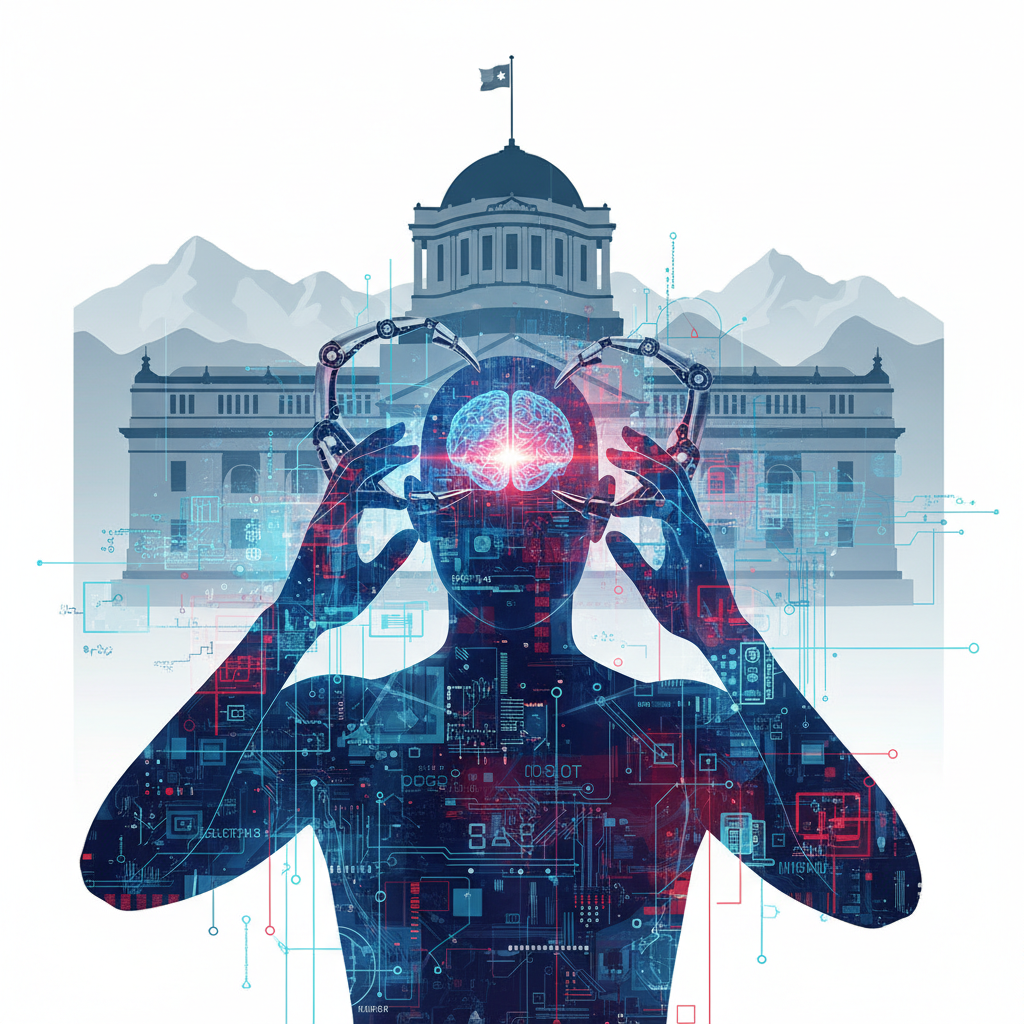

Picture this: a young lawyer, fresh out of the Universidad de Chile, sits hunched over a glowing screen. Not with stacks of dusty tomes, mind you, but with a sleek AI assistant, sifting through thousands of legal precedents in seconds. This isn't some far-off sci-fi fantasy; it's the daily reality for a growing number of legal professionals in Chile, a country where the legal system, much like its geography, is both complex and deeply rooted in tradition. The question isn't whether AI is here, but what it's doing to our brains, our relationships with work, and ultimately, our very understanding of justice.
We’re talking about AI in legal tech, of course. Tools that promise to revolutionize everything from contract analysis to case prediction and automated legal research. They’re supposed to make lawyers more efficient, more accurate, and less prone to human error. Sounds great on paper, doesn't it? Like a perfectly aged Carmenere, smooth and powerful. But as a journalist who’s seen more than a few tech fads come and go, I can tell you that the human element, the messy, beautiful, irrational human element, always finds a way to complicate things. The Andes view of AI is different; we see the peaks and the valleys, not just the glossy brochures.
Consider the case of Gabriela, a corporate lawyer I spoke with in Providencia. She used to spend days, sometimes weeks, poring over merger and acquisition documents, her eyes blurring from endless clauses. Now, a platform powered by something akin to OpenAI's GPT models can flag anomalies, identify risks, and draft initial summaries in a fraction of the time. "It's a miracle for efficiency," she told me, her eyes still a little tired, but now from managing the AI's output rather than generating it. "But sometimes, I feel like I'm losing the 'feel' for the document. The intuition you build from deep immersion, the subtle nuances that a machine might miss." This isn't just about speed; it's about a fundamental shift in cognitive load and skill sets.
Research backs up Gabriela's unease. Studies from institutions like the MIT Technology Review have begun to explore the psychological impact of AI integration in high-stakes professions. While AI excels at pattern recognition and data processing, human cognition thrives on synthesis, critical judgment, and creative problem-solving. When AI takes over the grunt work, lawyers might find their analytical muscles atrophying, leading to what some psychologists call