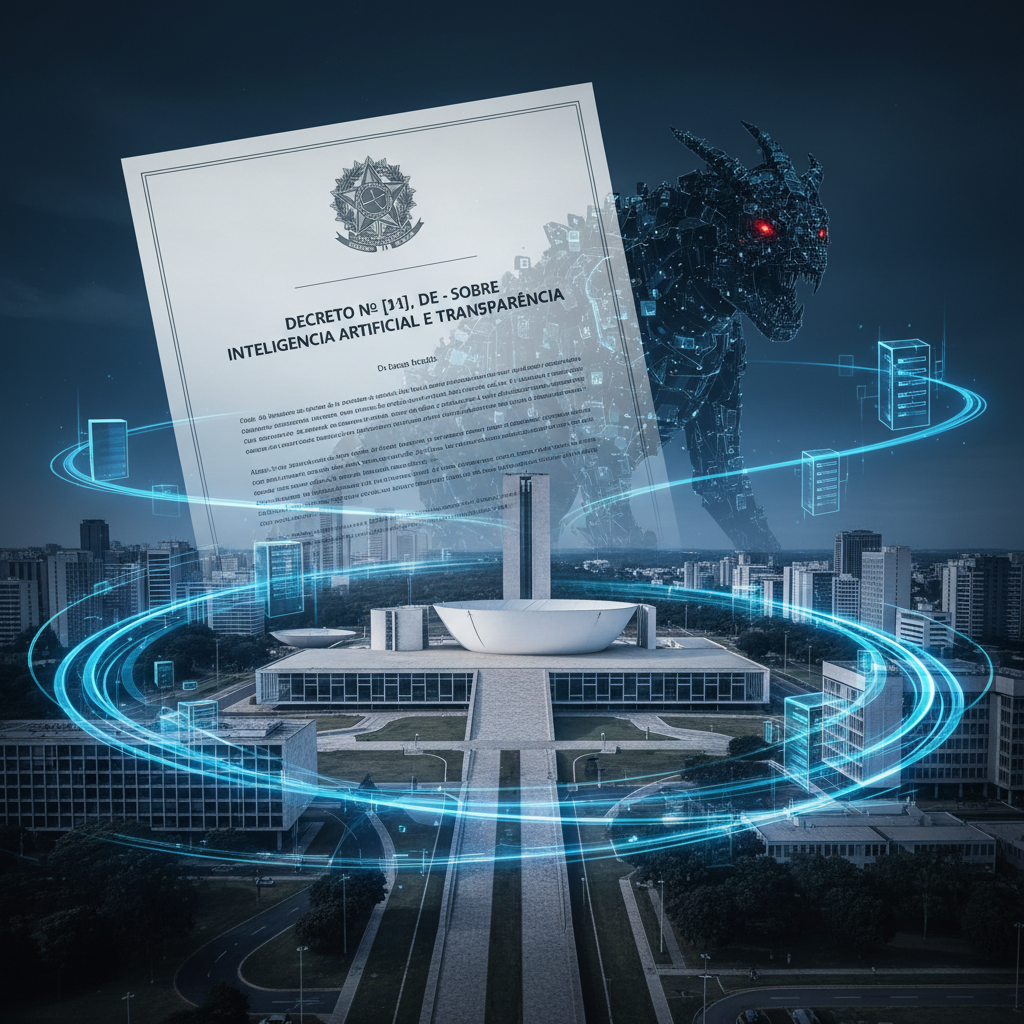

You know, sometimes I look at the news coming out of the global North, all those debates about AI ethics and data privacy, and I think, 'Pffft, they're just getting started.' Here in Brazil, we've been navigating complex data landscapes for decades, often with less fanfare but with real stakes. So when the news broke last month about the new Presidential Decree 12.456, aimed squarely at increasing transparency for AI platforms used by the federal government, my ears perked up. And when I heard it was largely a response to the growing presence of companies like Palantir in sensitive sectors, well, agora a coisa ficou séria, as we say.
This isn't some abstract academic exercise; this is about the nuts and bolts of how our government uses powerful, often opaque, AI systems. Palantir, with its Gotham and Foundry platforms, has a reputation for being the 'secret weapon' of intelligence agencies and defense departments globally. They dive deep into vast, disparate datasets, connecting dots that humans simply cannot. And while that sounds like a superpower, it also raises a montanha of questions about accountability, bias, and who ultimately controls the narrative these systems generate. The decree, signed by President da Silva, mandates that any AI system procured or utilized by federal agencies for critical functions, especially those involving citizen data or national security, must undergo a rigorous, public-facing impact assessment. It also requires detailed disclosure of the data sources, algorithmic models, and human oversight mechanisms in place. It's a big step, a passo gigante, for a country that's often played catch-up in the digital governance race.
So, who's behind this sudden push, and why now? It's a confluence of factors, really. For one, the international pressure for AI governance has intensified. The EU's AI Act, for all its bureaucratic heft, has set a global precedent. But more locally, there's a growing unease within certain government factions and civil society groups about the unchecked expansion of foreign tech influence. Senator Ana Paula Costa, a vocal advocate for digital rights from Rio Grande do Sul, has been a driving force. She told me last week, "We cannot allow a 'black box' approach to AI when it affects the lives of millions of Brazilians. We need to understand how decisions are being made, what data is being used, and who is ultimately responsible. This decree is a direct response to concerns raised by Palantir's increasing engagement with our defense and intelligence sectors, particularly regarding data sharing protocols." She's right, of course. The fear is that these systems, while powerful, could become Trojan horses, granting unprecedented access to sensitive national data without sufficient oversight. We saw glimpses of this concern during the pandemic, when data-driven solutions were rushed into deployment, sometimes with little public scrutiny.
In practice, what does this decree mean? For Palantir and other AI vendors eyeing lucrative government contracts in Brazil, it means a lot more paperwork, a lot more transparency, and potentially, a lot more public scrutiny. Federal agencies will now have to publish comprehensive reports detailing the ethical implications, data privacy safeguards, and potential societal impacts of any AI system they deploy. Imagine trying to get a contract approved if you can't clearly articulate how your AI avoids bias, protects individual privacy, or ensures human accountability. It's a significant hurdle, designed to force companies to open up their proprietary 'black boxes' or risk losing out on one of the world's fastest-growing digital markets. "The days of 'trust us, it works' are over," stated Dr. Ricardo Mendes, head of the Brazilian Institute for AI Regulation, a newly formed government body tasked with implementing the decree. "We need verifiable evidence of responsible AI development and deployment. Our national security and the rights of our citizens depend on it." This is Brazil's decade, and we're not just going to roll over for anyone.
The industry reaction, as you might expect, is a mixed bag. On one hand, companies like Google and Microsoft, which have been investing heavily in responsible AI frameworks and public-facing ethics guidelines, might find it easier to comply. Their existing transparency efforts, while imperfect, give them a head start. On the other hand, firms like Palantir, whose business model often thrives on discretion and proprietary algorithms, are likely to face a tougher challenge. A representative from a major international defense tech firm, who wished to remain anonymous, expressed frustration: "This level of disclosure could compromise our competitive edge and intellectual property. It's a heavy burden, and it might make Brazil a less attractive market for cutting-edge, sensitive technologies." But is that really a bad thing? Perhaps it means Brazil will attract companies truly committed to ethical AI, not just those looking for a quick buck.
From the civil society perspective, the decree is largely being hailed as a victory, albeit a partial one. Organizations like Data Privacy Brasil and the Brazilian Coalition for Digital Rights have been pushing for stronger AI regulation for years. "This decree is a crucial first step," said Mariana Silva, a leading lawyer with Data Privacy Brasil. "It acknowledges that AI is not just a technical issue, but a profound societal one. However, the real challenge will be enforcement. We need robust independent oversight and mechanisms for public participation to ensure these transparency requirements are not just window dressing." She's right, the devil is always in the details, and in Brazil, sometimes the diabo likes to hide in the bureaucracy. Transparency on paper is one thing, transparency in practice is another entirely. For more on the global push for AI transparency, you can check out articles on MIT Technology Review.
So, will it work? Can this decree truly tame the powerful, often secretive, AI platforms like Palantir's? My take is that it's a necessary, vital step, but it's just the beginning of a long journey. Brazil is the sleeping giant of AI and it's waking up, but waking up doesn't mean the path is clear. We have the ambition, the talent, and the market size to be a major player in the global AI landscape, but we also have unique challenges. Our legal framework, while evolving, still needs to mature to truly handle the complexities of AI governance. The decree is a strong signal that Brazil is serious about asserting its digital sovereignty and ensuring that AI serves our people, not just corporate interests. It forces a conversation that needs to happen: how do we harness the power of AI for good, while safeguarding our democratic values and individual rights? The answer won't come from a single decree, but from ongoing dialogue, adaptation, and a firm commitment to putting people first. This is a marathon, not a sprint, and Brazil is ready to run it. For ongoing developments in AI policy, Reuters Technology is a good source.