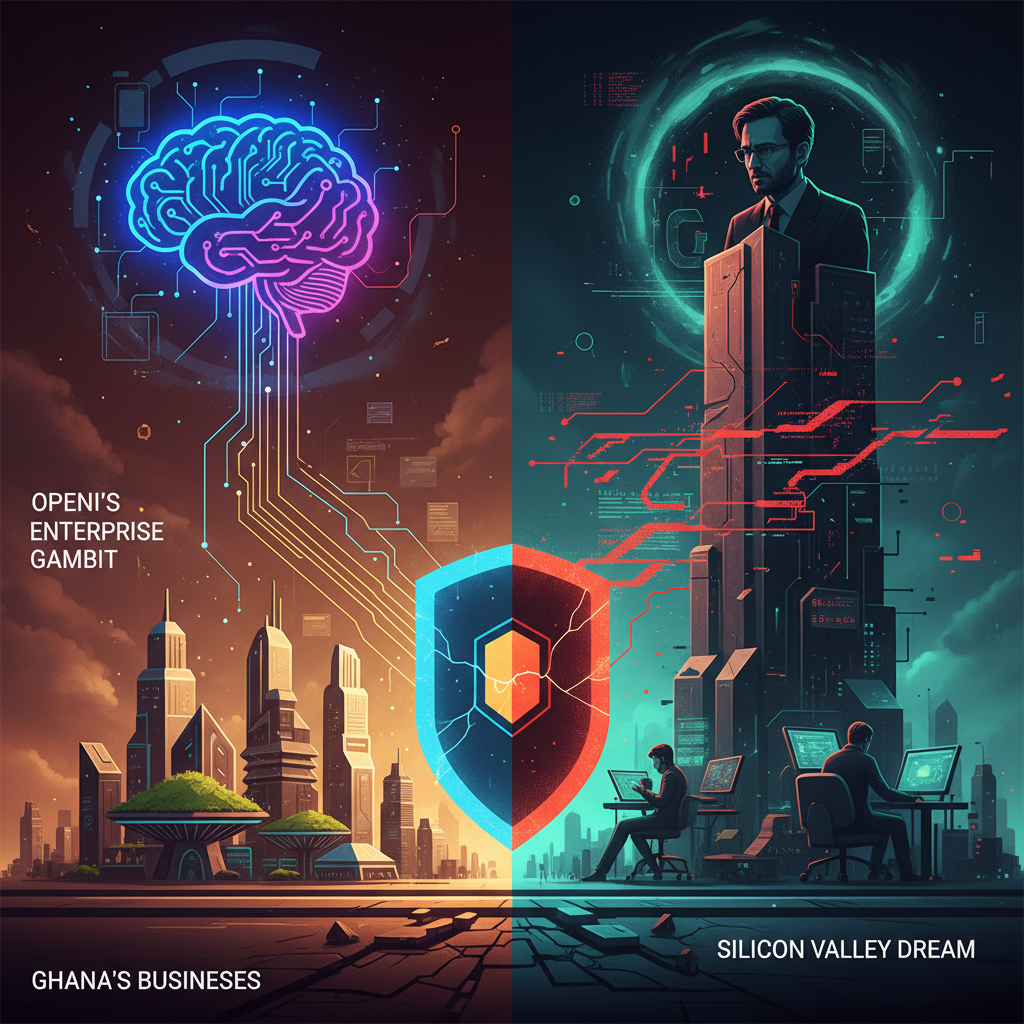
The drumbeats of change are growing louder, echoing from the tech hubs of Silicon Valley all the way to the bustling markets of Makola here in Accra. OpenAI, with its charismatic CEO Sam Altman at the helm, is pushing ChatGPT Enterprise as the ultimate tool to redefine corporate workflows. They paint a picture of unparalleled efficiency, bespoke AI models, and data privacy that promises to transform businesses globally. But from where I stand, looking out at the vibrant, complex tapestry of Ghana, I have to ask: what does this truly mean for us? Will this wave lift all boats, or will it simply deepen the existing chasms of inequality?
This isn't just a technical upgrade; it's a profound shift in how knowledge is created, processed, and leveraged. For too long, the narrative of technological advancement has been dictated by a select few, often overlooking the unique needs, challenges, and immense potential of regions like ours. We need to talk about this, because the implications of OpenAI's enterprise push will reshape Ghana, and indeed the entire world, in the next 5-10 years, and it's imperative that we shape that future ourselves.
A Future Forged in Algorithms: Ghana in 2030
Imagine Ghana in 2030. The skyline of Accra is dotted with more innovation hubs, but within them, the hum of AI is pervasive. Small and medium-sized enterprises (SMEs), the backbone of our economy, are no longer struggling with outdated systems. Thanks to localized, enterprise-grade AI solutions, a Kente weaving cooperative in Bonwire can use an AI assistant to manage international orders, optimize production schedules based on seasonal demand, and even suggest new design patterns inspired by historical Akan motifs, all while ensuring fair wages for artisans. This AI, powered by a robust, secure version of ChatGPT Enterprise, understands Twi and Ewe, not just English, and has been fine-tuned on Ghanaian business practices and cultural nuances.
In the health sector, our doctors and nurses, especially in remote areas, are supported by AI diagnostics that can analyze medical images and patient data with remarkable accuracy, cross-referencing against a vast, anonymized database of local health records. This drastically reduces misdiagnosis and improves treatment outcomes, addressing critical healthcare disparities. Government ministries, from education to agriculture, use these enterprise AI platforms to analyze vast datasets, predict crop yields, optimize resource allocation, and craft policies that are truly data-driven and responsive to community needs.
This isn't a fantasy. This is a plausible future, but it requires deliberate action, not just passive adoption. The key is not just having the technology, but having the control over it, ensuring it serves our people and our values, rather than becoming another tool for external influence.
How We Get There: From Today's Buzz to Tomorrow's Reality
Today, the conversation around ChatGPT Enterprise often centers on its benefits for large corporations in the Global North: enhanced customer service, automated coding, and streamlined internal communications. For Ghana, the journey to that 2030 vision involves several critical steps.
First, we need robust digital infrastructure. While significant progress has been made, reliable, affordable internet access across the country remains a challenge. The government's 'Ghana Digital Transformation Agenda' is a good start, but private sector investment, perhaps spurred by the very promise of enterprise AI, is crucial. Without the pipes, the water cannot flow.
Second, and perhaps most importantly, is data sovereignty and ethical AI development. OpenAI offers data privacy assurances for its enterprise clients, but we must ensure that our unique cultural data, our languages, our history, are not simply ingested and homogenized by models trained predominantly on Western datasets. We need Ghanaian data scientists, linguists, and ethicists at the table, actively participating in the fine-tuning and deployment of these models. Dr. Ama Serwaa, head of the AI for Development Institute in Accra, puts it plainly: "If our data is the new oil, then we must own the refineries. We cannot allow our digital heritage to be exploited without our consent or benefit." Her institute is already working with local startups to build culturally sensitive datasets for AI training, a vital step.
Third, education and skills development are paramount. We need to equip our youth with the skills to not just use AI, but to build, maintain, and critically evaluate it. Universities like the Kwame Nkrumah University of Science and Technology (knust) are expanding their computer science and AI programs, but we need more vocational training, more accessible online courses, and more mentorship opportunities. This affects every single one of us, from the tech entrepreneur in East Legon to the farmer in Tamale.
Key Milestones on the Path
- 2025-2026: Early Adopters and Pilot Programs. A few forward-thinking Ghanaian companies, perhaps in banking or telecommunications, begin piloting ChatGPT Enterprise. They will likely focus on internal efficiencies: automating HR queries, drafting marketing copy, or summarizing market research. The early results will be crucial in demonstrating tangible benefits and identifying local challenges. We might see partnerships with local tech firms to facilitate integration and customization.
- 2027-2028: Localized Fine-tuning and Data Governance Frameworks. As more Ghanaian data is fed into these models, the demand for localized fine-tuning will skyrocket. This is where the ethical considerations become acute. Ghana will need to establish clear data governance frameworks, perhaps inspired by the African Union's Data Policy Framework, to protect sensitive information and ensure equitable access to the benefits derived from it. OpenAI, Microsoft, and other major players will be pressured to offer more granular control and transparency over how their models learn from and represent diverse cultures.
- 2029-2030: Widespread Adoption and Indigenous AI Innovation. By this point, enterprise AI solutions, including those powered by OpenAI, will be commonplace in larger Ghanaian businesses. Crucially, this period should also see the rise of indigenous Ghanaian AI solutions. Local startups, having gained experience and insights from working with global platforms, will begin developing their own specialized AI tools, perhaps focusing on areas like agricultural tech, local language processing, or traditional medicine research. This is where true digital sovereignty begins to blossom.
Who Wins and Who Loses?
The winners, undoubtedly, will be the businesses and organizations that embrace AI strategically, understanding its potential for efficiency and innovation, but also its ethical complexities. Those who invest in local talent, build robust data governance, and prioritize culturally relevant AI applications will thrive. Companies like Zeepay, a Ghanaian fintech success story, could leverage enterprise AI to further streamline their remittance services, making them even more accessible and affordable for the diaspora.
The losers, unfortunately, could be those who resist change, or worse, those who adopt AI without critical thought. Without proper oversight, AI could exacerbate unemployment in certain sectors, particularly in routine administrative tasks. Small businesses unable to afford the initial investment or lacking the digital literacy to implement these tools might fall further behind. And if we are not vigilant, our unique cultural identities, our languages, and our ways of knowing could be subtly eroded by algorithms that prioritize global averages over local specificities. Silence is complicity when the future of our culture is on the line.
Mr. Kwame Owusu, CEO of a prominent Ghanaian manufacturing firm, expressed his concerns to me recently: "The promise of AI is great, but we must ensure it doesn't become another form of digital colonization. We need to be partners, not just consumers, in this technological revolution." His words resonate deeply.
What Readers Should Do Now
For business leaders in Ghana and across Africa, the time to act is now. Start exploring AI solutions, but do so with a critical eye. Demand transparency and customization from providers like OpenAI. Invest in your workforce's AI literacy. Look for opportunities to collaborate with local universities and startups to build context-specific solutions.
For policymakers, it's about crafting agile regulations that protect our data and promote ethical AI development, without stifling innovation. We need to create an environment where Ghanaian AI talent can flourish, where our languages are preserved and integrated into these powerful models, and where the benefits of AI are shared equitably.
And for every citizen, it's about engagement. Understand what AI is, how it works, and how it impacts your life. Ask questions. Advocate for policies that ensure AI serves humanity, not just profit. The future of Ghana, a future where technology truly empowers every individual and strengthens our rich cultural heritage, depends on the choices we make today. Let's build it together, with wisdom and foresight. For more insights into how AI is shaping global economies, you can follow Reuters Technology for the latest updates on enterprise AI trends, or explore MIT Technology Review for deeper analysis on the societal impacts of these technologies. Also, keep an eye on developments at OpenAI's blog for their official announcements and perspectives on enterprise solutions.