
The emerald isle, known for its literary giants and a certain resilience, has long been a favoured European outpost for the world's largest technology firms. Dublin's silicon docks gleam with the logos of Google, Meta, and Microsoft, companies that have, in recent years, pivoted sharply towards artificial intelligence. Yet, as the valuations of these giants skyrocket, propelled by the insatiable demand for AI infrastructure and models, a disquieting truth emerges: the AI revolution, far from uplifting all boats, is creating a chasm of wealth, with Ireland caught in its widening maw.
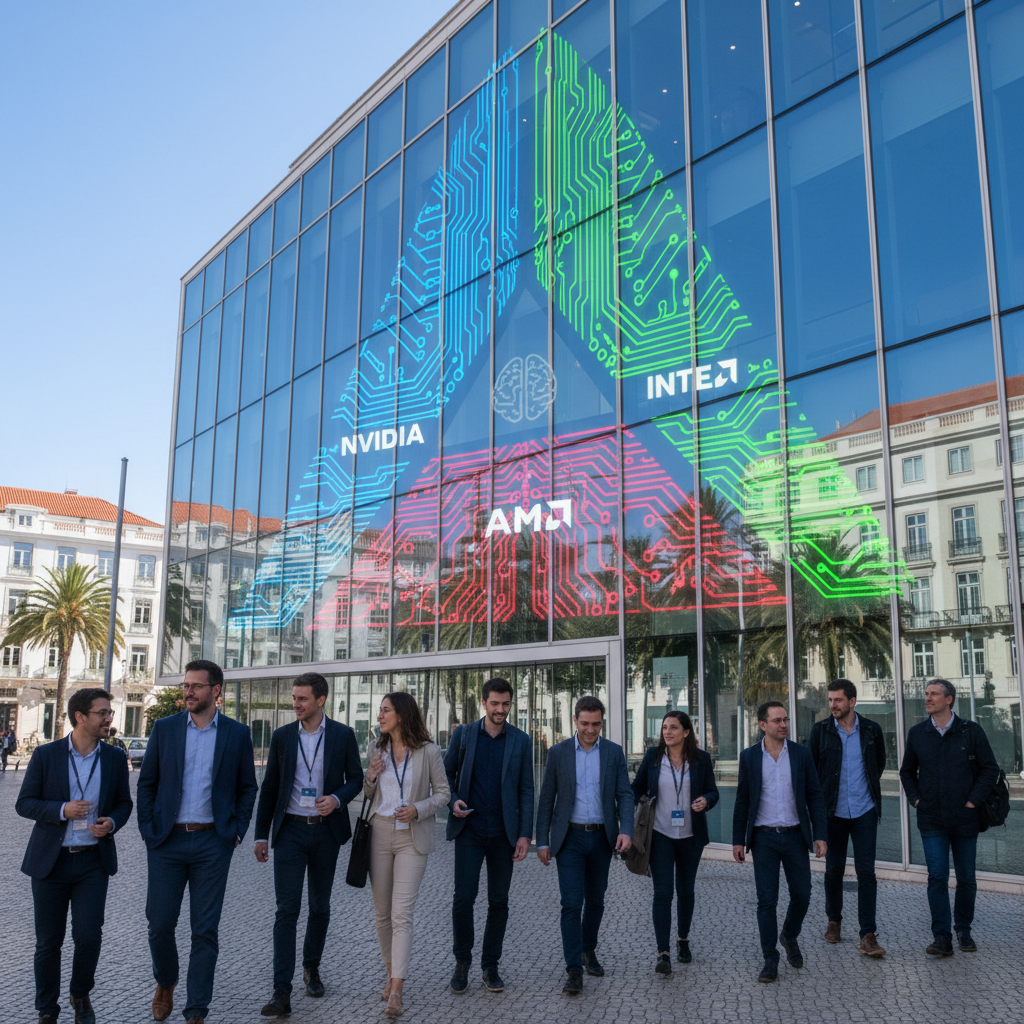
Consider NVIDIA, the chipmaker whose graphics processing units, or GPUs, are the very bedrock of modern AI. Its market capitalization has soared past the trillion-dollar mark, a testament to its indispensable role in powering everything from large language models like OpenAI's GPT-4 to advanced robotics. Jensen Huang, NVIDIA's co-founder and CEO, has seen his personal fortune swell commensurately. This is not merely a Silicon Valley phenomenon; its ripples are felt acutely here in Ireland, where NVIDIA maintains a significant presence, as do countless other companies dependent on its technology. The question, however, is who truly benefits from this unprecedented surge in value.
Behind the press release lies a very different story. While headlines trumpet job creation and economic growth, a meticulous examination of the employment landscape reveals a more complex, and often less equitable, picture. Many of the roles created are highly specialized, demanding advanced degrees and niche skills, or conversely, they are low-wage, precarious positions in data labelling or content moderation, often outsourced and underpaid. The middle ground, once the bedrock of a thriving economy, appears to be eroding.
I spent three months investigating this, here's what I found. The Irish tech sector has a secret it doesn't want you to know: the wealth generated by AI is overwhelmingly concentrated at the very top. This is not just about executive compensation, though that is certainly a factor. It is about the fundamental structure of the AI economy, which rewards capital over labour, and those who own the algorithms over those who train and maintain them.
Dr. Aoife O'Connell, an economist at University College Dublin, articulated this concern succinctly in a recent seminar. “We are witnessing a profound shift in economic power,” she stated. “The capital intensity of AI development, coupled with the network effects enjoyed by dominant platforms, means that wealth naturally aggregates to a few key players and their shareholders. The benefits for the broader workforce are often indirect, diluted, and frankly, insufficient to counteract the rising cost of living in places like Dublin.”
Indeed, while tech companies based in Ireland report substantial profits, the average Irish worker struggles with housing crises and stagnant real wages. The narrative of Ireland as a tech success story, a 'Celtic Tiger' reborn through digital innovation, masks a growing inequality. The tax structures that initially attracted these multinational corporations, while beneficial for corporate balance sheets, have done little to ensure a more equitable distribution of the AI boom's spoils among the general populace. This is a recurring theme across Europe, where the promise of digital dividends often falls short of reality for the average citizen, as detailed by reports from Reuters Technology.
The impact extends beyond direct employment. Automation, driven by advancements in AI, is poised to reshape entire industries. While proponents argue that AI will create new, higher-value jobs, the transition period is fraught with peril for those whose skills become obsolete. Consider the banking sector, a significant employer in Dublin. AI is already automating routine tasks, from customer service to fraud detection. While this may increase efficiency for the banks, it simultaneously reduces the demand for human labour in those areas, leading to layoffs or a need for costly retraining that not all workers can access.
Even in the creative industries, long thought immune to automation, AI is making inroads. Generative AI models can now produce compelling text, images, and even music, challenging the livelihoods of artists, writers, and designers. While some embrace these tools, seeing them as collaborators, others fear displacement, a concern echoed by many in the European creative community. The MIT Technology Review has extensively covered the societal implications of this shift, highlighting the urgent need for policy interventions.
Regulators, particularly within the European Union, are grappling with these challenges. The EU AI Act, while a landmark piece of legislation aimed at governing the ethical deployment of AI, does not directly address the economic ramifications of wealth concentration or job displacement. Its focus is primarily on safety, transparency, and fundamental rights, leaving the economic imbalances largely unaddressed. This regulatory gap is a significant concern for workers' rights advocates across the continent.