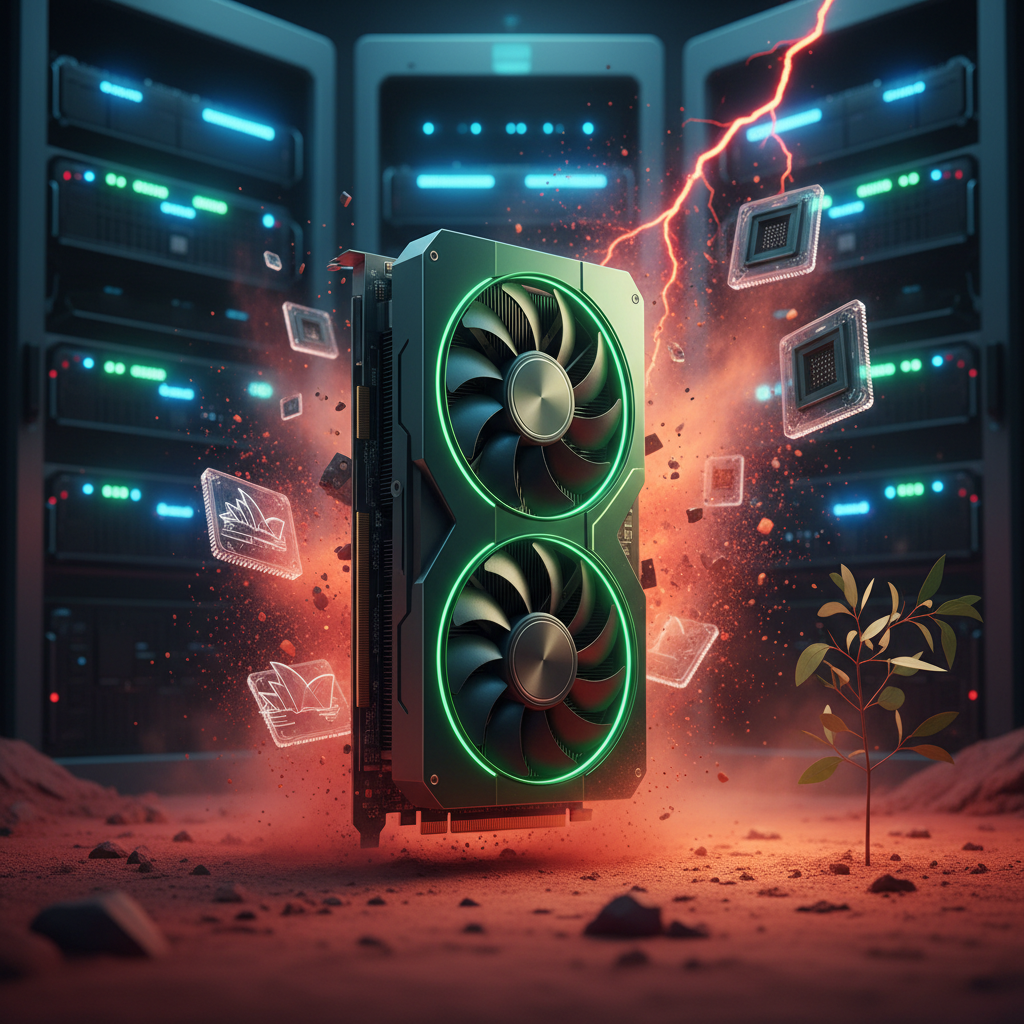

Right, let's talk about chips. Not the kind you get with your fish and chips, mind you, but the tiny, ridiculously complex silicon wafers that power everything from your phone to those fancy AI models everyone's raving about. You know, the ones that make NVIDIA's Jensen Huang look like he's printing money in his backyard. The world is utterly obsessed with artificial intelligence, and fair enough, it's doing some pretty wild stuff. But here's the rub, mate: all that AI, all those algorithms, all that computational wizardry, it all needs hardware. Specific, high-performance, incredibly difficult-to-make hardware, and there simply isn't enough of it to go around. We're staring down the barrel of a global AI chip shortage, and it's not just a minor inconvenience, it's a full-blown geopolitical drama with Australia caught in the crossfire.
Why Most People Are Ignoring It
Most folks hear 'chip shortage' and think back to a few years ago when they couldn't get a new PlayStation or a Ford Ranger. Annoying, sure, but hardly world-ending. The difference now is scale and criticality. This isn't about consumer electronics; it's about the foundational infrastructure of the digital age. The AI chip crunch is far more insidious, lurking beneath the surface of daily life. People are too busy scrolling through TikTok or arguing about the latest celebrity scandal to worry about the intricate dance of photolithography and rare earth minerals. They see the flashy headlines about new AI models, the incredible generative art, the chatbots that can write poetry, but they don't connect the dots to the physical constraints underpinning it all. It's like admiring a skyscraper without ever considering if there's enough concrete to finish the top floors. The sheer complexity of semiconductor manufacturing, dominated by a handful of players like Tsmc in Taiwan, makes it an abstract concept for the average punter, but its impact is anything but.
How It Affects YOU
So, how does this obscure global supply chain issue impact Brenda from Blacktown or Steve from Surfers Paradise? More than you might think. First, expect prices for anything AI-powered to climb. That new smart home gadget, the AI-enhanced software for your small business, even the cost of accessing advanced AI services from Google or OpenAI, it's all tied to chip availability. Less supply, higher demand, bigger price tag. Simple economics, really. Second, innovation might slow down. If startups, including the bright sparks in Australia's tech scene, can't get their hands on the powerful GPUs needed to train their models or develop new AI applications, their progress grinds to a halt. This means fewer new solutions for everything from healthcare diagnostics to agricultural efficiency. Imagine waiting longer for a breakthrough drug because the research lab couldn't get the compute power. Third, your job. While AI promises to create new roles, a lack of chips could stifle the growth of AI-driven industries, potentially impacting job creation in sectors that are banking on AI transformation. Down Under, we do things differently, but we still need the same fundamental tools as everyone else to compete on the global stage.
The Bigger Picture
The AI chip shortage isn't just about economics; it's a geopolitical chessboard. The United States and China are locked in a technological arms race, with semiconductors as the ultimate prize. The US, keen to maintain its lead and curb China's technological ambitions, has imposed stringent export controls on advanced AI chips and manufacturing equipment. This means companies like NVIDIA can't sell their top-tier GPUs to Chinese entities without a special license, creating a ripple effect across the global supply chain. This isn't just about commercial competition, it's about national security, military advantage, and economic dominance. Taiwan, home to Tsmc, the world's leading chip manufacturer, finds itself at the epicentre of this struggle. Any disruption there, heaven forbid, would send shockwaves through every tech-dependent industry on Earth. For Australia, this means navigating a complex diplomatic landscape, ensuring we have access to critical technologies while maintaining our alliances. Our reliance on global supply chains for these essential components makes us vulnerable, a stark reminder that even a country as geographically isolated as ours is deeply intertwined with global power plays.
What Experts Are Saying
Experts are sounding the alarm, and frankly, they're not mincing words. "The current geopolitical climate has turned semiconductors into strategic assets, akin to oil in the last century," stated Dr. Sarah Lohman, a senior fellow at the Center for Strategic and International Studies, in a recent policy brief. "Nations that control chip production and access will wield immense power." Closer to home, Professor Michelle Simmons, Director of Silicon Quantum Computing at Unsw, has highlighted the need for Australia to invest in its own foundational research and manufacturing capabilities. "While we may not build advanced logic chips tomorrow, investing in niche areas like quantum computing and specialized photonics could give us strategic leverage," she told a recent industry forum. Even Jensen Huang, NVIDIA's CEO, has publicly acknowledged the constraints, stating, "We're running as fast as we can, but the demand for AI is simply unprecedented." He's not wrong; NVIDIA's data center revenue hit a staggering $22.1 billion in the last quarter of 2025, a testament to the insatiable appetite for their GPUs. Finally, an analyst from Gartner, Mr. David Chou, recently noted, "Companies are now having to make incredibly difficult decisions about where to allocate their limited chip budgets, prioritizing certain AI projects over others. This will inevitably slow down the broader adoption of AI across industries." Reuters has been tracking these developments closely, illustrating the global scramble.
What You Can Do About It
Alright, so what's an individual or a small business in Australia supposed to do? First, if you're in tech or a related industry, stay informed. Understand the supply chain dynamics and factor potential delays or cost increases into your planning. Diversify your AI service providers if possible, don't put all your eggs in one basket that relies solely on one type of chip or one supplier. For businesses, consider optimizing your existing AI infrastructure rather than constantly chasing the latest, most powerful hardware. Efficiency is key. For policymakers, the message is clear: invest in domestic research and development, explore opportunities for niche manufacturing, and forge strong international partnerships to secure supply. We need to be thinking about a national AI strategy that includes hardware, not just software. It's time to get serious about our digital sovereignty. For the average person, it's about understanding the interconnectedness of our world. The next time you use an AI tool, remember the complex global ballet of science, engineering, and geopolitics that made it possible. Wired often covers the broader implications of these tech trends, offering deeper insights.
The Bottom Line
This isn't just a hiccup; it's a fundamental shift. The AI chip shortage, driven by geopolitical tensions and the sheer difficulty of manufacturing these advanced components, is going to reshape the global tech landscape for years to come. Australia's tech scene is like a good flat white, better than you'd expect, but even the best brew needs the right beans. Without a stable, secure supply of AI chips, our ambition to be an AI leader, to innovate in mining, agriculture, and healthcare, could be severely hampered. This issue will matter immensely in five years because it will determine which nations lead the AI race, which companies thrive, and how quickly society can harness the transformative power of artificial intelligence. It's about more than just silicon; it's about sovereignty, innovation, and our place in the future. Mate, this AI thing is getting interesting, and the chips are literally on the table. The stakes couldn't be higher. For a deeper dive into the technical aspects of AI and its foundational components, MIT Technology Review is always a solid read.