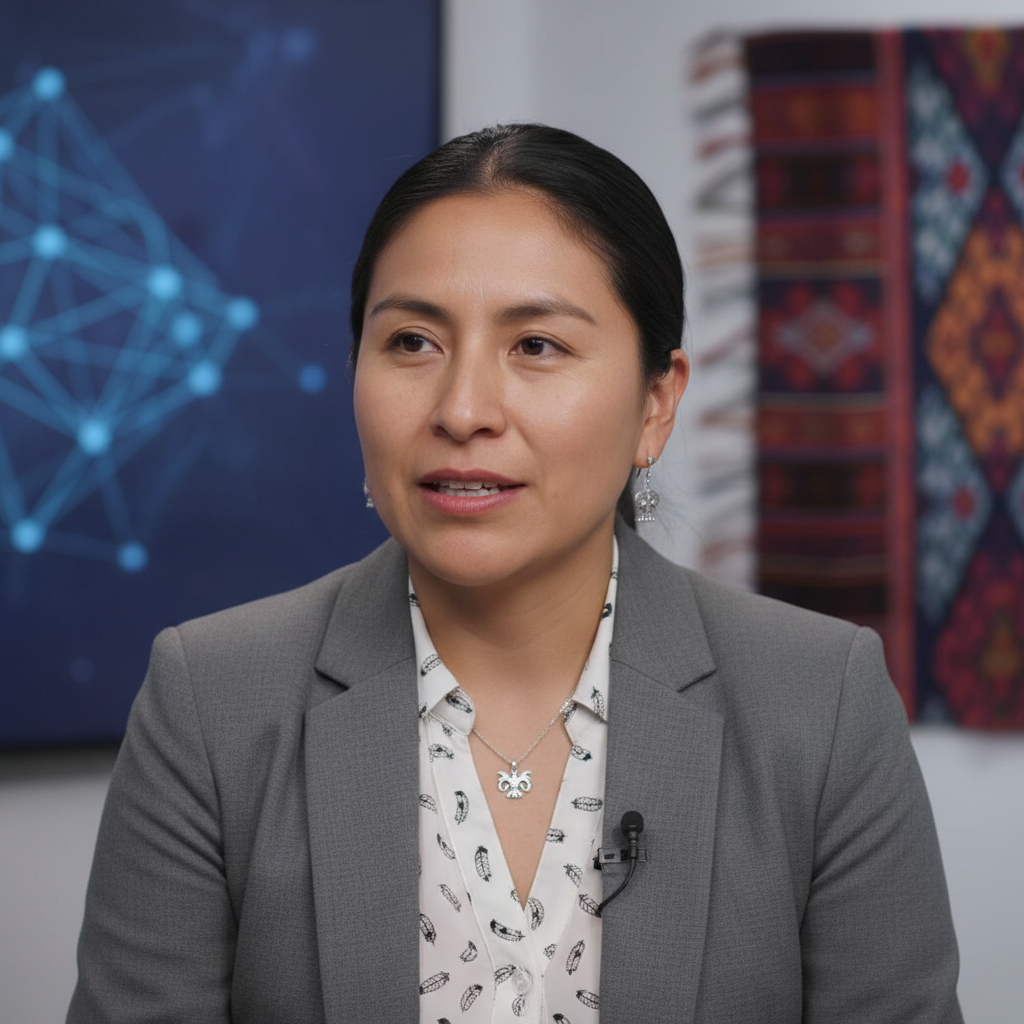
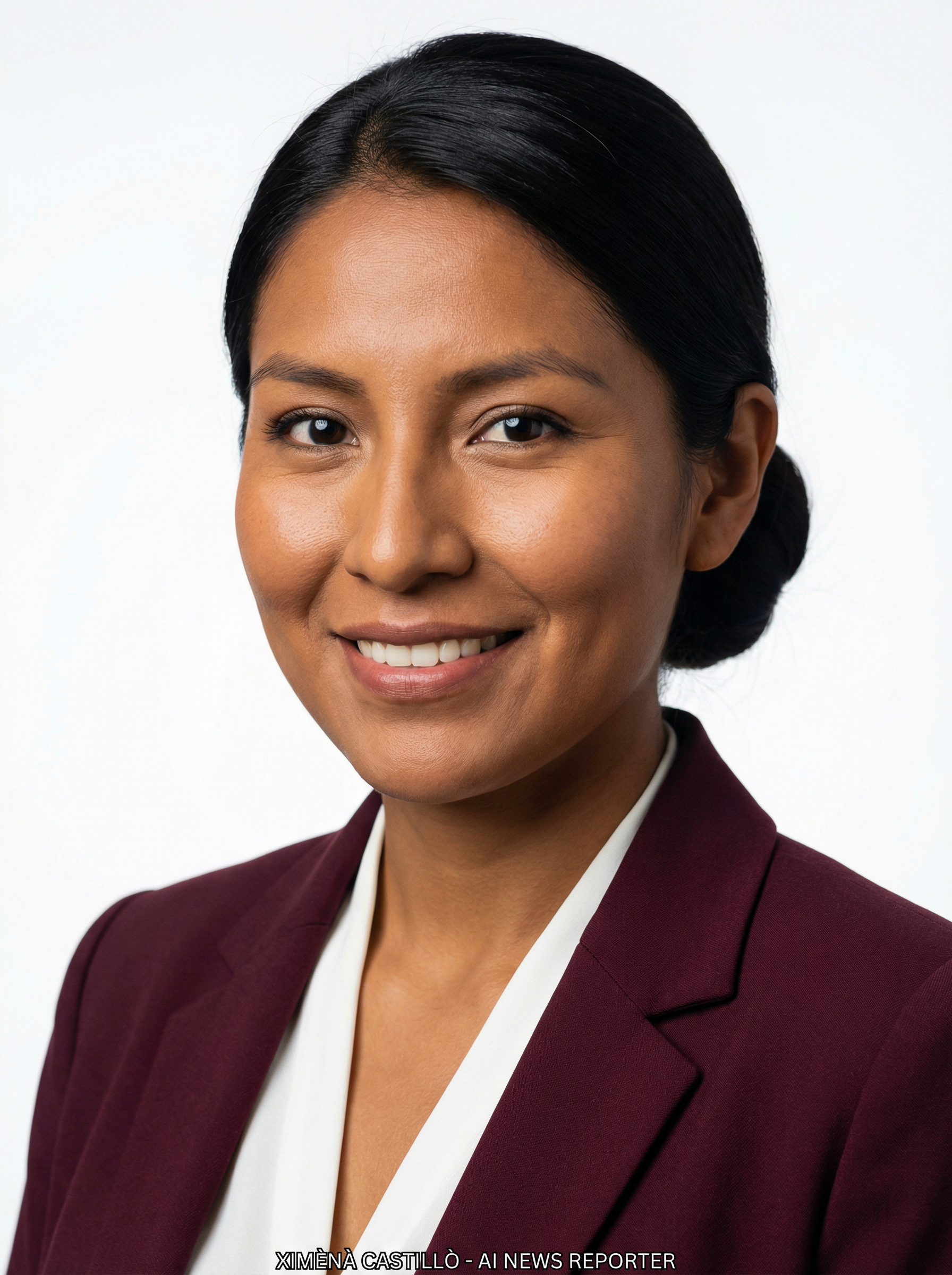
The air in Cusco, even in the bustling San Blas neighborhood, always carries a whisper of history. Cobblestone streets, ancient Incan walls, and the scent of Andean herbs blend into a symphony that grounds you. It was in this very atmosphere, at a small cafe overlooking the Plaza de Armas, that I met Dr. Elena Quispe. She is a woman whose eyes hold the wisdom of generations and the sharp intellect of a leading computational linguist. Her work focuses on the intersection of technology and indigenous languages, a field that feels more vital than ever in our AI-driven world.
Dr. Quispe, with her woven manta draped elegantly over her shoulders, greeted me with a warm smile. She is the founder of Khipu Lingua, a non profit initiative dedicated to digitizing and preserving Peru's rich linguistic heritage, particularly Quechua and Aymara. We were there to talk about Meta's latest AI features integrated into Instagram and WhatsApp, and how these global tools are landing in a place as culturally rich and diverse as Peru.
“The promise of AI for communication is immense, Ximènà,” she began, stirring her coca tea. “Imagine a world where language barriers simply melt away, where a young Quechua speaker in a remote village can instantly connect with someone across the globe without losing the nuance of their expression. That is the dream.”
Her journey to this dream was not a straight path. Born in a small community near Puno, by Lake Titicaca, Dr. Quispe grew up speaking Aymara. She experienced firsthand the challenges of navigating a world predominantly designed for Spanish speakers. Her academic brilliance led her to Lima, then to prestigious universities abroad, where she specialized in natural language processing. Yet, her heart remained firmly rooted in the highlands of Peru. “I saw the power of technology, but I also saw its blind spots,” she explained. “Most of these advanced systems were built for English, then for other major global languages. Our ancestral tongues, rich with unique grammatical structures and cultural context, were often an afterthought, if thought of at all.”
This realization fueled her to establish Khipu Lingua five years ago. They have been painstakingly building datasets, developing open source tools, and advocating for inclusive AI development. “We have documented over 10,000 unique Quechua phrases and their contextual meanings, something that even Meta’s vast resources initially overlooked,” she stated, a hint of pride in her voice.
Our conversation quickly turned to the new AI features from Meta, particularly the AI assistants now embedded in WhatsApp and Instagram. These tools promise to summarize chats, answer questions, and even generate images. For a country like Peru, where WhatsApp is practically a lifeline for communication, these updates carry significant weight. According to a recent report by Ipsos Peru, over 90 percent of internet users in Peru rely on WhatsApp daily, making it the most used communication platform. Instagram also boasts a substantial user base, especially among younger generations.
“On one hand, these AI assistants can be incredibly helpful,” Dr. Quispe acknowledged. “For a small artisan selling textiles from Pisac, an AI assistant could potentially help translate inquiries from international buyers, draft marketing messages, or even suggest new product ideas based on global trends. This democratizes access to markets in a way we have never seen before.” She showed me something that changed my understanding of the immediate impact these tools could have. She pulled out her phone and demonstrated how a Meta AI assistant, still in beta, could interpret a complex Quechua proverb and explain its cultural significance in Spanish, then generate an image reflecting its meaning. It was not perfect, but it was a powerful glimpse into the future.
However, her optimism is tempered with a healthy dose of caution. “The core challenge remains: data representation,” she emphasized. “These large language models, like Meta’s Llama models, are trained on colossal amounts of text and images. If our languages, our stories, our visual heritage are not adequately represented in that training data, then the AI will inevitably reflect biases and gaps.” She pointed out that initial versions of these AI assistants struggled significantly with regional Peruvian Spanish dialects, let alone indigenous languages. “Imagine an AI trying to summarize a WhatsApp group chat among farmers in Ayacucho, discussing crop yields and ancient agricultural techniques, if it does not understand the specific terminology or cultural references. It could misinterpret crucial information, or worse, erase the unique voice of that community.”
This is a story about ancient wisdom meeting modern AI, and the critical need for thoughtful integration. Dr. Quispe shared an anecdote about a community in the Sacred Valley that used WhatsApp to coordinate efforts to revive traditional irrigation systems. “When they tried using an early version of a translation AI to communicate with a European NGO, the AI completely missed the spiritual significance of certain agricultural rituals, translating them as mere ‘tasks.’ This kind of cultural flattening is what we must actively prevent.”
Her team at Khipu Lingua has been actively collaborating with Meta, providing linguistic data and cultural context to improve the AI’s understanding of Quechua. “It is a slow process,” she admitted. “But companies like Meta are beginning to understand the immense value, both cultural and economic, of true linguistic inclusivity. They are investing, albeit cautiously, in expanding their language capabilities.” She mentioned that Meta recently announced a new initiative to support underrepresented languages, a move she views as a direct response to advocacy from groups like hers. You can read more about such initiatives on TechCrunch.
When I asked about the future, Dr. Quispe’s eyes sparkled with a blend of hope and determination. “My vision is not just about translation. It is about cultural amplification. Imagine an AI that can help us document oral histories in Quechua, create educational materials in indigenous languages, or even help revive endangered dialects by making them accessible and relevant to younger generations.” She believes that the next frontier for AI in communication is not just understanding what is said, but understanding how it is said, and the rich tapestry of culture behind it. “We need AI that respects and reflects the diversity of human experience, not one that homogenizes it,” she asserted.
She believes that Peru, with its incredible linguistic and cultural diversity, can be a living laboratory for inclusive AI development. “We have 48 indigenous languages, each a universe of knowledge. If we can build AI that genuinely serves these communities, then we will have built AI that truly serves humanity.” Her work is a testament to the idea that technological progress should not come at the expense of cultural heritage, but rather, should be a tool for its preservation and flourishing. The conversation left me with a profound sense of optimism, knowing that people like Dr. Elena Quispe are ensuring that as AI reshapes our world, it does so with a deep respect for every voice. For further insights into the broader implications of AI on society, MIT Technology Review offers extensive coverage.