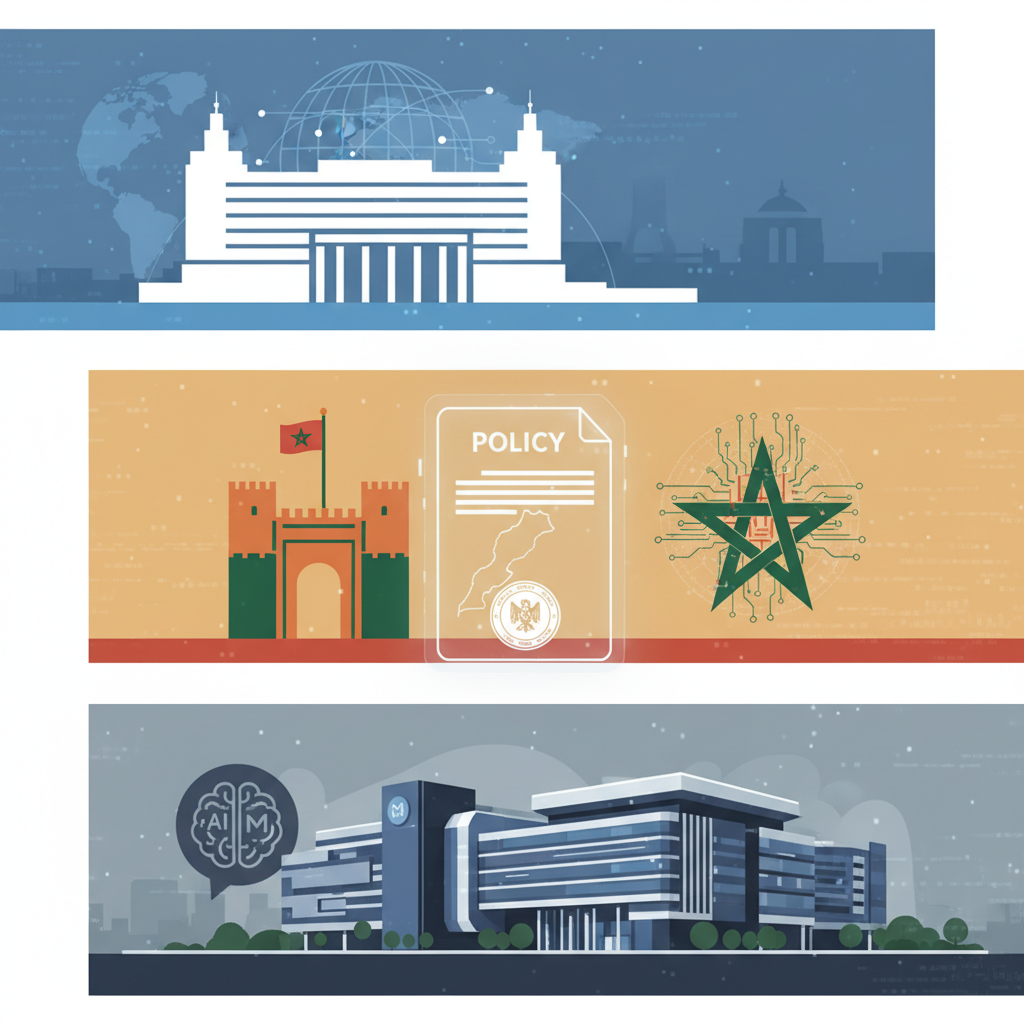
The digital whispers of Casablanca's ancient medina now travel through algorithms, not just word of mouth. It is April 2026, and the world is grappling with a new reality: AI is no longer just in our data centers, it is in our conversations. Meta, the behemoth behind Instagram and WhatsApp, has pushed its generative AI features deeper into these platforms, transforming how billions interact. From automated customer service on WhatsApp Business to AI-generated stickers and conversational agents in Instagram DMs, the integration is profound. But who governs these new digital citizens, especially here in Morocco, a nation at the crossroads of so many worlds?
The policy move is clear: Meta is deploying its Llama 3 powered AI across its family of apps, promising enhanced user experience, greater personalization, and new avenues for commerce. For a company with over 3.98 billion monthly active users across its apps, according to its latest earnings reports, this is not a minor update, it is a fundamental shift. The AI can summarize long chats, suggest replies, even generate images from text prompts within the apps. This level of embedded AI means that for many, their primary interaction with artificial intelligence will be through Meta's interface, often without explicitly realizing it.
Who is behind this, and why? Naturally, Meta is driving this integration. Mark Zuckerberg has been vocal about his vision for AI to be a central component of all Meta products, viewing it as the next computational frontier after mobile. The 'why' is multifaceted: to enhance user engagement, to provide more sophisticated tools for businesses, and crucially, to stay competitive with rivals like OpenAI's ChatGPT and Google's Gemini. They are betting that seamless AI integration will lock users deeper into their ecosystem. The sheer scale of Meta's user base means that these AI features will touch more lives globally than almost any other AI deployment to date. Here in Morocco, where WhatsApp is practically a national utility for communication and small business, the impact is particularly acute.
What does this mean in practice for Morocco? It means that a significant portion of our daily digital interactions, from family group chats to negotiating prices with a souk vendor, will soon be mediated or augmented by AI. Imagine an AI assistant helping a small artisan in Fes translate product descriptions for an international buyer on WhatsApp, or an Instagram AI suggesting local Moroccan recipes based on a user's dietary preferences. The potential for economic empowerment and cultural exchange is immense. However, it also raises questions about data privacy, algorithmic bias, and content moderation. If Meta's AI is trained on global datasets, how well does it understand Moroccan Darija, or the nuances of our cultural expressions? Will it inadvertently promote certain narratives or censor others? This is where the regulatory challenge truly begins.
Industry reaction has been a mix of cautious optimism and competitive urgency. Smaller Moroccan tech startups, many of them based in Casablanca, are watching closely. Some see opportunities to build services on top of Meta's AI platforms, leveraging the massive user base. Others worry about being overshadowed or having their innovations absorbed. Dr. Omar El Fassi, a prominent Moroccan AI researcher and CEO of a local AI solutions firm, expressed his concerns. “While the promise of these tools is undeniable, we must ensure that the underlying AI models are culturally sensitive and ethically aligned with our values. We cannot simply import black box solutions from Silicon Valley without critical examination,” he stated in a recent tech forum in Rabat. “Morocco sits at the crossroads of Africa, Europe, and the Arab world and that's our AI superpower. We need to leverage that unique position to shape, not just consume, these technologies.”
Civil society groups, particularly those focused on digital rights and media literacy, are raising red flags. Organizations like the Moroccan Center for Digital Innovation and Public Policy are concerned about the implications for free speech, misinformation, and data sovereignty. “When AI generates content or summarizes conversations, who is accountable for errors or harmful outputs?” asks Fatima Zahra Benali, a legal expert at the Center. “The sheer volume of communication on these platforms means that even minor biases in the AI can have massive societal effects. We need transparency, clear redress mechanisms, and robust data protection, especially for sensitive personal communications.” The European Union's AI Act, set to fully take effect in the coming years, offers a potential blueprint, but its extraterritorial reach is still being tested, and it may not fully address the specific concerns of African nations. Reuters has been closely tracking the global regulatory landscape.
Will it work? This is the million-dirham question. The effectiveness of these AI features will depend on multiple factors. From a technical standpoint, Meta's Llama 3 is a powerful model, reportedly performing well on various benchmarks. However, integrating it seamlessly into diverse cultural contexts, particularly in multilingual environments like Morocco, is a monumental task. The Sahara is vast, but the data flowing across it is vaster, and ensuring that this data is processed ethically and effectively requires more than just technical prowess, it requires cultural intelligence and regulatory foresight.
From a policy perspective, success hinges on a delicate balance. Regulators in Morocco, often looking to the EU for guidance, are exploring frameworks that protect citizens without stifling innovation. The Moroccan Digital Development Agency, for example, is actively engaging with stakeholders to draft national guidelines for AI use. However, the global nature of Meta's platforms means that national regulations, while crucial, might only be part of the solution. International cooperation and harmonized standards will be essential to avoid a fragmented digital space where different rules apply based on geographic location. MIT Technology Review often covers the challenges of global AI governance.
Ultimately, the success of Meta's AI integration, particularly in regions like North Africa, will be measured not just by user engagement metrics or ad revenue, but by its ability to genuinely empower users, respect cultural diversity, and operate within a robust ethical and legal framework. The challenge for Morocco and other African nations is to ensure that these powerful tools serve our societies, rather than dictate our digital destinies. Casablanca is becoming the AI capital nobody expected, and as such, we must be proactive in shaping the future of these technologies, not merely reactive to their deployment. The conversation has just begun, and it is one we must all participate in, in every language, across every platform. For more insights into the broader impact of AI on communication, you can explore articles on The Verge's AI section.