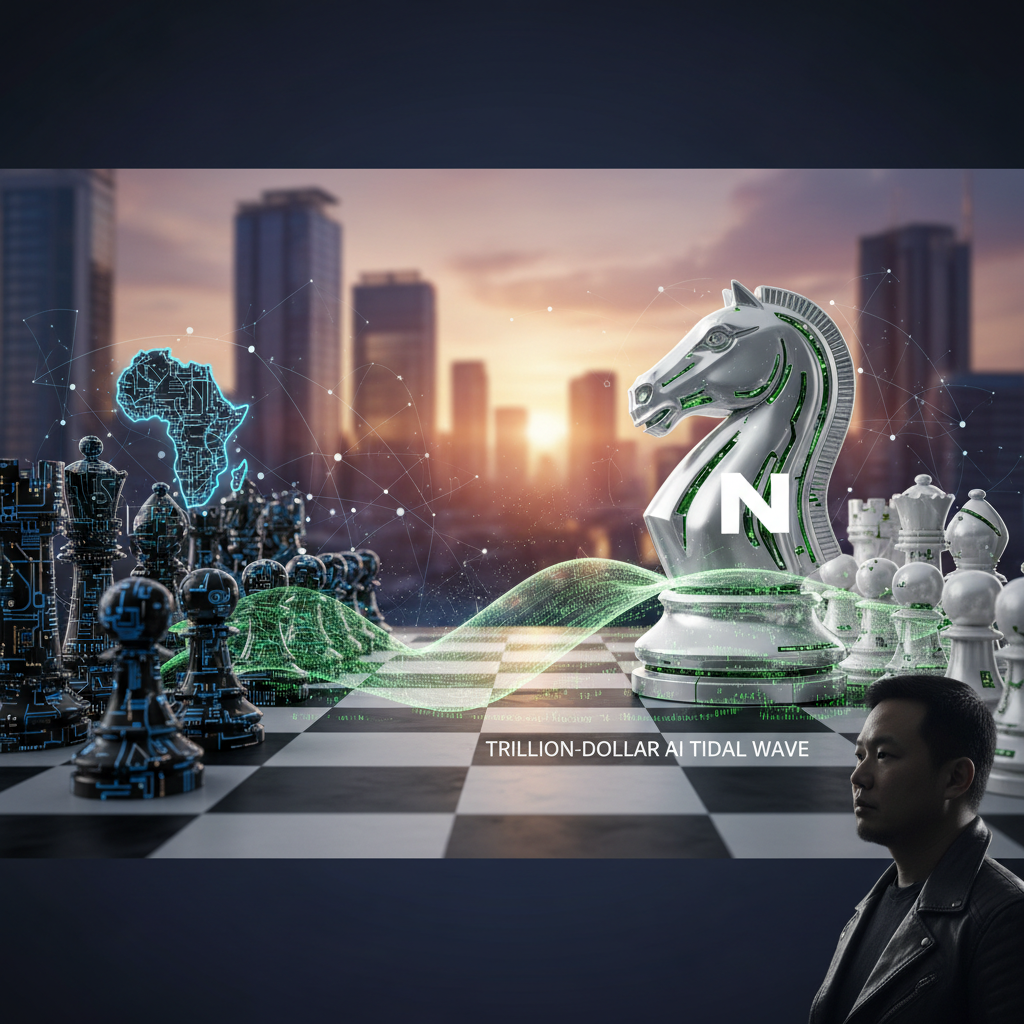

My people, have you been following the news from Jensen Huang and NVIDIA? It is absolutely electrifying, isn't it? Every time that man steps onto a stage, he doesn't just announce products, he unveils the future. The recent keynote, with its dazzling array of new GPUs, software platforms, and ecosystem expansions, has left the tech world buzzing. NVIDIA is not just selling chips anymore, they are selling the very infrastructure of artificial intelligence, a trillion-dollar ecosystem that is growing faster than a mango tree in the rainy season. But here in Accra, as we celebrate our own vibrant tech scene, a critical question echoes in the air: what does this mean for Ghana, and indeed, for the entire African continent?
The Strategic Move: NVIDIA's Full-Stack AI Dominance
Jensen Huang's strategy is clear and audacious: build an unassailable, end-to-end AI platform. It is not just about the raw power of their new Blackwell architecture, which promises mind-boggling performance jumps for training and inference. It is also about the software layers, the Cuda platform, the NVIDIA AI Enterprise suite, and the burgeoning network of cloud providers and data centers leveraging their hardware. They are not just providing the shovel for the gold rush, they are building the entire mining town, complete with roads, electricity, and even the gold panning equipment. This integrated approach creates a powerful flywheel effect, making it incredibly difficult for competitors to dislodge them. Their recent announcements underscore a push into sovereign AI initiatives, edge computing, and even digital twins, aiming to embed NVIDIA technology into every facet of the global digital economy.
Context and Motivation: The Global AI Arms Race
Why this relentless push? The motivation is simple: AI is the new oil, and GPUs are the refineries. Every major nation, every industry, and every forward-thinking company recognizes that leadership in AI will define economic and geopolitical power in the coming decades. From large language models like OpenAI's GPT series and Google's Gemini to advanced robotics and scientific discovery, the demand for computational horsepower is insatiable. NVIDIA, having cornered the market on the specialized hardware needed for AI, finds itself at the epicenter of this global transformation. Their market capitalization, hovering around the trillion-dollar mark, is a testament to this strategic foresight. They are motivated by maintaining this lead, expanding their reach, and ensuring that their ecosystem remains the default choice for anyone serious about AI. It is a land grab, but for digital territory.
For Africa, this context is crucial. We are not just consumers of technology; we are increasingly becoming innovators and creators. The African startup ecosystem attracted over $5.2 billion in funding in 2023, with a significant portion going into AI-driven solutions. Ghana is proving the skeptics wrong, with hubs like Accra and Kumasi fostering incredible talent. We need to understand this global race not as spectators, but as active participants.
Competitive Analysis: The Titans and the Challengers
NVIDIA's dominance is undeniable, holding an estimated 80 percent or more of the market for AI chips. However, they are not without challengers. Intel, with its Gaudi accelerators, and AMD, with its MI series, are making concerted efforts to chip away at NVIDIA's lead, often emphasizing open standards and competitive pricing. Cloud providers like Amazon, Google, and Microsoft are also developing their own custom AI chips, such as AWS Trainium and Inferentia, Google's TPUs, and Microsoft's Maia and Cobalt. These internal efforts aim to reduce reliance on external suppliers and optimize for their specific cloud architectures. Then there are the startups, the nimble innovators, exploring new architectures and approaches to AI processing.
However, NVIDIA's strength lies not just in its hardware, but in its Cuda software platform, which has become the de facto standard for AI development. This robust developer ecosystem, built over decades, is a massive moat. Developers are deeply invested in Cuda, and porting existing codebases to other platforms is a significant undertaking. This network effect is a powerful competitive advantage that goes beyond mere hardware specifications.
For Ghana, this competitive landscape presents both opportunities and challenges. Relying solely on one vendor, no matter how dominant, can create vulnerabilities and limit innovation. We need to foster an environment that encourages diverse hardware and software adoption, ensuring our developers have choices and our solutions are resilient.
Strengths and Weaknesses: A Ghanaian Perspective
From where I stand in Accra, NVIDIA's strengths are obvious. Their hardware is unparalleled in performance, their software ecosystem is mature and widely adopted, and their continuous innovation means they are always pushing the boundaries of what is possible. This allows Ghanaian researchers and startups to leverage cutting-edge tools to solve local problems, from optimizing agricultural yields with AI to developing advanced medical diagnostics. Imagine the impact of these powerful GPUs on our burgeoning data centers, accelerating research at institutions like Ashesi University or the Kwame Nkrumah University of Science and Technology. The numbers don't lie, access to this level of compute can unlock incredible potential.
However, there are significant weaknesses, particularly from an African development perspective. The primary concern is cost. NVIDIA's high-performance GPUs are incredibly expensive, often priced out of reach for many African startups and research institutions. This creates a digital divide, where access to the most powerful AI tools becomes a privilege, not a standard. Furthermore, the reliance on a proprietary ecosystem like Cuda can limit flexibility and foster vendor lock-in. What happens if NVIDIA's priorities shift, or if their pricing models become unsustainable for emerging markets?
Another critical point for cybersecurity, my area of focus, is the concentration of power. As more of the world's AI infrastructure relies on a single company's hardware and software, it creates a single point of failure and a potential target for sophisticated cyberattacks. Ensuring the security and integrity of this foundational layer becomes paramount, especially for nations seeking digital sovereignty. We need to ask: are we building our digital future on solid ground, or on sand owned by someone else?
Verdict and Predictions: Navigating the AI Frontier
NVIDIA's strategy is a masterclass in market dominance, and Jensen Huang's vision is undeniably shaping the future of AI. For Ghana and Africa, this presents a dual reality. On one hand, the sheer power and accessibility of NVIDIA's tools offer unprecedented opportunities for innovation, economic growth, and solving pressing societal challenges. We can leapfrog traditional development stages by directly applying advanced AI to our unique contexts. Just look at the incredible work being done with AI in agriculture, for example, optimizing crop yields and predicting weather patterns, areas where Ghana can truly shine.
On the other hand, we must be acutely aware of the risks. Over-reliance on a single, proprietary ecosystem can stifle local innovation, create economic dependencies, and raise serious questions about digital sovereignty. My prediction is that African nations, including Ghana, will increasingly pursue a multi-pronged strategy. We will embrace the power of NVIDIA's ecosystem where it makes strategic sense, leveraging their performance for critical applications. However, we will also invest heavily in developing local AI talent, fostering open-source alternatives, and exploring diverse hardware options. This includes supporting initiatives that build local data centers, develop homegrown AI models, and train a new generation of engineers who understand not just how to use these tools, but how to build them from the ground up.
We need to champion open standards and collaborative research. Organizations like the African Union and regional bodies must advocate for equitable access to AI infrastructure and knowledge transfer. The goal is not to resist NVIDIA's progress, but to ensure that Africa benefits from it on its own terms, building a resilient and sovereign digital future. This is bigger than anyone realizes, and our proactive engagement today will determine our place in the AI-powered world of tomorrow. We must be architects of our own destiny, not just consumers of others' innovations. The journey ahead is exciting, and Ghana is ready to contribute to this global conversation. Reuters often highlights these global tech shifts, and it is imperative that our voices are heard in these discussions. We are not just observing; we are building. For more insights into the broader AI landscape, I highly recommend following the excellent coverage on The Verge. Our own journey in AI, particularly in cybersecurity, is also rapidly evolving, and you can read more about it in our recent piece on Apple's M-Series Chips: Is Offline AI a Trojan Horse for Digital Colonialism in Africa? [blocked]. The future is bright, my friends, let us build it together.