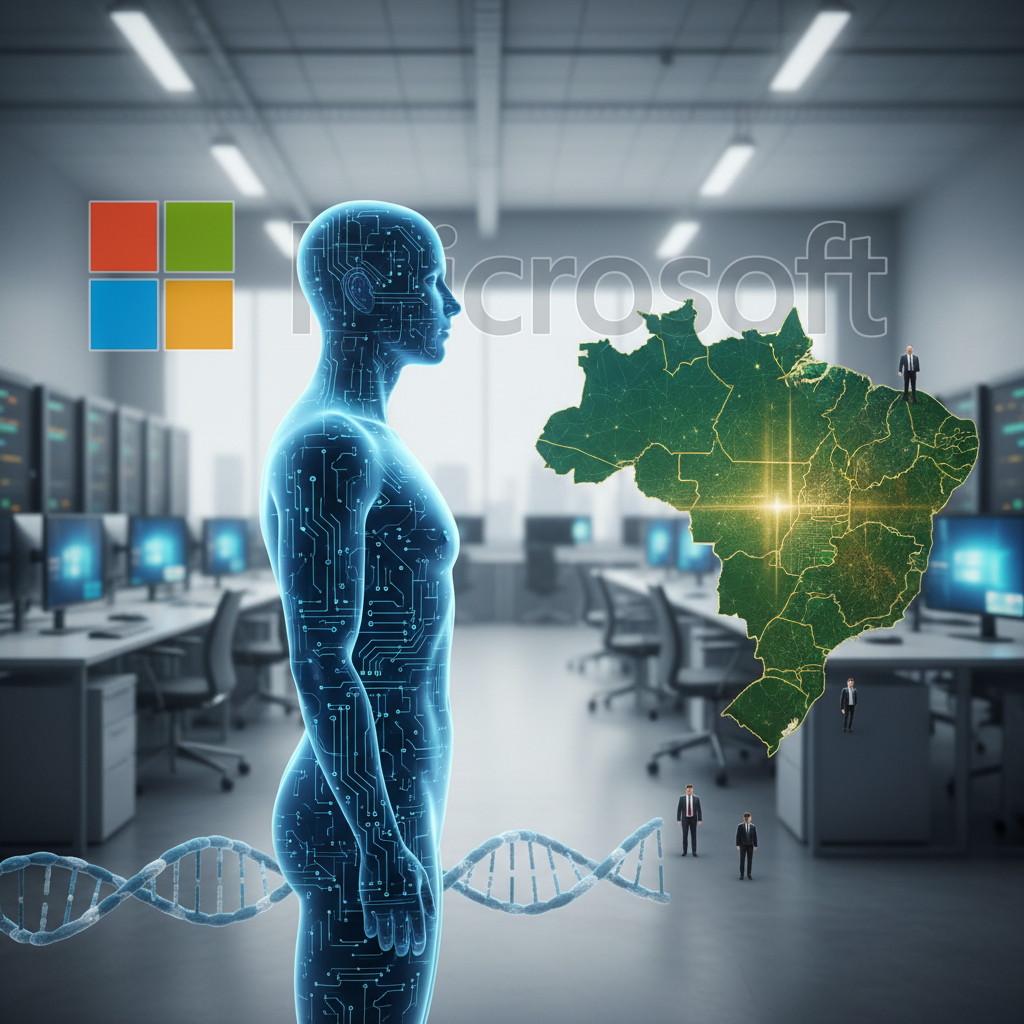

The air in São Paulo's Faria Lima district, Brazil's financial heart, often hums with the electric charge of ambition and capital. Yet, in late March 2024, a different kind of current coursed through the digital corridors of power, one originating thousands of kilometers away in Silicon Valley. The news was stark: Inflection AI, once a promising challenger in the generative AI space, had effectively ceased to exist as an independent entity. Its co-founders, Mustafa Suleyman and Karén Simonyan, along with most of their engineering talent, were absorbed into Microsoft to form a new consumer AI division. This wasn't merely a corporate maneuver; it was a seismic event, a talent grab of epic proportions, and its tremors are still being felt, even here in Brazil.
For many, the narrative was simple: a startup, unable to compete with giants like OpenAI and Google, sold its most valuable asset, its people, to a larger player. But as an investigative journalist, I know better than to accept the surface story. The investment trail leads to a more complex truth, one that illuminates the precarious nature of AI innovation and its profound implications for emerging markets like ours.
In Brazil, the initial reaction among AI startups and venture capitalists was a mix of apprehension and strategic recalibration. The Inflection saga underscored a brutal reality: even with substantial funding, reportedly over $1.3 billion, and a star-studded team, independent AI ventures face an uphill battle against the hyperscalers. This development has forced Brazilian companies to reassess their AI strategies, particularly concerning talent acquisition and retention. The fear is palpable: could Brazil's brightest AI minds be the next target for global tech giants, leaving our local ecosystem depleted?
Consider the healthcare sector, a critical area where Brazil has been making significant strides in AI adoption. Hospitals like Hospital Israelita Albert Einstein and Sírio-Libanês have invested heavily in AI for diagnostics, personalized treatment plans, and operational efficiency. According to a recent report by McKinsey, AI adoption in Brazilian healthcare was projected to reach 35% by late 2025, with an estimated ROI of 15-20% within two years for early adopters. However, the Microsoft-Inflection deal introduces a new variable: the consolidation of foundational AI models and talent. If the most advanced models and the brightest minds are concentrated within a few global behemoths, will local innovators have access to the tools and expertise needed to compete or even to customize these solutions effectively for Brazil's unique public health challenges, such as those faced by the Sistema Único de Saúde, our public healthcare system?
My investigation reveals that while some Brazilian companies view this consolidation as a threat, others see opportunity. Firms like Stefanini and CI&T, major players in IT services and digital transformation, are doubling down on partnerships with Microsoft, leveraging its expanding AI capabilities. "The integration of Inflection's talent into Microsoft means an acceleration of innovation within the Microsoft ecosystem," explains Carlos Pessoa, CEO of a prominent Brazilian AI consultancy. "For our clients who are already heavily invested in Azure, this translates to more sophisticated tools and potentially faster deployment of AI solutions. It's a pragmatic shift, prioritizing access to cutting-edge technology over the romantic ideal of independent innovation." This perspective highlights a common Brazilian business trait: adaptability and a willingness to integrate global solutions to solve local problems.
However, the impact on workers in Brazil is more nuanced. While the demand for AI specialists remains high, the nature of that demand is subtly changing. There is a growing emphasis on engineers and data scientists who can effectively integrate and customize large language models from providers like Microsoft and OpenAI, rather than those focused on building foundational models from scratch. This could lead to a skills gap if educational institutions and corporate training programs do not adapt quickly enough. "We are seeing a pivot in the type of AI talent companies are seeking," says Dr. Ana Paula França, Director of AI Research at the University of São Paulo. "The focus is shifting from pure research and model development to application engineering and ethical deployment. This is a critical moment for our universities to align curricula with market needs, ensuring our graduates are not just consumers of global AI, but active shapers of its local application." This sentiment resonates deeply with Brazil's long-standing struggle to retain its top scientific talent, often lost to more developed economies.
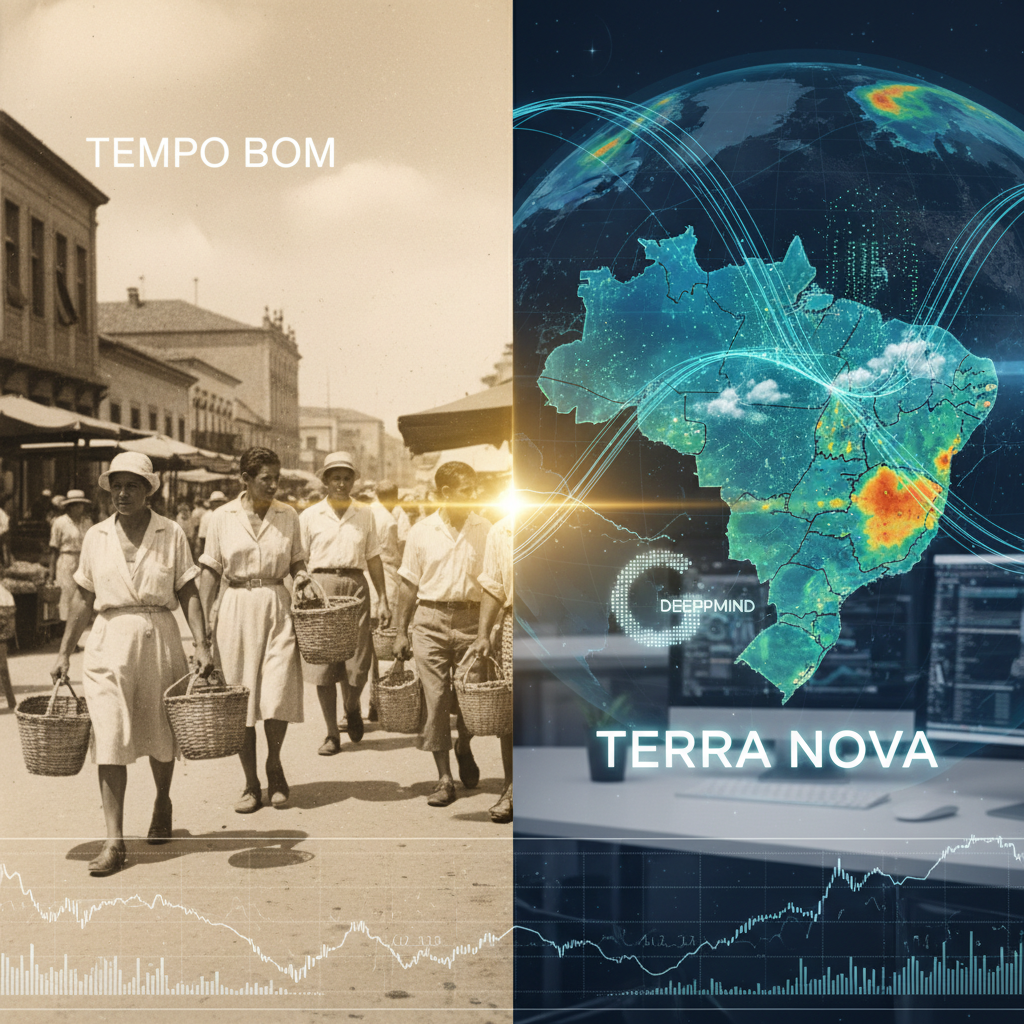
Brazil's AI funding landscape hides surprises. While global venture capital might become more cautious about backing independent foundational model startups, local investment in AI applications and vertical-specific solutions is robust. Funds like Canary and Astella Investimentos continue to pour capital into Brazilian startups leveraging AI for agriculture, fintech, and logistics. For instance, Agrotools, a Brazilian agritech company, uses AI to monitor crops and predict yields, attracting significant local investment. Their success hinges not on building a new LLM, but on applying existing AI technologies to solve specific, high-value problems in Brazil's agricultural powerhouse. This pragmatic approach safeguards against the kind of existential crisis that befell Inflection AI.
Expert analysis from global institutions further clarifies the situation. A report from Bloomberg Technology noted that the Inflection acquisition was a clear signal of the ongoing 'AI arms race' among tech giants, where talent and intellectual property are paramount. Satya Nadella, Microsoft's CEO, has been quoted emphasizing the strategic importance of AI talent, stating, "In this new era of AI, talent is the ultimate differentiator." This statement, made publicly, underscores the motivation behind such aggressive talent acquisitions. The consolidation of talent within a few dominant players could stifle the diversity of approaches and perspectives, which is crucial for truly innovative and equitable AI development, especially in diverse cultural contexts like Brazil.
What is coming next for Brazil is a dual challenge and opportunity. On one hand, the pressure to attract and retain AI talent will intensify, potentially leading to 'brain drain' if local opportunities cannot match global ones. On the other hand, the increased accessibility of powerful, pre-trained AI models from Microsoft and others could democratize AI development, allowing smaller Brazilian companies to build sophisticated applications without the astronomical costs of foundational research. The key will be to foster an ecosystem that encourages innovation in application, ethical deployment, and localized solutions, rather than attempting to compete directly with the deep pockets of Silicon Valley in foundational AI research. Brazil must carve its own niche, leveraging its unique challenges and opportunities to become a leader in AI application, not merely a consumer of global technologies. The future of AI in Brazil, much like a complex samba, will require precise steps, careful rhythm, and a deep understanding of our unique cultural beat. For more insights into the broader AI landscape, readers can refer to MIT Technology Review for in-depth analysis of these global shifts. The question remains: will Brazil dance to its own tune, or will it merely follow the lead of the global tech giants?