
The air in Bengaluru, usually thick with the hum of innovation and the occasional traffic snarl, feels a bit heavier today. It is not just the monsoon clouds gathering, but a palpable tension hanging over India's burgeoning AI sector. We have all heard the whispers, the geopolitical rumbles about an AI cold war brewing between global superpowers. Frankly, most of us here in India, busy building our own digital future, tended to view it as a distant storm, something for the Washington and Beijing types to fret over. Well, the storm just made landfall, right here on our shores, and it is hitting us where it hurts most: the very silicon that powers our AI dreams.
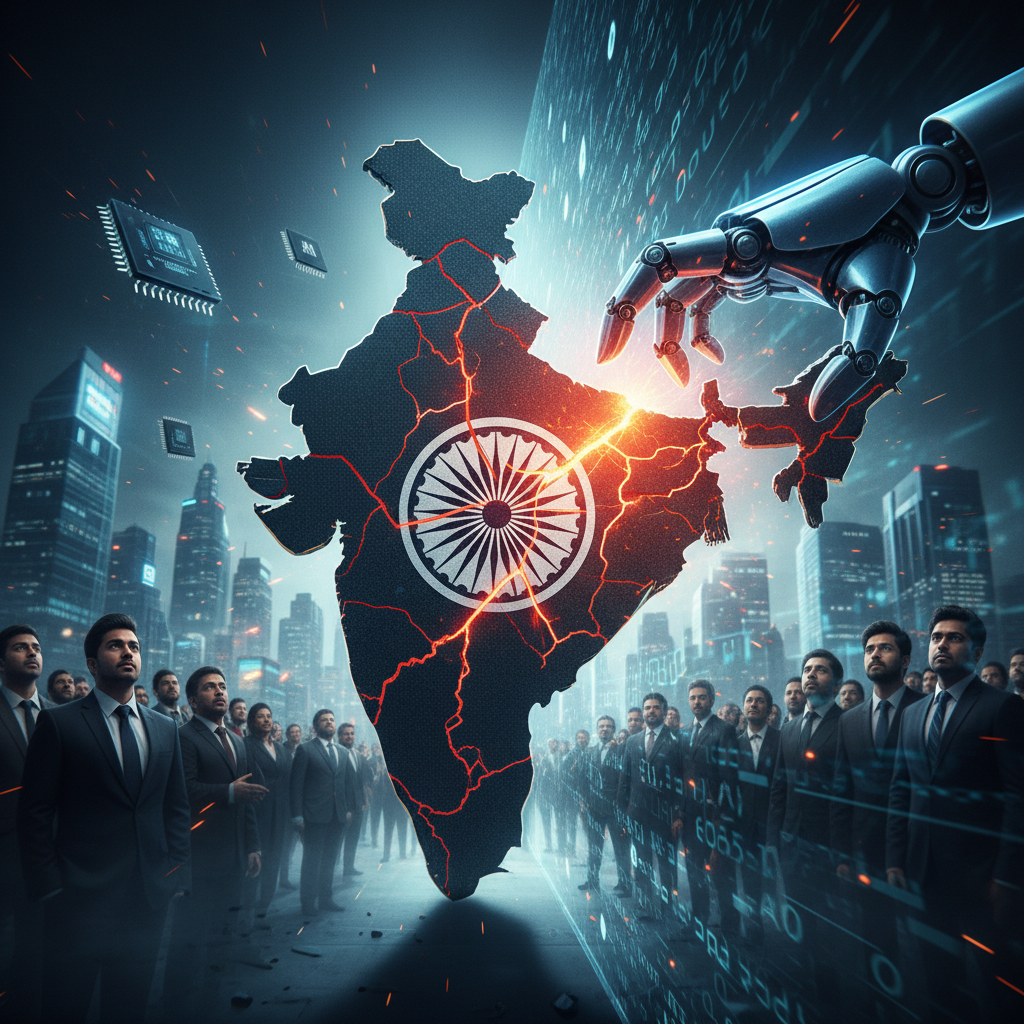
The breaking news, which has sent ripples through every tech park from Hyderabad to Gurugram, is the sudden, almost surgical, tightening of export controls on advanced AI chips and manufacturing equipment. This is not just about a few high-end GPUs; we are talking about the foundational infrastructure needed to train and deploy large language models, to develop cutting-edge robotics, and to build the next generation of AI applications. The latest restrictions, reportedly spearheaded by the US with tacit support from allies, are ostensibly aimed at preventing certain nations from gaining a strategic advantage in AI. Oh, the irony, because right now, it feels like everyone else is caught in the crossfire.
For months, Indian startups and established tech giants alike have been navigating an already complex global supply chain. The 'Make in India' initiative has been pushing for domestic manufacturing, a commendable goal. But let us be real, for advanced semiconductors, we are still largely dependent on a handful of global players, primarily in Taiwan, South Korea, and the US. This new wave of restrictions, impacting not just the sale of chips but also the highly specialized machinery from companies like Asml and Lam Research, means that even if we wanted to build more of these chips ourselves tomorrow, the tools to do so are now under lock and key, or at least under very strict scrutiny.
"This is a significant setback for India's aspirations to become a global AI hub," stated Dr. K. VijayRaghavan, former Principal Scientific Adviser to the Government of India, in a recent interview. "While we have immense talent and a robust software ecosystem, our hardware dependency is our Achilles' heel. These controls will inevitably slow down our progress in developing indigenous AI capabilities, particularly in areas requiring massive computational power." His words echo the growing concern among policymakers and industry leaders who have been championing India's digital transformation.
The immediate impact is already being felt. Several Indian AI startups, particularly those working on foundational models or advanced robotics, are reporting delays in securing necessary hardware. One founder, who wished to remain anonymous to avoid jeopardizing future supply, told me, "We had orders placed months ago for NVIDIA H100 GPUs, and now they are either indefinitely delayed or being diverted. We are scrambling to find alternatives, but the market is drying up, and prices are skyrocketing. It is like trying to build a rocket without being able to buy the fuel." This is not just about business; it is about national strategic advantage.
This situation highlights a stark reality: the global AI race is not just about who has the smartest algorithms, but who controls the physical infrastructure. It is a digital version of the old spice routes, only now the commodity is silicon, and the gatekeepers are nations, not empires. The US, with its formidable tech giants and chip design prowess, and China, with its aggressive state-backed investment in AI, are locked in a high-stakes chess match. India, a rising power with its own ambitions, finds itself navigating a minefield.
"We are seeing a weaponization of technology, where access to critical components becomes a tool of foreign policy," observed Professor C. Raja Mohan, a leading strategic affairs analyst, during a panel discussion at the Observer Research Foundation. "India needs to accelerate its self-reliance in semiconductor manufacturing, not just for economic reasons, but for national security. Relying on external supply chains, however friendly the nations involved, exposes us to these geopolitical shocks." This is not a new sentiment, of course. Silicon Valley discovered what Kerala knew all along: self-sufficiency, especially in critical resources, is not just a virtue, it is a necessity.
What happens next? The government is reportedly exploring various avenues, including diplomatic channels to secure exemptions or ensure a steady supply for critical sectors. There is also renewed impetus on the 'India Semiconductor Mission', which aims to attract investments in chip manufacturing. Vedanta and Foxconn's joint venture, though now dissolved, and the more recent Micron Technology plant in Gujarat, are steps in the right direction. But these are long-term projects, requiring billions in investment and years to come to fruition. In the immediate future, Indian companies might have to innovate around hardware limitations, perhaps by focusing on more efficient algorithms or by leveraging cloud-based AI infrastructure, which itself relies on these very chips.
This development is a stark reminder that in the age of AI, national sovereignty extends beyond borders and into the very fabric of our digital infrastructure. For DataGlobal Hub readers, especially those in the startup ecosystem, this means a recalibration of strategies. Diversifying supply chains, investing in domestic R&D, and perhaps even exploring open-source hardware alternatives will become paramount. The days of simply buying the best available tech are, for now, complicated by the shifting sands of global power. It is a tough pill to swallow, especially when our own ambitions are so grand. File this under 'things that make you go hmm' and then immediately start looking for solutions.
The geopolitical chess game is no longer played just in distant capitals; its moves are now directly impacting the daily operations of a startup in Bengaluru, or a research lab in Delhi. India's journey to becoming a global AI leader just got a lot more challenging, but then again, we Indians have always thrived on overcoming challenges. The question now is, can our ingenuity outpace the global chip squeeze? Our future, and perhaps a significant chunk of the world's AI landscape, depends on the answer. For more on the global tech landscape, check out Reuters Technology. You can also follow the latest in AI research and development at MIT Technology Review. The stakes are higher than ever, and the game is just getting started. For a deeper dive into how AI is shaping the global economy, consider reading our analysis on the economy of AI [blocked]. This is not just about chips; it is about destiny.