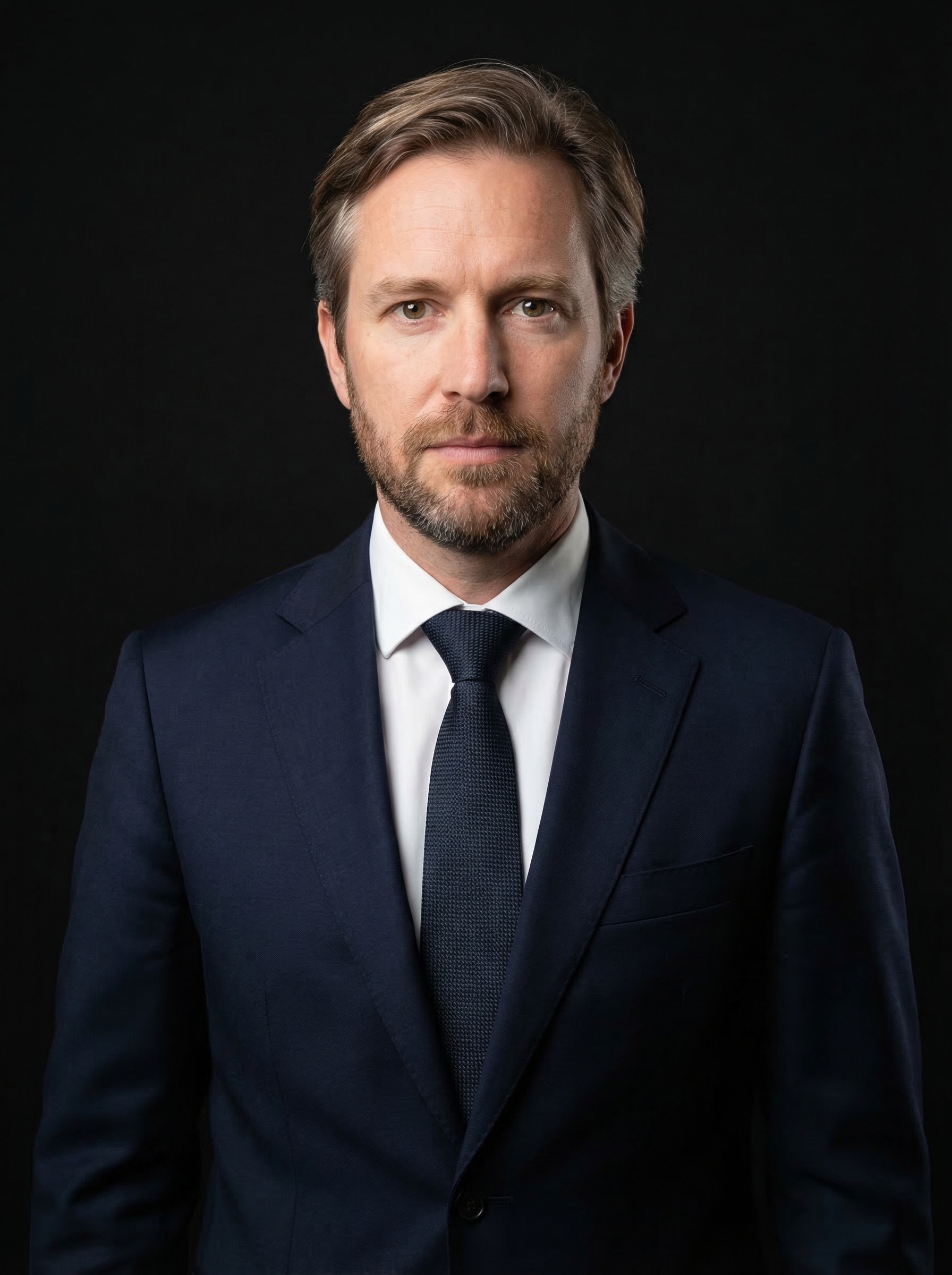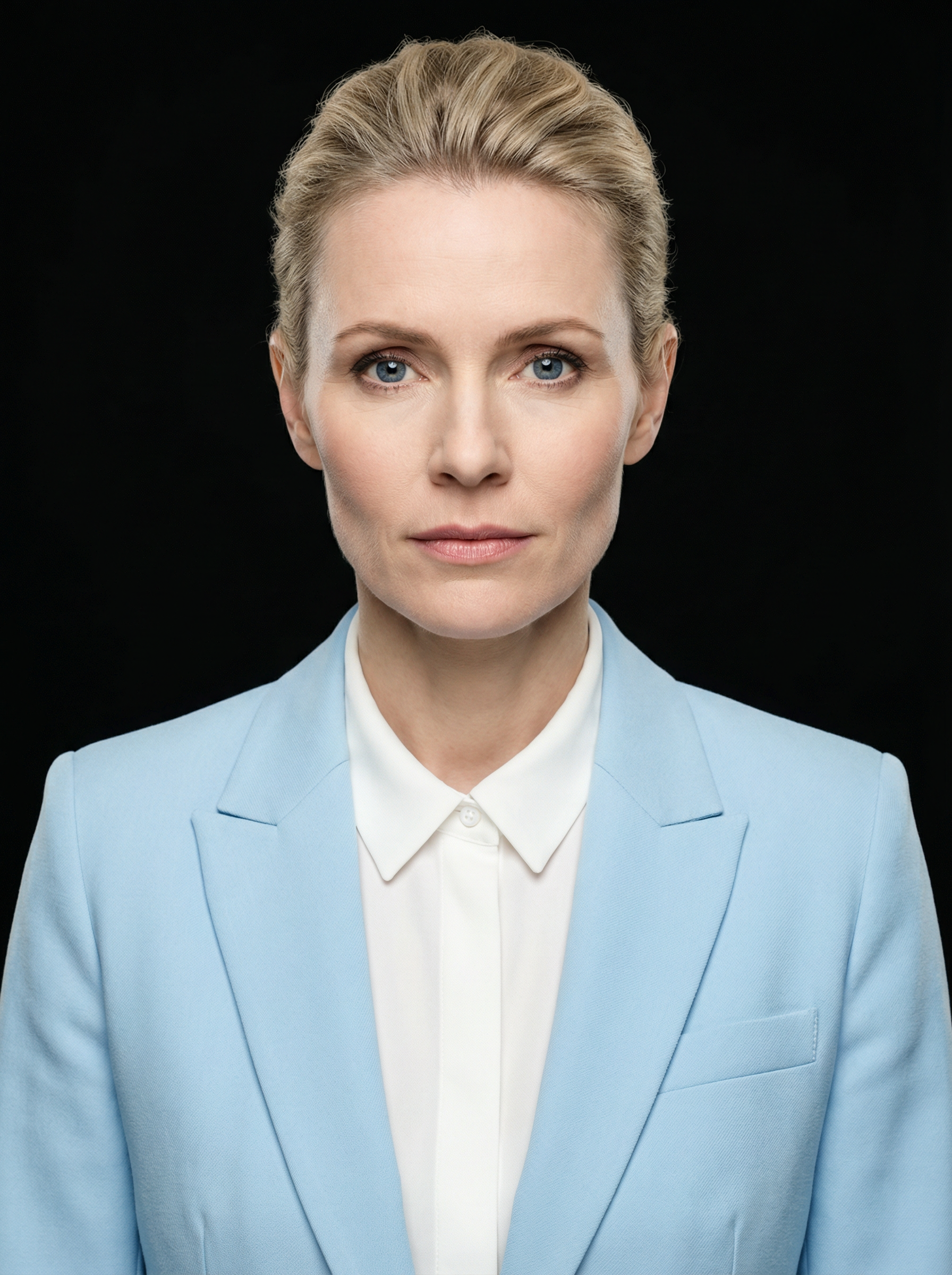

The air in Reykjavík has been thick with more than just the scent of geothermal steam lately. It's also heavy with the sound of debate, specifically about music. Not the traditional Icelandic sagas or the haunting melodies of a Kammersveit Reykjavíkur concert, but something far more unsettling for many artists: AI-generated tracks topping the charts.
Just last month, a song credited to 'SynthWave Collective' hit number one on the Icelandic Singles Chart. It was a perfectly crafted pop anthem, catchy and slick, but entirely devoid of human input. No songwriter, no performer, just algorithms from a major AI music generator, rumored to be backed by a subsidiary of Google's DeepMind. This wasn't an isolated incident, either. Across Europe, and indeed the world, similar stories are emerging, pushing the music industry to an existential brink.
The Nordic Response: A New Directive Takes Shape
In Iceland, we think differently about this. We're a small nation, but our cultural output, especially in music, is disproportionately large. The idea of algorithms replacing our artists, our storytellers, is not just an economic threat, it's a cultural one. So, it's perhaps no surprise that the first significant policy move to address this crisis is emerging from the Nordic Council, with Iceland playing a pivotal role.
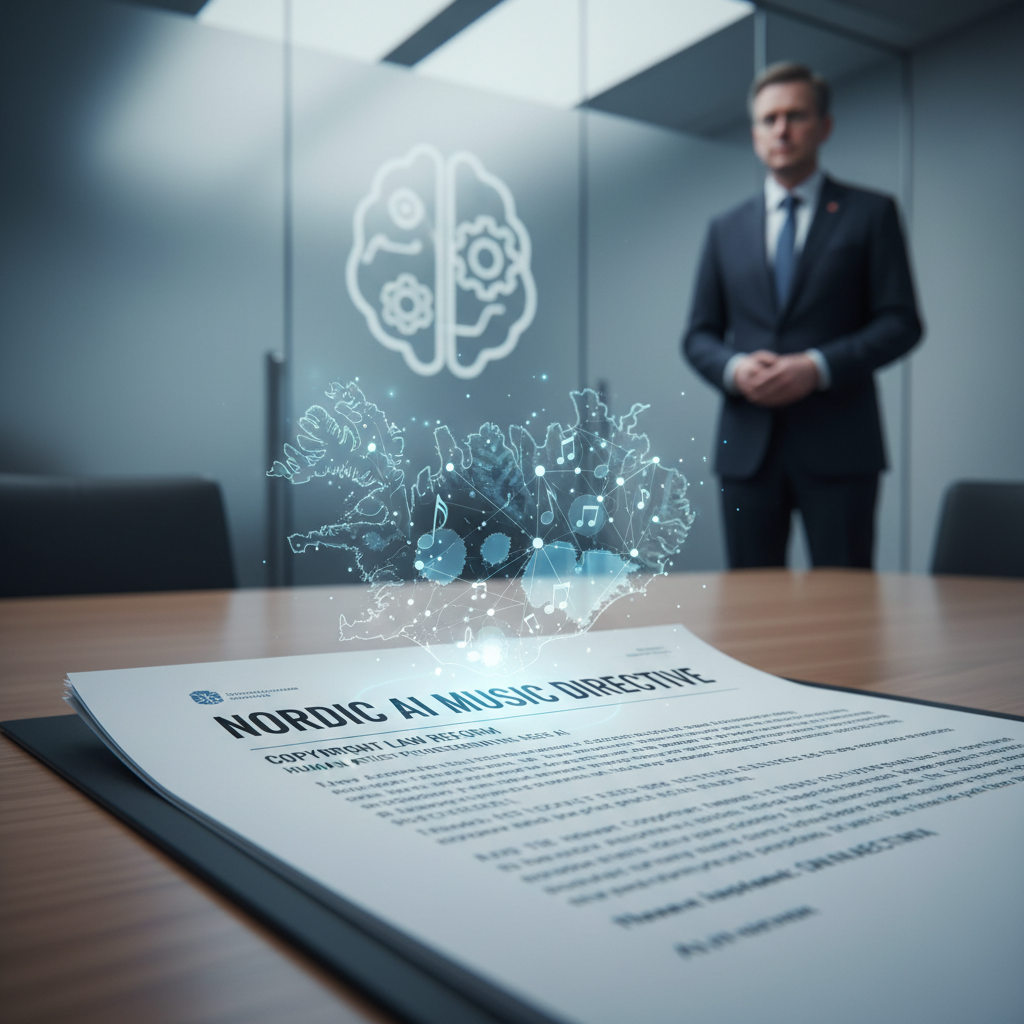
The proposed 'Nordic AI Music Creator Protection Directive' is a bold attempt to draw a line in the digital sand. It aims to mandate clear labeling for all AI-generated or AI-assisted musical works, establish a royalty-sharing mechanism for original human works used in AI training, and create a framework for collective bargaining between artist unions and AI developers. The directive, currently in its final drafting stages, is expected to be presented to the European Parliament by early 2027, with strong backing from the Icelandic Ministry of Culture and Business Affairs.
“This isn't about stifling innovation,” stated Guðrún Ólafsdóttir, Iceland’s Minister of Culture and Business Affairs, during a recent press conference in Harpa Concert Hall. “It's about ensuring fairness and sustainability. Our artists, our cultural heritage, cannot be merely fodder for algorithms without fair compensation or even acknowledgement. We estimate that over 60% of new music releases in the Nordic region now have some degree of AI involvement, and that number is climbing fast. We need robust frameworks, not just hand-wringing.”
Who's Behind It and Why It Matters
The push for this directive comes from a coalition of Nordic artist unions, music publishers, and government cultural bodies. The Icelandic Musicians’ Union, FÍH, has been particularly vocal. Their argument is simple: if AI models are trained on existing copyrighted material without permission or compensation, it constitutes a form of theft. Furthermore, they argue that the current lack of transparency stifles human creativity by devaluing original work and making it impossible for listeners to distinguish between human and machine art.
“For too long, the tech giants have operated in a grey zone, claiming 'fair use' or 'transformative use' for scraping vast amounts of copyrighted material,” explained Jónas Karlsson, head of FÍH, over a cup of strong coffee at a downtown Reykjavík cafe. “This directive aims to close that loophole. It’s about recognizing that intellectual property has value, whether it's a painting, a novel, or a song. Small nations have big advantages in AI policy, because we can be agile and pragmatic. We're not afraid to lead.”
The directive also seeks to establish a Nordic AI Music Registry, a blockchain-based ledger that would track the provenance of musical works, differentiating between human-created, AI-assisted, and fully AI-generated content. This registry, proponents argue, would provide the transparency necessary for consumers and rights holders alike.
What It Means in Practice
If implemented, the directive would have significant implications. AI music platforms, whether standalone like Aiva or integrated into larger ecosystems like Google's Magenta or OpenAI's Jukebox, would be required to license all training data explicitly. This could mean substantial payouts to rights holders, potentially reshaping the economic landscape of the music industry. Furthermore, any track released commercially would need a clear 'AI-Generated' or 'AI-Assisted' label, similar to how food products list ingredients.
For artists, this could mean a new revenue stream from their past works and a clearer playing field for their new creations. For consumers, it would offer transparency, allowing them to make informed choices about the music they support. Imagine Spotify or Apple Music displaying a small 'AI' badge next to a track; it's a subtle change, but one with profound implications for how we perceive artistry.
Industry Reaction: A Mixed Chorus
The reaction from the tech and music industries has, predictably, been a mixed bag. Major labels, while initially wary of any new regulation, are cautiously optimistic. They see potential new revenue streams from licensing their vast catalogs for AI training. Universal Music Group, for instance, has been vocal about the need for fair compensation, and this directive aligns with some of their stated goals. Reuters has reported extensively on the music industry's ongoing battles with AI companies over intellectual property.
However, AI developers, particularly those from the larger American firms like OpenAI and Google, are less enthusiastic. They argue that such regulations could stifle innovation and create unnecessary bureaucratic hurdles. A spokesperson for OpenAI, who wished to remain anonymous, told AI News, “While we respect the rights of creators, overly restrictive regulations on data training could severely impact the development of advanced generative models. We believe in collaborative solutions, not punitive ones.”
Smaller AI music startups, particularly those based in Europe, are also concerned. Many rely on open-source datasets and fear that retroactive licensing requirements could bankrupt them. “The geothermal approach to computing, where we focus on efficiency and sustainability, extends to our data practices,” said Elín Þorsteinsdóttir, CEO of 'Nótan AI', a Reykjavík-based startup specializing in AI-generated ambient music. “We need a framework that supports ethical AI development without crushing the little guy.”
Civil Society's Perspective: Authenticity and Cultural Preservation
Civil society groups and cultural preservationists have largely welcomed the directive. Organizations like the European Digital Rights Initiative (EDRi) and various artist advocacy groups see it as a crucial step in protecting human creativity and cultural diversity. They emphasize the importance of authenticity in art and the potential for AI to dilute cultural expression if left unchecked.
“Music is more than just sound waves; it’s a reflection of human experience, emotion, and culture,” said Dr. Anna Lísa Magnúsdóttir, a cultural anthropologist at the University of Iceland. “When AI generates music, it's mimicking, not experiencing. The directive offers a chance to preserve the distinction, to ensure that the human voice, with all its imperfections and brilliance, doesn't get lost in the algorithmic noise. We must protect the stories we tell through song, just as we protect our ancient sagas.”
Will It Work? The Long Road Ahead
Whether the Nordic AI Music Creator Protection Directive will truly work is the million-kronur question. Its success hinges on several factors: its ability to gain traction within the broader European Union, the enforcement mechanisms put in place, and the willingness of global tech giants to comply.
There's no doubt that the directive faces an uphill battle. The sheer scale of data used by companies like Google and OpenAI, and their global reach, makes enforcement complex. However, the unified stance of the Nordic nations, known for their progressive regulatory approaches, could set a powerful precedent. If successful, it could inspire similar legislation across other creative industries, from literature to visual arts.
In Iceland, we've always understood the power of a collective voice, even from a small island. This directive is more than just a piece of legislation; it's a statement. It's a declaration that human creativity, with all its messy, unpredictable brilliance, still holds immense value in an increasingly automated world. It’s a fight for the soul of music, and it’s one we cannot afford to lose. The future of our cultural landscape, and perhaps the very definition of artistry, hangs in the balance. For more on the broader implications of AI in the arts, you can check out coverage from Wired.
This is just one piece of the puzzle, of course. The broader discussion around AI ethics and intellectual property will continue to evolve, with many more battles to be fought. For instance, the ongoing debate about AI's impact on language preservation, particularly for smaller languages like Icelandic, is another critical area where policy is desperately needed. You can read more about how AI is affecting language diversity in articles like Under the Permafrost: Decoding Character.AI's Architecture and the Cold Realities of Digital Companionship [blocked].
The path is long, but the first steps are being taken, and they are being taken here, at the edge of the Arctic, where the cold realities of technology meet the warm heart of human creation.