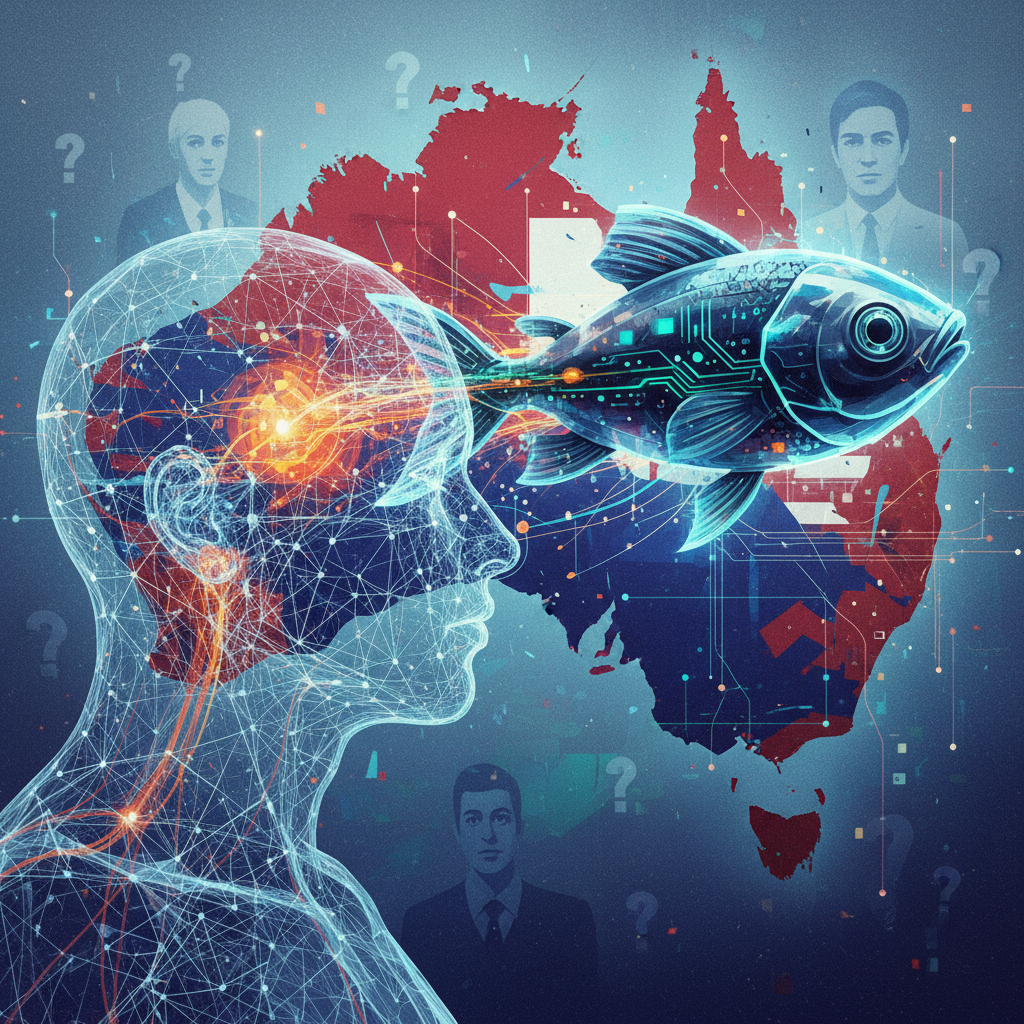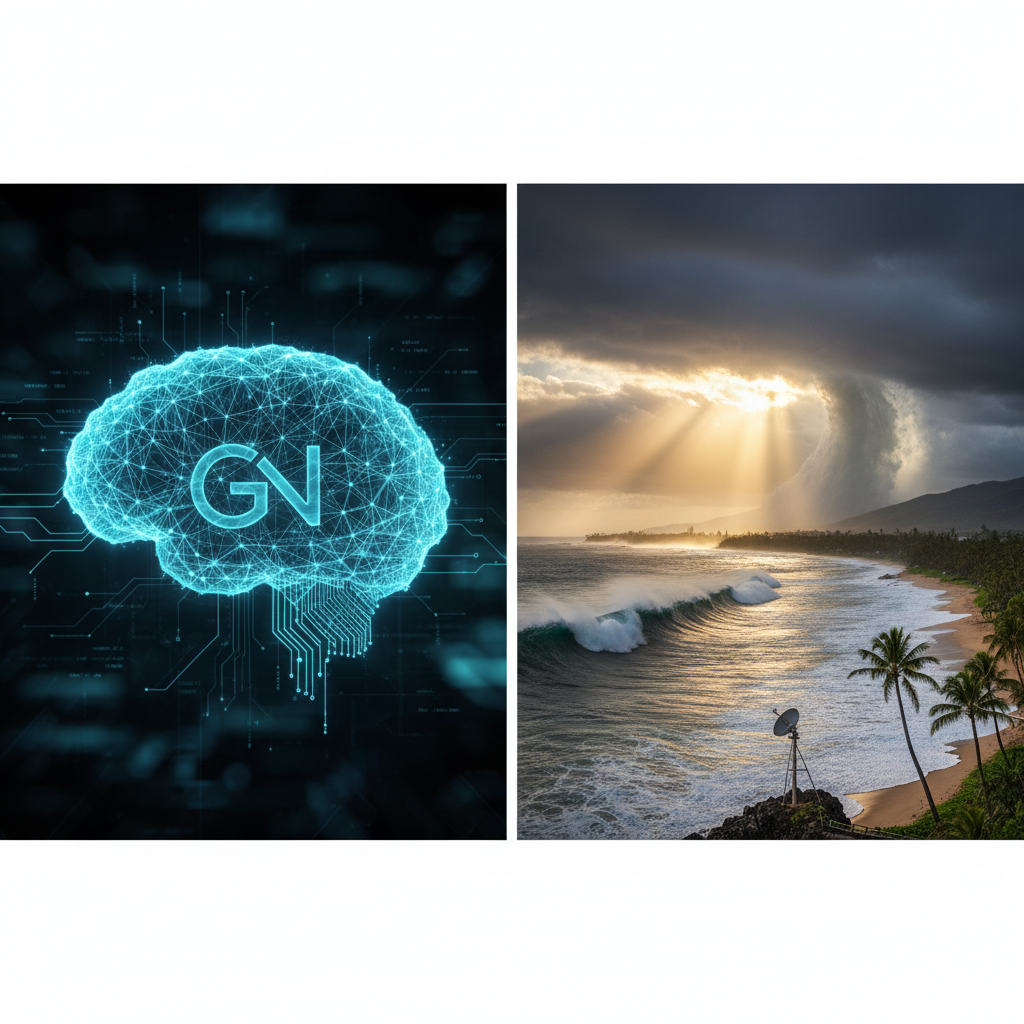

There’s a silent revolution brewing, one that promises to reshape our relationship with the very air we breathe and the oceans that sustain us. It's not about a new social media platform or another flashy gadget. It's about the weather, specifically, how artificial intelligence is predicting it with a precision and speed that traditional models simply cannot touch. And for those of us living in the Pacific, where the ocean is both life and a constant threat, this isn't just interesting science, it's everything.
For decades, meteorologists have relied on complex numerical weather prediction, or NWP, models. These are massive, physics-based simulations, requiring supercomputers to crunch trillions of calculations. They are good, don't get me wrong, but they are slow, computationally expensive, and often struggle with localized, rapidly developing phenomena. Now, enter AI. Companies like Google DeepMind, with their GraphCast model, and NVIDIA, pushing the boundaries with FourCastNet, are demonstrating AI models that can forecast global weather patterns faster and often more accurately than their traditional counterparts. We're talking about predictions for precipitation, temperature, wind speed, and atmospheric pressure, out to 10 days, generated in minutes on a single GPU, not hours on a supercomputer. This isn't just an incremental improvement; it's orders of magnitude better in certain aspects. It's like comparing a canoe to a jet ski: both move on water, but one is fundamentally transforming the speed and scale of travel.
Why are most people ignoring this? Well, the weather report is usually just background noise, isn't it? We glance at it, maybe complain about it, and then move on. The intricate details of how that forecast is generated are far from our minds. The average person doesn't differentiate between a forecast from the National Weather Service and one generated by a Google DeepMind AI. They just want to know if they need an umbrella. The technical jargon, the deep learning architectures, the sheer computational power involved, it all feels abstract. It's not a new iPhone, it's not a viral TikTok trend, so it struggles to capture mainstream attention. But beneath this quiet surface, the tectonic plates of predictive science are shifting, and the implications are profound, especially for vulnerable regions.
So, how does this affect you? Imagine a world where you know, with much greater certainty, if a hurricane is going to make landfall on your island, not just five days out, but with accurate trajectory and intensity predictions 72 hours before it becomes truly dangerous. For farmers, it means knowing precisely when to plant or harvest to avoid unexpected droughts or floods. For fishermen, it means safer voyages and better catches, avoiding sudden squalls that can turn deadly. For emergency services, it means more lead time for evacuations, better allocation of resources, and ultimately, saving lives. Here in Hawaii, where our connection to the elements is primal and immediate, this isn't theoretical. It's about our homes, our livelihoods, our very existence. When a Kona low brings torrential rains or a hurricane threatens our shores, every hour of accurate prediction is a gift, a lifeline. The future is being built on volcanic rock, and that future demands precision.
The bigger picture here is staggering. Economically, the impact could be immense. Better weather predictions can reduce agricultural losses, improve energy grid management by forecasting demand and renewable energy output, and optimize shipping routes, saving billions in fuel and time. For the insurance industry, it means more accurate risk assessment, potentially leading to fairer premiums and faster payouts. Socially, it democratizes access to critical information. Imagine remote Pacific islands, often the first to feel the brunt of climate change, receiving highly localized, accurate forecasts that empower their communities to prepare and adapt. This isn't just about avoiding disaster; it's about building resilience and fostering prosperity in the face of an increasingly unpredictable climate. It's about giving agency back to communities often at the mercy of global weather patterns.
Experts are already weighing in on this paradigm shift. Dr. Peter Dueben, a meteorologist at the European Centre for Medium-Range Weather Forecasts (ecmwf), has publicly acknowledged the impressive performance of AI models, stating,