The air in Tokyo, even when crisp with the promise of spring, often carries a hum, a subtle vibration of innovation and anticipation. Lately, that hum has grown into a chorus, a conversation echoing through boardrooms and ramen shops alike: is the global AI explosion a bubble waiting to burst, or a genuine revolution reshaping our world? As a journalist from Japan, I’ve watched this debate unfold with a particular lens, one colored by our nation's unique challenges and its deep-rooted cultural values.
The dot-com bust of the early 2000s still lingers in the collective memory of many investors and entrepreneurs. The euphoria, the astronomical valuations, the sudden collapse, it was a harsh lesson. Today, we see similar patterns: venture capital pouring into AI startups at unprecedented rates, companies like OpenAI and Anthropic commanding valuations in the tens of billions, and a race among tech giants like Google, Microsoft, and Meta to release ever more powerful models. NVIDIA, the chip giant, has seen its market capitalization skyrocket, driven by insatiable demand for its GPUs, the very engines of this AI boom. It feels dizzyingly familiar to some.
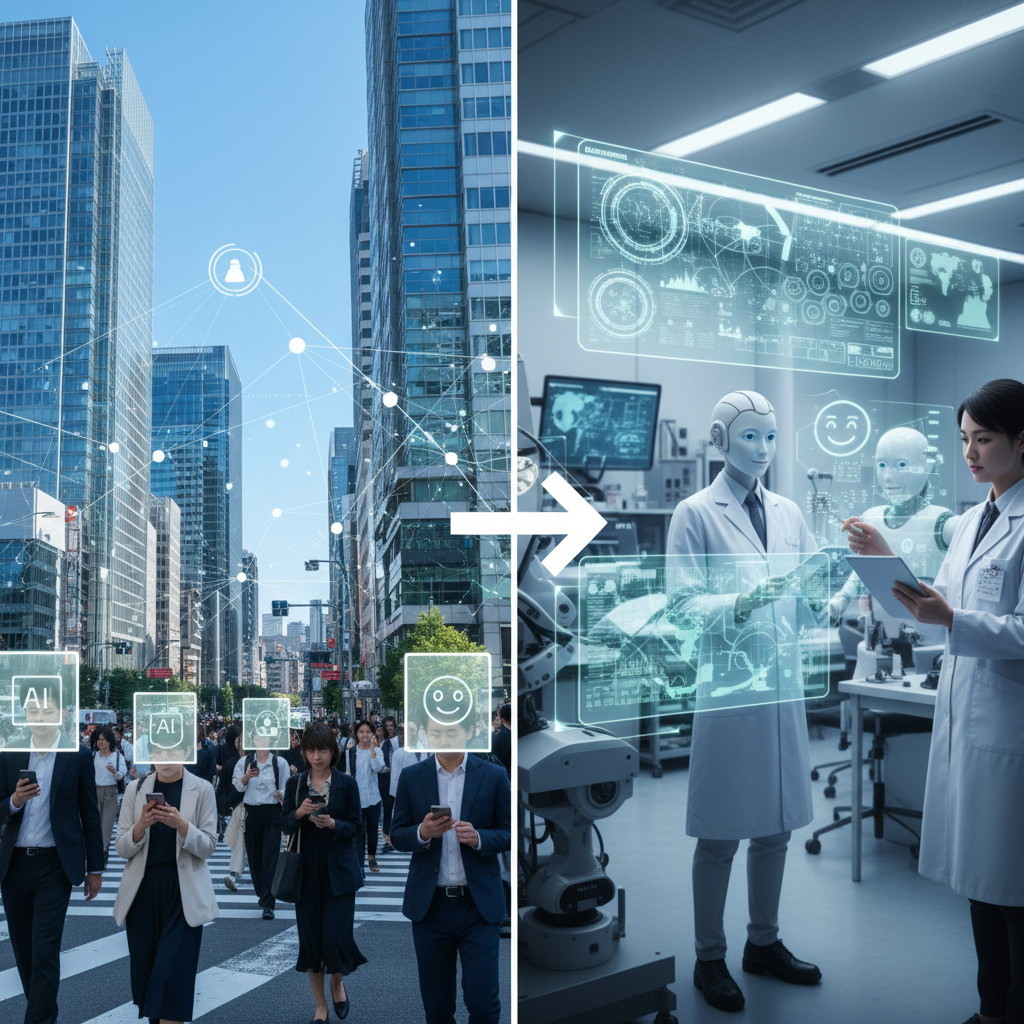
Yet, there’s a distinct feeling that this time might be different, especially here in Japan. Our nation faces demographic shifts unlike almost any other, with an aging population and a declining birthrate. For us, AI is not just about efficiency or profit; it is about survival, about maintaining quality of life, and about supporting our communities. This deeply human need, I believe, sets our approach apart and perhaps offers a different perspective on the global 'bubble' question.
I remember visiting a small robotics lab in Osaka last autumn. The space was filled with the quiet whirring of machines, but also with the gentle murmurs of researchers. One young engineer, Kenji, was demonstrating a prototype for a companion robot designed to assist the elderly. It wasn't flashy or aggressive, but rather designed with an almost serene demeanor, its movements soft and deliberate. Kenji explained to me, "We are not just building machines, we are building companions. We are building tools that understand the nuances of human interaction, especially for those who might feel isolated." He whispered something that changed my perspective: "The human side of the machine, that is our true innovation." This focus on empathetic AI, on solutions that genuinely address societal needs, is a hallmark of Japan's contribution to the AI landscape.
Globally, the numbers are staggering. According to a recent report by Reuters, global investment in AI startups reached an estimated $100 billion in 2023, a significant jump from previous years, and projections for 2024 and 2025 continue to show robust growth. Companies are acquiring smaller AI firms at a rapid pace, integrating AI capabilities into almost every product imaginable, from search engines to enterprise software. Microsoft's deep partnership with OpenAI, for instance, has fundamentally reshaped its product offerings, embedding GPT models into its Copilot suite across Windows, Office, and Azure.
But critics point to the fact that many of these AI companies, despite their high valuations, are not yet profitable. Their business models often rely on massive computational resources, which are expensive, and the path to widespread, sustainable revenue generation is still being defined. "We are seeing a tremendous amount of speculative capital entering the market," noted Dr. Hiroshi Ishiguro, a prominent robotics researcher at Osaka University. "While the underlying technology is transformative, the market valuations may not always reflect immediate, tangible returns. We must be cautious, but not fearful." Dr. Ishiguro's words resonate with a balanced perspective, acknowledging both the promise and the potential pitfalls.
In Japan, the conversation around AI often intertwines with the concept of omotenashi, our unique approach to hospitality and service. We are not just looking to automate tasks; we are looking to enhance human experiences, to provide support in areas where human resources are becoming scarce. This is why areas like healthcare robotics, elder care AI, and personalized education platforms are seeing significant investment and development here. Startups like Preferred Networks, for example, are making strides in areas from industrial automation to medical imaging, often with a focus on real-world applications that solve pressing problems.
Consider the impact of generative AI. While the Western world often focuses on its creative potential for art and writing, here in Japan, its application in areas like personalized learning for students or developing custom care plans for seniors is equally, if not more, compelling. The ability of AI to process vast amounts of medical data to assist doctors, or to provide conversational support for individuals living alone, offers tangible benefits that are hard to dismiss as mere hype. MIT Technology Review has highlighted how AI could revolutionize elder care, a topic of immense relevance to Japan.
However, the global nature of this AI boom means Japan cannot exist in a vacuum. The intense competition for AI talent, the rising costs of specialized hardware like NVIDIA's H100 GPUs, and the ethical considerations surrounding data privacy and algorithmic bias are challenges we share with the rest of the world. The recent discussions around AI safety and governance, spearheaded by figures like Sam Altman of OpenAI and Dario Amodei of Anthropic, are closely watched here. Our government, through initiatives like the AI Strategy 2023, is actively working to balance innovation with responsible development, fostering a robust ecosystem while addressing potential risks.
The debate about whether this is a bubble or a blueprint is not easily settled. Perhaps it is a bit of both. There will undoubtedly be companies that fail, and valuations that correct themselves. That is the nature of innovation cycles. But the underlying technological advancements, the fundamental shift in how we interact with information and automate complex tasks, feels more profound than a fleeting trend. As Satya Nadella, CEO of Microsoft, stated in a recent interview, "AI is not just another technology cycle; it is a platform shift that will redefine every industry." This sentiment echoes strongly in Japan, where industries from manufacturing to services are actively exploring AI integration.
For Japan, the focus remains on leveraging AI to build a more resilient, compassionate, and efficient society. We are not just chasing the next big valuation; we are pursuing solutions that will enrich human lives. The quiet determination in those Osaka labs, the thoughtful discussions in government committees, and the pervasive sense of responsibility in our tech community suggest that while the global AI market may experience its ups and downs, Japan's commitment to building a human-centric AI future is a steady, enduring force. This is not just about technological prowess; it is about the enduring spirit of kaizen, continuous improvement, applied to the very fabric of our future. It is about ensuring that as the machines learn, we, as humans, continue to thrive and connect. Perhaps this perspective from our island nation can offer a valuable lesson for the global AI journey. After all, the most valuable innovations are those that ultimately serve humanity, not just markets. You can learn more about the broader AI industry landscape on TechCrunch.