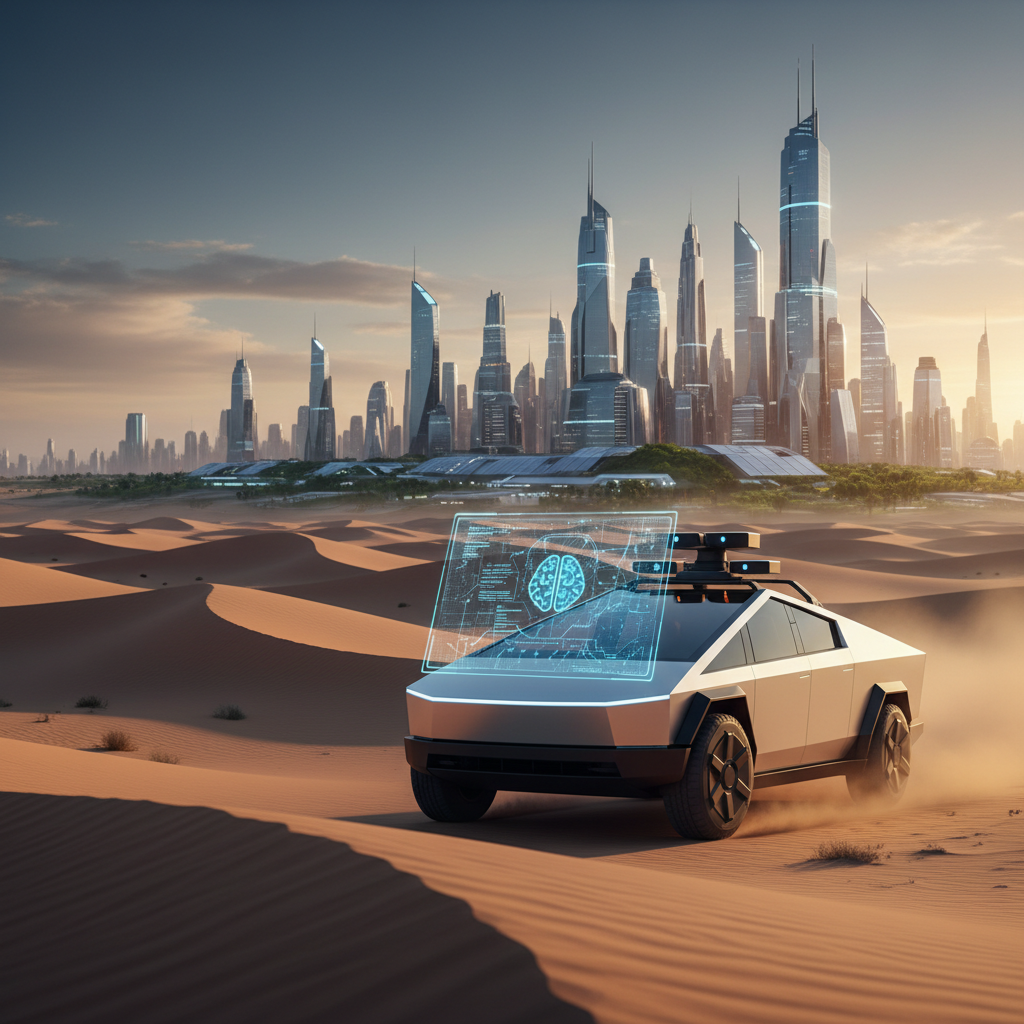
The hum of an engine, the scent of mint tea, and the bustling rhythm of Algiers traffic; these are the sensory inputs that define our daily commute. For generations, the art of driving has been a deeply human endeavor, a dance between intuition, experience, and the unpredictable chaos of the road. Yet, across the globe, a new paradigm is rapidly emerging, one where silicon and algorithms seek to assume the wheel. Tesla's Full Self-Driving (FSD) technology stands at the vanguard of this revolution, promising a future of effortless, accident-free transit. But as this sophisticated AI system pushes the boundaries of what is possible, it simultaneously collides with a formidable, often fragmented, regulatory landscape. For a nation like Algeria, deeply invested in technological advancement and infrastructure development, understanding this clash is not merely academic, it is vital.
The Big Picture: What Does Full Self-Driving Aim to Achieve?
At its core, Tesla's FSD aims to transform a vehicle from a mere conveyance into an intelligent, autonomous entity capable of navigating complex urban and highway environments without human intervention. Imagine a car that can pick you up, drive you to a destination, find parking, and even return home, all while you attend to other tasks or simply relax. This is the promise. From a technical standpoint, this involves a colossal leap from advanced driver-assistance systems (adas), which offer features like adaptive cruise control or lane keeping, to a system that can perceive, predict, and plan in real-time, handling everything from traffic lights and pedestrian crossings to unexpected detours and adverse weather conditions. The goal is not just convenience, but a dramatic reduction in traffic accidents, a staggering statistic that claims over 1.3 million lives globally each year, according to the World Health Organization.
The Building Blocks: Key Components Explained Simply
Let me walk you through the architecture of how Tesla's FSD system operates. It is a symphony of hardware and software, each component playing a crucial role:
-
Sensors: The Vehicle's Eyes and Ears. Unlike some competitors that rely heavily on LiDAR, Tesla primarily uses a suite of cameras, radar, and ultrasonic sensors. The cameras, numbering around eight, provide 360-degree visibility, capturing high-resolution video streams. Radar assists with distance and velocity measurements, particularly in challenging conditions like fog or heavy rain. Ultrasonic sensors handle close-range detection, useful for parking maneuvers. This sensor fusion creates a rich, multi-modal understanding of the environment, much like how our own senses combine to form a coherent perception.
-
Neural Networks: The Brain of the Operation. The raw data from these sensors is fed into a complex array of deep neural networks. These networks, trained on petabytes of real-world driving data collected from millions of Tesla vehicles, are responsible for various tasks: object detection (identifying cars, pedestrians, cyclists), lane line detection, traffic sign recognition, and understanding the semantic meaning of the driving scene. The mathematics behind this is elegant, involving multi-layered perceptrons and convolutional neural networks that learn intricate patterns from vast datasets.
-
FSD Computer: The Processing Powerhouse. To process this immense data load in real-time, Tesla developed its own custom silicon, the FSD computer. This chip is designed for high-performance inference, executing the neural network models with low latency. It is a testament to vertical integration, ensuring that the hardware is perfectly optimized for the software it runs.
-
Prediction and Planning: The Decision Maker. Once the environment is understood, the system must predict the behavior of other road users and then plan a safe and efficient path. This involves sophisticated algorithms that consider factors like speed limits, traffic flow, road geometry, and potential hazards. It is akin to a grandmaster chess player, constantly evaluating moves and counter-moves on a dynamic board.
Step by Step: How FSD Works From Input to Output
Consider a typical scenario in a city like Oran, with its bustling streets and distinct driving patterns:
- Perception: As the Tesla navigates, its cameras continuously stream video. The neural networks instantly identify a pedestrian stepping off the sidewalk, a taxi signaling a turn, and a traffic light changing to amber. The radar confirms the distance to the vehicle ahead, and ultrasonic sensors detect a parked car to the right.
- Prediction: Based on millions of similar past observations, the AI predicts the pedestrian's likely path, the taxi's turning trajectory, and the impending red light. It also anticipates the reaction of the car behind it.
- Planning: The FSD system then calculates the optimal response: perhaps a gentle deceleration to allow the pedestrian to cross, a slight adjustment in lane positioning to give the taxi space, and a smooth stop at the intersection, all while maintaining a safe following distance from the vehicle in front.
- Control: Finally, these decisions are translated into precise commands for the vehicle's actuators: steering, acceleration, and braking. This entire cycle, from sensing to action, occurs many times per second, ensuring continuous adaptation to the dynamic environment.
A Worked Example: Navigating a Roundabout in Constantine
Imagine a Tesla approaching one of Constantine's iconic roundabouts. This is a complex maneuver, requiring understanding of right-of-way rules, predicting multiple vehicle trajectories, and executing precise steering and speed adjustments. The FSD system would:
- Detect the roundabout entrance, lane markings, and all vehicles within the intersection and approaching it.
- Identify which vehicles have priority based on local traffic laws (which can vary significantly even within Algeria).
- Predict the paths of all relevant vehicles, anticipating accelerations, decelerations, and exits.
- Plan its entry into the roundabout, selecting the correct lane, yielding if necessary, and maintaining a safe gap.
- Execute the turn, using precise steering and speed control, and then signal its exit, all while continuously monitoring for unexpected events.
This level of nuanced interaction with a shared space highlights the sophistication required, and also the immense challenge of regulatory harmonization.
Why It Sometimes Fails: Limitations and Edge Cases
Despite its advancements, FSD is not infallible. Its limitations stem from several factors:
- Perception Challenges: Extreme weather (heavy rain, snow, sandstorms common in parts of Algeria), poor lighting, or unusual objects can confuse the vision system. The system's reliance on cameras means it can struggle in conditions where human eyes would also struggle.
- Unforeseen Scenarios (Edge Cases): The world is infinitely complex. A child chasing a ball into the street, an animal darting out, or an unconventional traffic signal can present situations not adequately represented in the training data. While Tesla continuously updates its software with new data, the 'unknown unknowns' remain a formidable hurdle.
- Regulatory Ambiguity: Perhaps the most significant current challenge is the patchwork of regulations. What is permissible in California may be illegal or undefined in Germany, let alone Algeria. This lack of a unified legal framework creates operational friction and slows deployment. For instance, in the United States, the National Highway Traffic Safety Administration (nhtsa) has launched numerous investigations into Tesla's FSD features, citing concerns over crashes and potential safety defects. Reuters has extensively covered these ongoing regulatory battles.
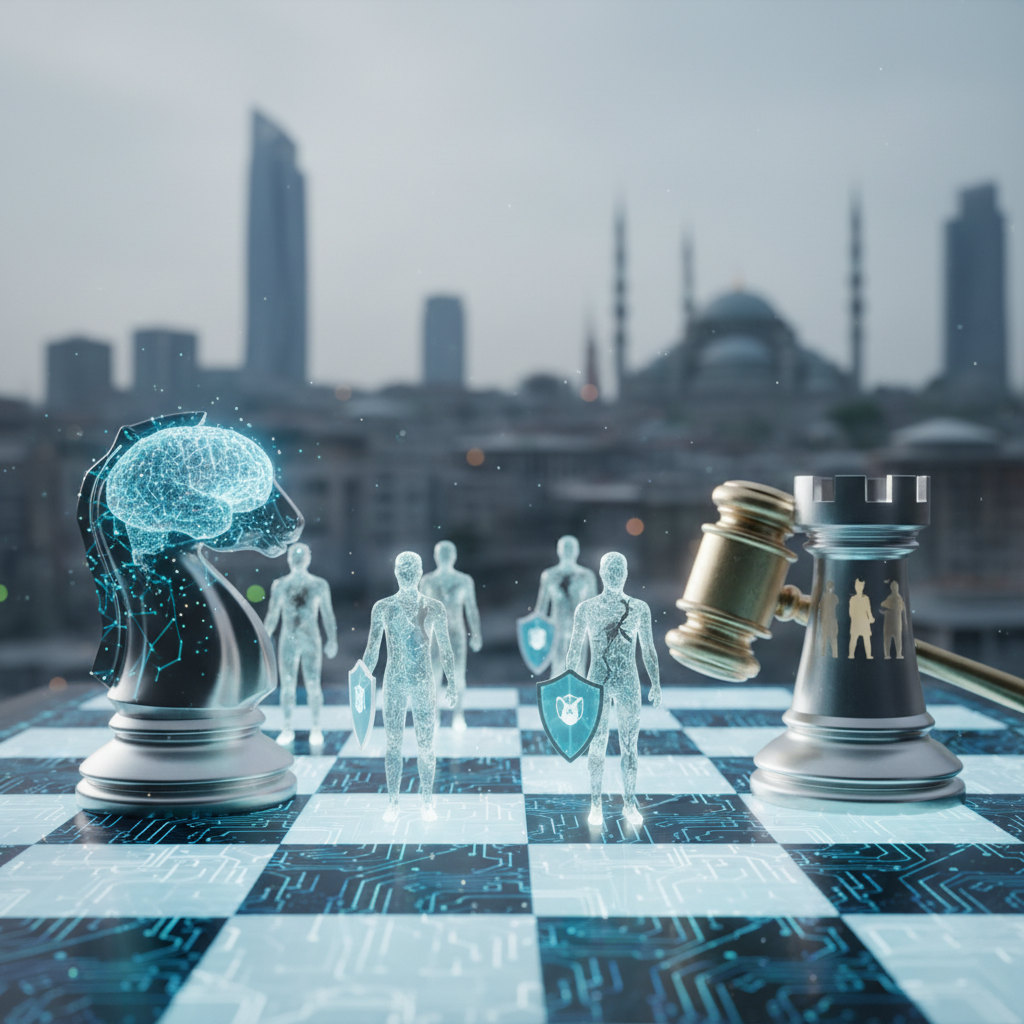
The Regulatory Battle: A Global Chess Match
The regulatory landscape for autonomous vehicles is a complex tapestry woven with threads of national sovereignty, technological ambition, and public safety concerns. In Europe, the Unece regulations provide a framework for automated driving systems, but national interpretations vary. Germany, for example, has been proactive in establishing legal frameworks for Level 3 automated driving, where the driver can disengage but must be ready to take over. The United States operates under a more fragmented approach, with state and federal agencies often having overlapping jurisdictions. MIT Technology Review often highlights the disparate approaches nations are taking.
For Algeria, and indeed for many African nations, the challenge is multi-faceted. We must not only adapt global standards but also tailor them to our unique road conditions, diverse driving cultures, and specific infrastructure needs. The question arises: should we adopt a prescriptive approach, dictating exactly how these systems must operate, or a performance-based one, setting safety targets and allowing innovation to find its own path? As Professor Karim Meziani, a leading expert in transportation law at the University of Algiers, recently stated, "Our approach must balance the imperative of safety with the undeniable potential for economic growth and improved mobility that autonomous vehicles offer. We cannot simply import regulations; we must cultivate them to our soil."
Where This is Heading: Future Improvements and Algeria's Role
The future of FSD involves continuous refinement of its neural networks, leveraging even larger datasets and more powerful AI models. Tesla's move towards a 'vision-only' approach, relying primarily on cameras, suggests a belief in the power of deep learning to extract all necessary information from visual input. This reduces hardware complexity and cost. Furthermore, advancements in simulation environments allow for testing millions of scenarios, including rare edge cases, without putting real drivers at risk.
For Algeria, the path forward involves a strategic, collaborative effort. We must invest in local AI talent, perhaps drawing inspiration from our rich mathematical heritage, to contribute to the global conversation on autonomous systems. Establishing clear, adaptable regulatory sandboxes, similar to those seen in Dubai or Singapore, could allow for controlled testing and deployment of AV technologies, fostering innovation while rigorously assessing safety. Developing robust digital infrastructure, including high-definition mapping and reliable connectivity, will also be paramount. The potential benefits, from enhancing road safety to optimizing logistics and creating new economic opportunities, are too significant to ignore. The journey towards fully autonomous vehicles is long, but with careful planning and a commitment to both innovation and safety, Algeria can play a meaningful role in shaping this transformative technology, rather than merely being a recipient of it.