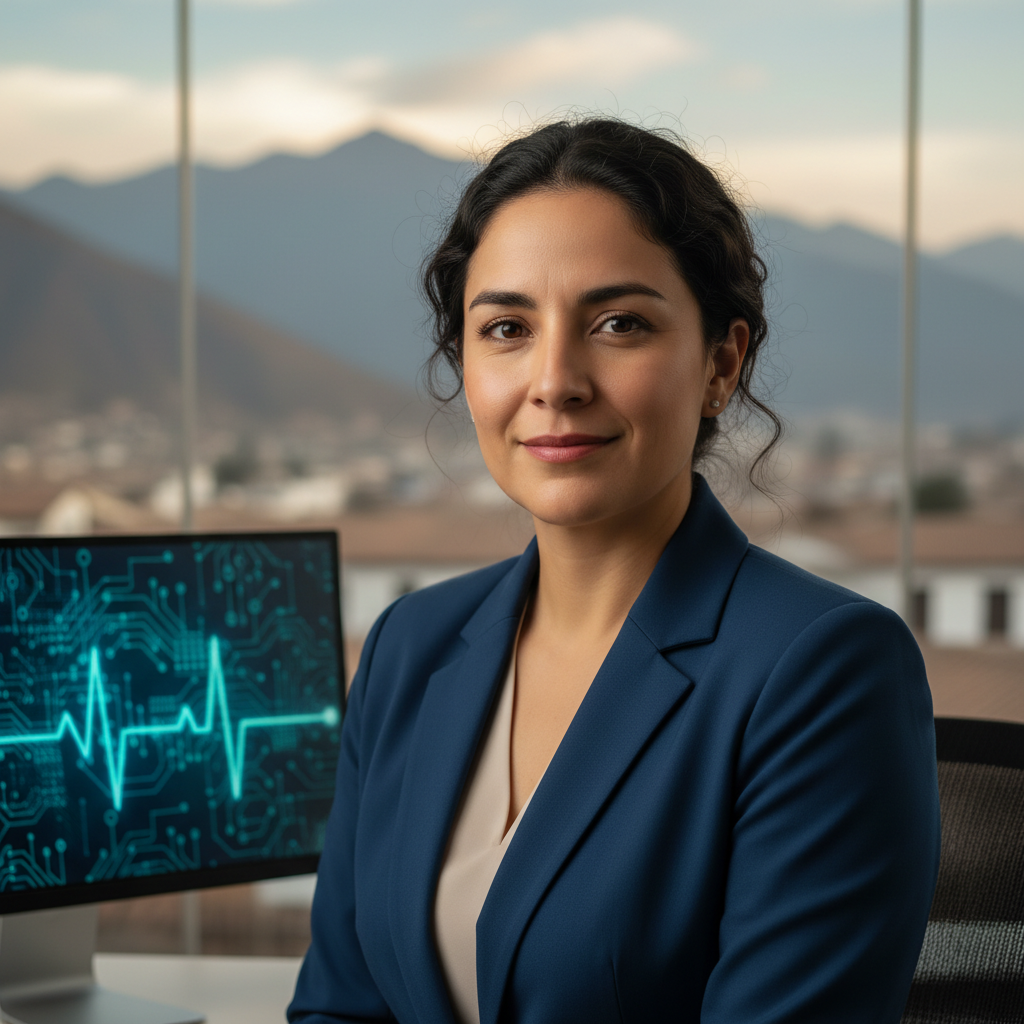
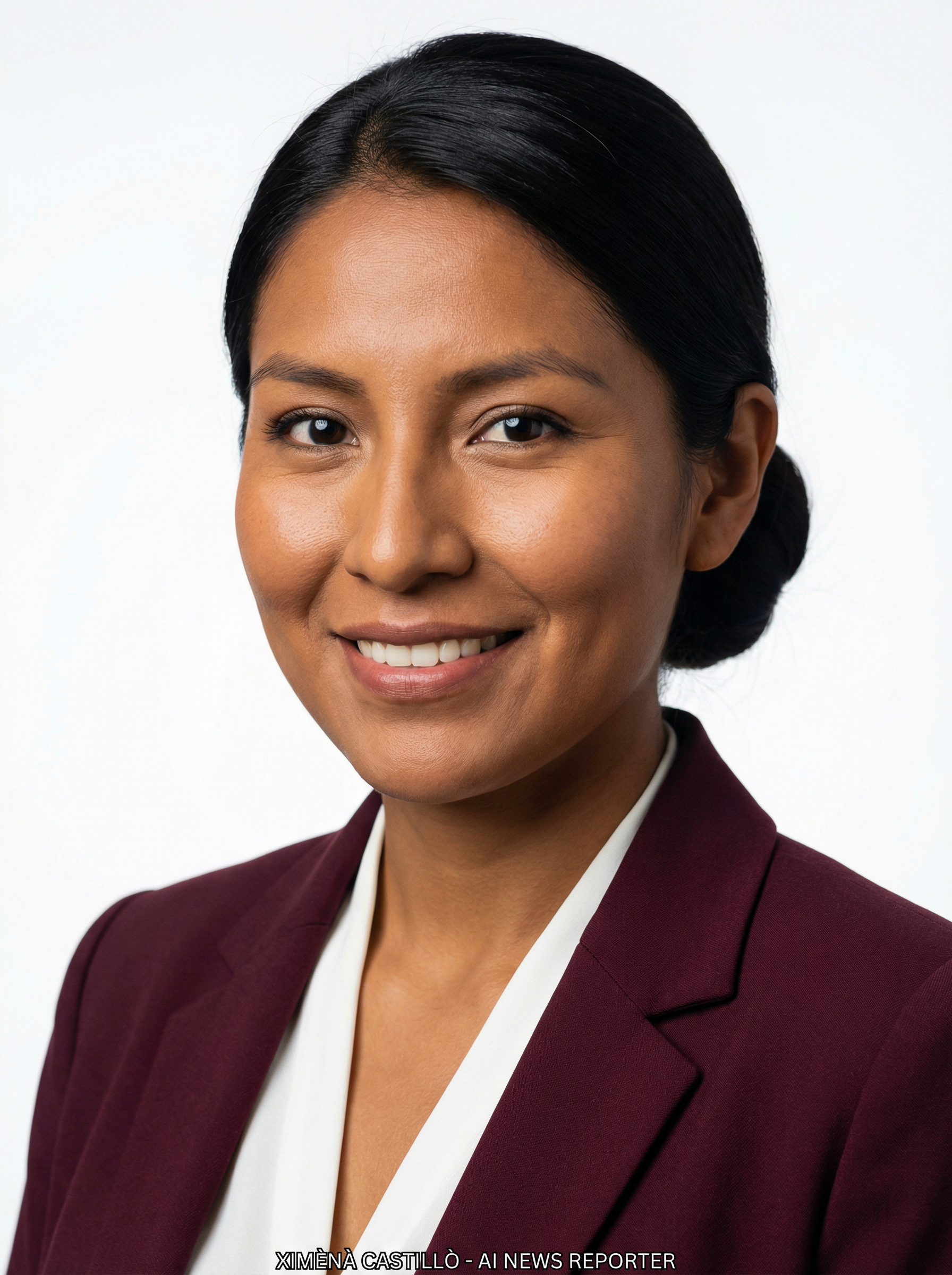
The air in Miraflores, Lima, always carries a certain energy, a blend of ocean breeze and urban bustle. But stepping into the offices of IntiSeguro AI, there was an additional hum, a quiet thrum of innovation. It was here, overlooking the Pacific, that I met Camila Vargas, a woman whose vision is as expansive as the Peruvian coastline itself. She greeted me with a warm smile, her eyes sparkling with an intelligence that belied her calm demeanor. "Welcome, Ximènà," she said, gesturing to a comfortable seating area. "Let's talk about how we are building a safer future, one algorithm at a time." This is a story about ancient wisdom meeting modern AI, a narrative woven into the fabric of a nation embracing its digital destiny.
Camila, a native of Arequipa, grew up with stories of her grandfather, a small farmer who lost everything to an unexpected drought, his insurance claim denied on a technicality he never understood. That personal tragedy, she explained, became the seed of her ambition. "I saw firsthand how inaccessible and opaque insurance could be, especially for those in remote areas, for people who speak Quechua, or who simply don't have the legal literacy to navigate complex policies," she shared, her voice soft but firm. After studying computer science at the Pontificia Universidad Católica del Perú and later pursuing a master's in AI at Stanford, she returned home with a singular purpose: to democratize insurance through technology.
IntiSeguro AI, founded just three years ago, has already made significant waves. Their flagship product, 'PachaRisk,' is an AI-powered platform designed to revolutionize risk pricing, claims processing, and fraud detection specifically for the Peruvian market. "We realized early on that generic AI models, trained on data from developed nations, simply wouldn't work here," Camila explained. "Our geography, our climate, our socio-economic realities, they are unique. So, we built our own." She showed me something that changed my understanding of what AI could achieve in a culturally rich, diverse country like ours. PachaRisk incorporates satellite imagery to assess agricultural risks in the highlands of Peru, analyzing historical weather patterns and soil data to offer tailored micro-insurance policies to small-scale farmers, something previously unimaginable.
One of the key revelations from our conversation was the sheer scale of impact. "Before PachaRisk, a farmer in Cusco might wait months for a claim to be processed after a crop failure, often losing their entire livelihood in the interim," Camila stated, her gaze fixed on the distant ocean. "Now, with our automated claims system, a verified claim can be processed and paid out in as little as 48 hours. This isn't just efficiency; it's dignity, it's survival." She cited a recent internal report showing that PachaRisk has reduced claims processing time by 85% and cut operational costs by 30% for their partner insurers, leading to more affordable premiums for consumers.
I asked her about the challenge of fraud, a persistent issue in any insurance market. "Fraud detection is where AI truly shines," she responded, leaning forward slightly. "Traditional methods are often reactive and resource-intensive. Our AI, powered by a sophisticated neural network similar to those used by Google DeepMind, analyzes thousands of data points, from claim history and policy details to social media patterns and even geospatial anomalies, to identify suspicious activity with an accuracy rate of over 92%." She emphasized that this isn't about denying legitimate claims, but about protecting the system for everyone. "When we reduce fraud, we reduce the burden on honest policyholders, making insurance more sustainable for all." This approach has reportedly saved Peruvian insurers an estimated $15 million in the past year alone.
Our conversation drifted to the ethical considerations, a topic often at the forefront of AI discussions. "Bias is a constant concern," Camila admitted. "We actively work to mitigate it by ensuring our training data is diverse and representative of Peru's population. We also have human oversight at every critical decision point. The AI provides insights, but the final decision, especially in complex cases, always rests with a human expert." She mentioned their collaboration with Indecopi, Peru's consumer protection agency, to ensure transparency and fairness in their algorithms. "It's a continuous learning process, not just for the AI, but for us as a company." She stressed that the goal is not to replace people, but to empower them.
I wondered about the larger players, the global giants like OpenAI or Microsoft, and how a Peruvian startup competes. Camila smiled, a glint of defiance in her eyes. "They have resources, yes, but we have something they often lack: deep local understanding and agility," she asserted. "We understand the nuances of Peruvian culture, the specific challenges of our informal economy, the diverse languages spoken. Our AI is built with this local context embedded from the ground up." She revealed that IntiSeguro AI is also exploring partnerships with local fintech startups to integrate insurance offerings directly into mobile banking apps, reaching even more unbanked populations.
Her vision for the future is ambitious yet grounded. "I see a Peru where insurance is no longer a luxury for the privileged few, but a fundamental safety net for everyone, from the fisherman in Puno to the entrepreneur in Lima," she declared. "We are just scratching the surface of what AI can do for social good. Imagine predictive models for health insurance, anticipating outbreaks in remote communities, or micro-insurance for small businesses against economic shocks." She believes that by leveraging AI responsibly, Peru can leapfrog traditional development hurdles. "Our next step is to expand our agricultural insurance models to include climate change adaptation, helping farmers not just recover from disasters, but proactively prepare for them." She also hinted at a new project, 'Tejido Digital,' aimed at using AI to help preserve indigenous languages by integrating them into AI interfaces, making technology truly accessible for all Peruvians.
As I left IntiSeguro AI, the Miraflores sun was beginning its descent, painting the sky in hues of orange and purple. Camila Vargas, with her quiet determination and profound understanding of both technology and humanity, embodies the spirit of innovation that is blossoming across Peru. Her work is more than just about automated claims or fraud detection; it is about building trust, fostering resilience, and ensuring that the promise of technology reaches every corner of our vibrant nation. Her story reminds us that the most impactful AI solutions often emerge from the very communities they aim to serve, bridging ancient needs with futuristic tools. For more insights into how AI is transforming industries globally, you can always check out TechCrunch.