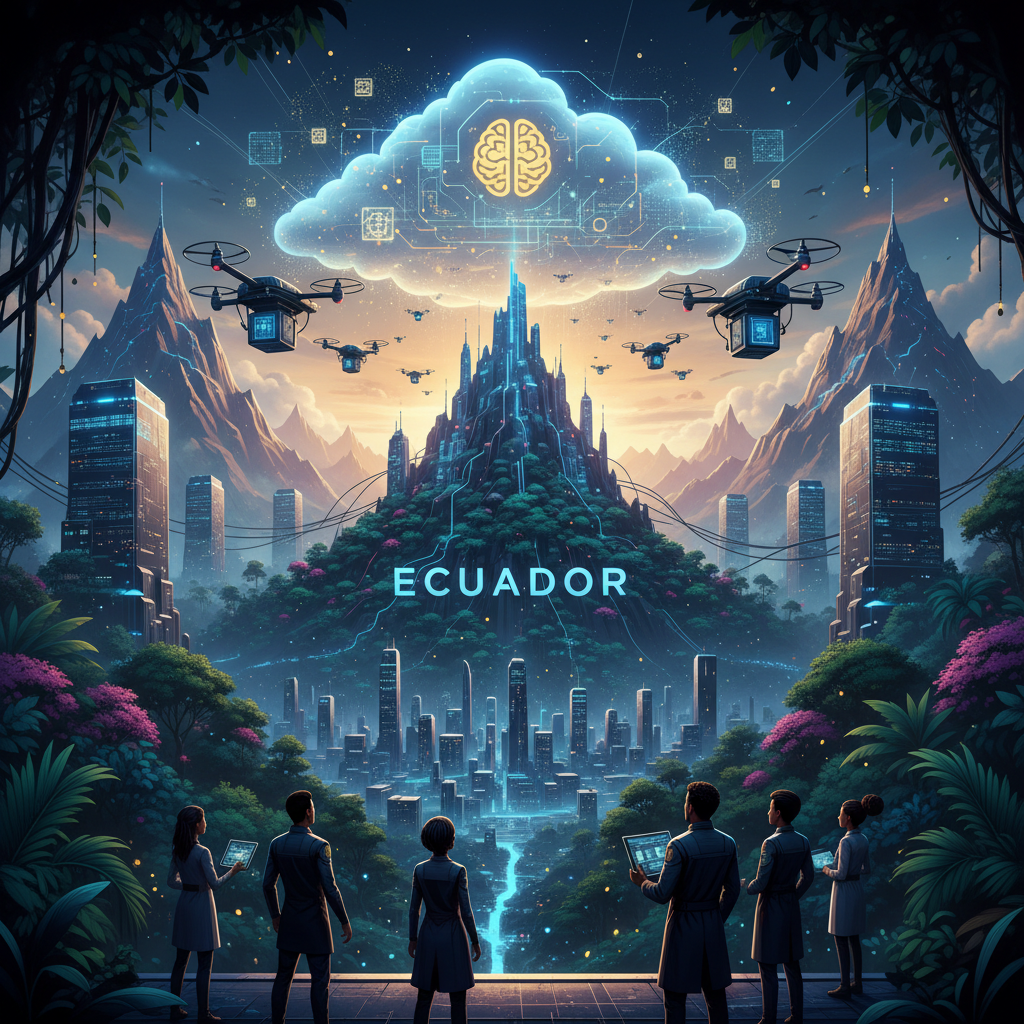

¡Hola, mis amigos! Mariànnà Sanchèz here, bubbling with excitement from the heart of Ecuador, ready to talk about something truly revolutionary, something that feels like a whisper of magic in the digital wind: federated learning. For years, the promise of powerful AI has been tempered by the very real fear of data privacy. How do we unlock the incredible potential of machine learning, especially in sensitive areas like healthcare, financial services, or even protecting our delicate ecosystems, without exposing our most intimate information to the world? The answer, it turns out, is a beautiful dance of distributed intelligence, and it's going to reshape Ecuador and the entire globe in ways we're just beginning to grasp by 2030.
Imagine a world where your phone, your local clinic's server, or even a remote sensor in the Amazon rainforest, can contribute to a global AI model without ever sending its raw, private data anywhere. That, my friends, is the essence of federated learning. Instead of centralizing data, we centralize the learning process. Each local device trains a small part of the AI model using its own data, then sends only the updates or insights from that training back to a central server. These updates are then aggregated to improve the overall model, a bit like a thousand tiny streams feeding into one mighty river, each adding its unique flavor without revealing its source. It's brilliant, it's secure, and it's the key to unlocking an ethical AI future.
Here in Ecuador, a country blessed with unparalleled biodiversity, the implications are nothing short of breathtaking. Think about it: our precious Galápagos Islands, a living laboratory, generate mountains of ecological data. Currently, sharing this data for large-scale AI analysis is fraught with concerns about proprietary research, national sovereignty, and the sheer volume of transmission. But with federated learning, research institutions across the islands, from the Charles Darwin Foundation to local universities, could collaboratively train a sophisticated AI model to predict invasive species movements or monitor endemic populations, all without any single entity having to surrender its raw, sensitive datasets. This isn't just about efficiency, it's about empowerment and protection. Ecuador's biodiversity meets AI and it's magical, truly magical!
The Future is Distributed: A Glimpse into 2030
By 2030, federated learning will be as ubiquitous as cloud computing is today. We'll see its impact everywhere. In our vibrant healthcare sector, hospitals in Quito and Guayaquil will be contributing to a national AI diagnostic model for early disease detection, like a federated model for identifying early signs of Chagas disease or dengue fever, leveraging anonymized local patient data while strictly adhering to privacy protocols. Dr. Sofia Velasco, Director of Digital Health Initiatives at the Ministry of Public Health, recently told me,