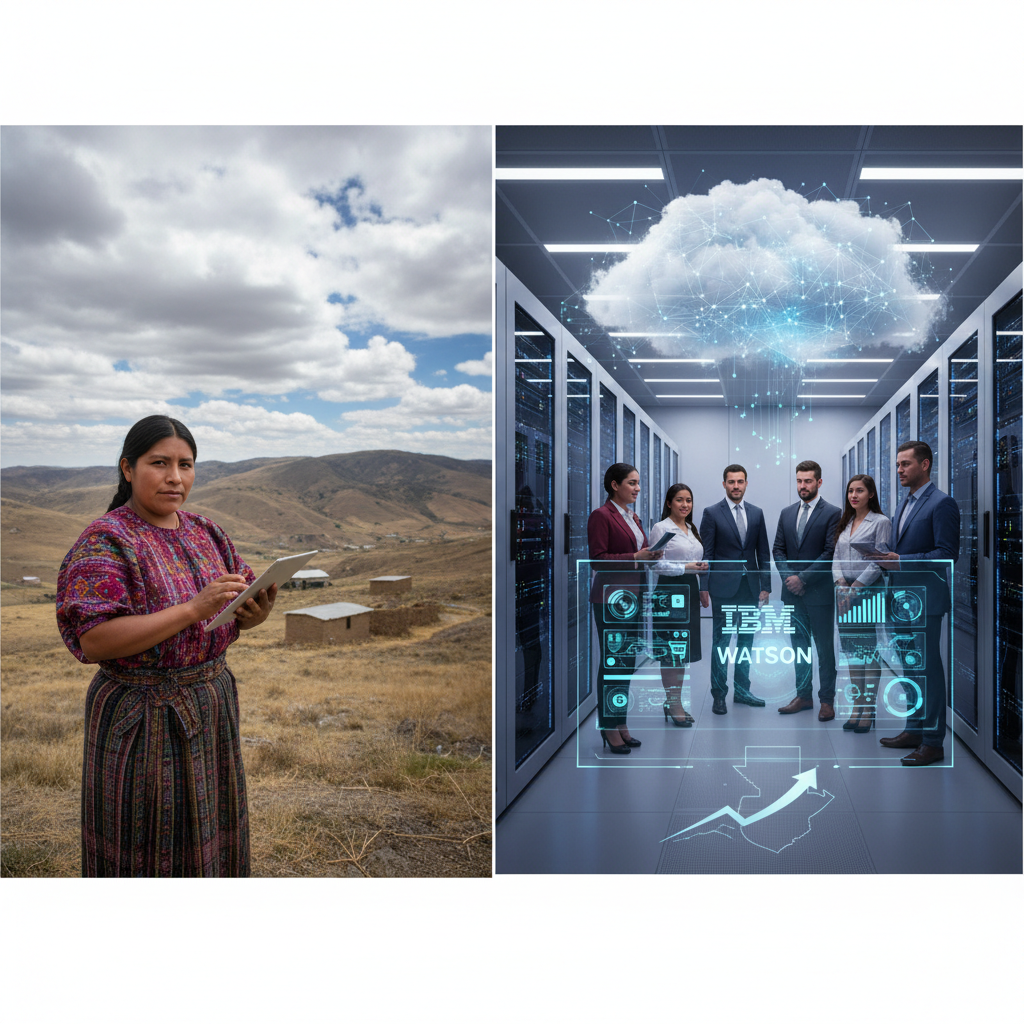

The air in the Guatemalan highlands, crisp and clean, often carries the scent of pine and rich earth. It is a place where ancient traditions meet the quiet hum of progress, a place where the rhythm of life is deeply connected to the land. This sense of rootedness, of understanding the unique soil beneath our feet, is something I often think about when I look at the global tech giants and their grand pronouncements.
Lately, the buzz has been all about IBM Watson, specifically its reinvention and the surging enterprise AI consulting market. For years, Watson was a name synonymous with ambitious, sometimes overhyped, AI promises. Now, IBM is repositioning it, focusing on specific industry applications, hybrid cloud integration, and a more pragmatic approach to AI deployment. They are no longer chasing the general AI dream of beating humans at Jeopardy, but rather aiming to be the reliable, behind-the-scenes brain for businesses grappling with complex data.
This shift is not just a corporate rebranding; it reflects a broader trend in the AI landscape. Companies like Microsoft with their Copilot offerings, Google with Gemini, and even specialized players like Anthropic with Claude, are all vying for a slice of the enterprise pie. They are moving beyond foundational models to offer tailored solutions, recognizing that a one-size-fits-all AI rarely fits anyone well. The global enterprise AI market, according to recent analyses, is projected to reach over $100 billion by 2027, a staggering figure that shows just how much is at stake. Consulting firms, from the Big Four to boutique specialists, are scrambling to build out their AI practices, advising clients on everything from data strategy to ethical deployment.
But what does this mean for us, here in Guatemala? When I hear about these billions and global strategies, I always ask myself: how does this translate to the small textile cooperative in Chimaltenango, or the burgeoning coffee exporter in Huehuetenango? How does it serve the needs of a country where digital literacy varies widely and infrastructure can be a challenge?
"The reinvention of Watson, focusing on specific industry verticals like healthcare and finance, is a smart move for IBM," explains Dr. Elena Morales, a senior AI consultant with a firm operating out of Guatemala City. "They are learning from past lessons. The enterprise space demands practical, measurable ROI, not just futuristic visions. For Guatemala, this could mean more accessible, pre-packaged solutions that don't require massive in-house AI teams, which is crucial for our smaller and medium-sized enterprises." She emphasized that the key will be localization and affordability.
Indeed, the challenge for companies like IBM, and the consulting firms partnering with them, is to bridge the gap between global solutions and local realities. It is not enough to simply offer a powerful AI tool; it must be culturally relevant, linguistically appropriate, and economically viable. TechCrunch often covers the latest in AI startups and their enterprise solutions, but the focus is rarely on emerging markets like ours.
Consider the healthcare sector, a primary target for the new Watson. In a small village in Guatemala, a community health worker might be the first line of defense against disease. Imagine if a localized Watson application, perhaps running on a mobile device, could help them quickly diagnose common ailments, access patient records securely, or even predict outbreaks based on environmental data. This is not about replacing human wisdom, but augmenting it. Her grandmother's wisdom meets machine learning, creating a powerful synergy.
"We are seeing a growing demand for AI solutions that can handle data in indigenous languages, or at least be easily adapted," says Ricardo Xol, a software engineer and advocate for digital inclusion from Quetzaltenango. "Many global models are trained predominantly on English or Spanish data. If we want AI to truly serve our diverse population, it needs to understand the nuances of K'iche', Kaqchikel, and Mam. This is where local consulting expertise becomes invaluable, helping to fine-tune global models for our specific context." His words resonate deeply, reminding us that technology must bend to humanity, not the other way around.
The enterprise AI consulting market is booming globally, with firms like Accenture, Deloitte, and PwC heavily investing in their AI capabilities. They are helping multinational corporations streamline operations, personalize customer experiences, and make data-driven decisions. For Guatemalan businesses, however, the entry point might not be a multi-million dollar bespoke AI project. It is more likely to be a targeted, affordable solution that addresses a specific pain point, like optimizing supply chains for agricultural exports or improving customer service for local banks.
This is a story about resilience, about how our communities adapt and innovate. I recently spoke with Ana María López, a young entrepreneur who runs an online artisan craft store. She was struggling with inventory management and predicting demand for her intricate textiles. "I heard about these big AI systems, but they felt so far away, so expensive," she told me. "Then, a small local consulting group introduced me to a simplified AI tool that helps me track sales patterns and suggest popular designs. It is not Watson, but it is AI, and it is making a real difference." Her experience highlights the need for accessible, scalable AI that meets businesses where they are.
IBM's pivot with Watson, focusing on a more grounded, enterprise-centric approach, offers a potential pathway for greater AI adoption in places like Guatemala. The key will be collaboration: global tech giants working with local experts, understanding local needs, and building solutions that genuinely empower rather than simply impose. The enterprise AI consulting market will only truly succeed here if it can translate its global ambitions into tangible, human-centered progress on the ground. The future of AI in Guatemala, like the future of our harvests, depends on cultivating the right seeds in the right soil, with care and understanding. We must ensure that these powerful tools are not just for the global elite, but for everyone, from the bustling markets of La Terminal to the quiet, ancestral lands of our indigenous communities. For more insights into how AI is shaping industries, you can explore articles on MIT Technology Review.
The journey of AI, much like the journey of a river from the mountains to the sea, will inevitably encounter diverse landscapes. It is our responsibility to ensure that its flow nourishes all the lands it touches, bringing growth and opportunity to every corner, including our beloved Guatemala.