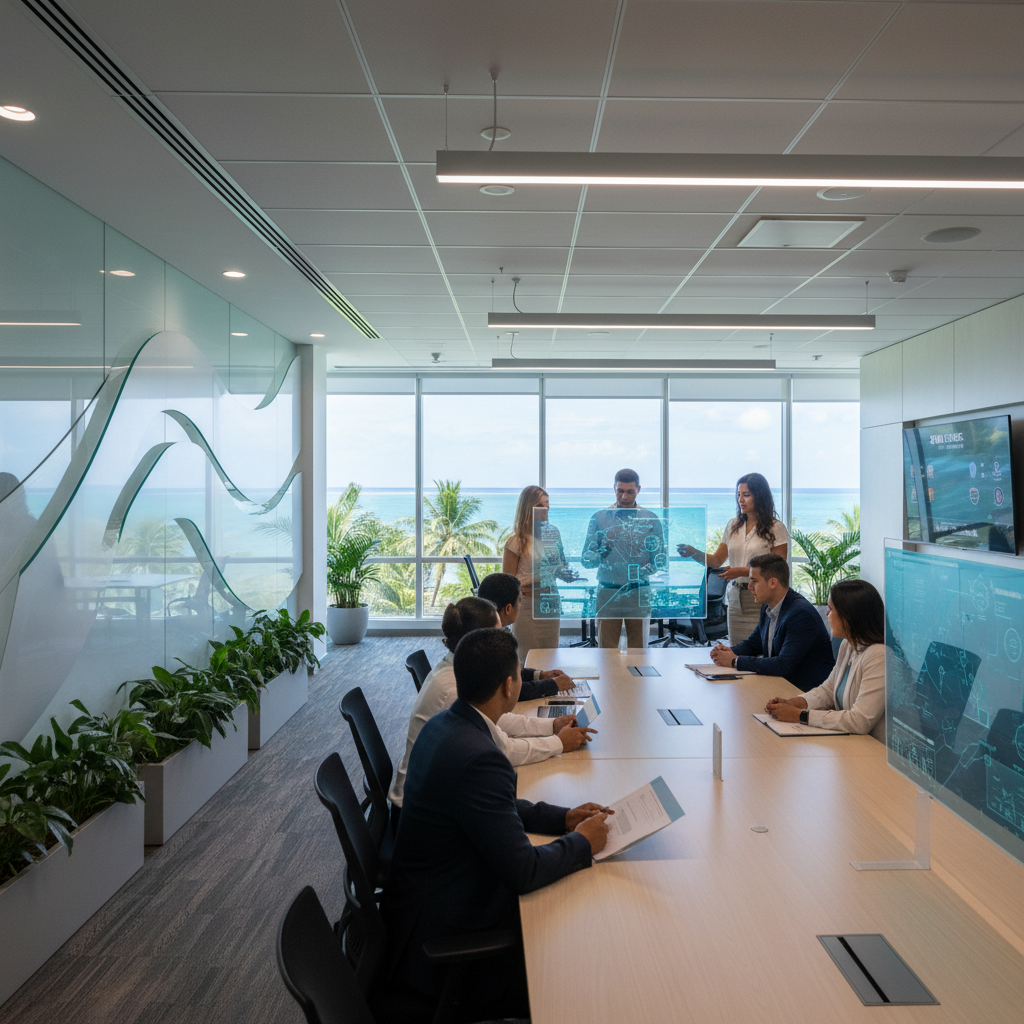
The air in Suva, even in April, carries the scent of salt and possibility. Inside the modest, yet bustling, headquarters of Shield Pacific, a different kind of current hums. Screens glow with complex network diagrams and real-time threat maps, a digital ocean far removed from the actual Pacific just outside. This isn't your typical Silicon Valley startup; this is a company born from necessity, forged in the unique vulnerabilities of island nations, and now, it’s a global force in AI cybersecurity.
Just last month, the tech world was abuzz with news of Google's multi-billion dollar acquisition of Wiz, a cloud security giant. While that made headlines, a quieter, equally significant story has been unfolding, one that shows the true global reach of AI innovation. Shield Pacific, a company many outside our region might not have heard of until recently, has carved out a formidable niche, demonstrating that cutting-edge tech doesn't only sprout from established tech hubs. Their recent Series C funding round, closing at $75 million and led by Sequoia Capital with participation from Andreessen Horowitz, valued the company at an impressive $150 million. This isn't just venture capital; it's a vote of confidence in a different way of doing things.
From Island Vulnerability to Global Solution: The Origin Story
The story of Shield Pacific begins not in a garage, but in the aftermath of a series of devastating cyberattacks that crippled critical infrastructure across several Pacific Island nations in the late 2010s. Hospitals, government services, and even local banking systems were hit, exposing the profound digital vulnerabilities of countries with limited resources and nascent digital defenses. “We saw firsthand what happens when you’re unprepared,” recalls Dr. Alisi Vunivalu, Shield Pacific’s CEO and co-founder, a woman whose calm demeanor belies a fierce intellect. “The impact wasn't just financial, it was societal. It was a wake-up call. We realized that the solutions being offered by global players weren’t tailored to our context, they were too expensive, too complex.”
Dr. Vunivalu, then a cybersecurity lecturer at the University of the South Pacific, teamed up with her former student, Mikaele Waqabaca, an ethical hacker with a knack for understanding system weaknesses. Their initial goal was simple: protect Fiji. Their first product, a lightweight, AI-powered threat detection system designed for low-bandwidth environments, was piloted with the Fijian government and local utilities. It worked. It was efficient, effective, and crucially, affordable. This early success, funded by a small grant from the Pacific Islands Forum Secretariat and initial seed investment from local Fijian entrepreneurs, proved their concept. They officially launched Shield Pacific in 2019.
The Business Model: Practical Protection for a Perilous Digital World
Shield Pacific operates on a subscription-based Software-as-a-Service (SaaS) model, offering three core products: Sentinel, an AI-driven endpoint detection and response (EDR) solution; Guardian, a network traffic analysis platform optimized for regional internet infrastructure; and Aegis, a cloud security posture management (cspm) tool designed for hybrid cloud environments common in developing economies. Their differentiation lies in their AI models, which are trained on a diverse dataset including threat intelligence from under-represented regions, making them particularly adept at identifying novel attack vectors that might bypass systems trained solely on Western data.
Their annual recurring revenue (ARR) currently stands at approximately $150 million, a significant leap from the $30 million reported just two years ago. This growth is fueled by a customer base that spans governments, financial institutions, and telecommunications providers, not just in the Pacific but increasingly in Southeast Asia, Africa, and Latin America. Key customers include the Bank of South Pacific, Digicel Pacific, and surprisingly, a growing number of mid-sized enterprises in Europe and North America seeking more cost-effective, yet robust, alternatives to established players. They also have a strategic partnership with Google Cloud, integrating their Aegis solution for enhanced security within Google's ecosystem.
Competitive Landscape and Differentiation
The cybersecurity market is crowded, dominated by giants like Palo Alto Networks, CrowdStrike, and Fortinet, and emerging players like Wiz. Shield Pacific competes by focusing on two key areas: efficiency and regional relevance. Their AI models require less computational power and bandwidth, a critical advantage in regions with infrastructure limitations. Furthermore, their deep understanding of geopolitical cyber threats specific to developing nations gives them an edge. “While others chase the latest zero-day in Silicon Valley, we’re focused on the phishing campaigns targeting local businesses and the state-sponsored actors trying to infiltrate national data centers in emerging markets,” explains Mikaele Waqabaca, the company’s CTO. “It’s a different battle, and we built our AI for it.”
Analysts generally view Shield Pacific positively. “They’ve identified a genuine market gap and filled it with a technically sound, culturally aware solution,” says Dr. Anya Sharma, a senior cybersecurity analyst at Gartner. “Their growth trajectory in underserved markets is remarkable, and their recent funding round suggests they’re ready to challenge more established players on a global scale.” Reuters Technology recently highlighted their unique approach to threat intelligence sharing among their Pacific clients, fostering a collaborative defense network.
The Team and Culture: The Pacific Way of Problem-Solving
Shield Pacific employs over 400 people globally, with main offices in Suva, San Francisco, London, and a new development hub in Tokyo focused on quantum-resistant cryptography research. Dr. Vunivalu’s management style is often described as collaborative and consensus-driven, reflecting the talanoa tradition of open dialogue in Fiji. “We believe in the Pacific way of problem-solving,” she states. “Everyone’s voice matters, from our junior analysts to our senior engineers. That diversity of thought is our strength.”
Key hires include former Google Cloud security architect, David Chen, now Shield Pacific’s Chief Product Officer, and Dr. Kenji Tanaka, who joined from NTT Data to lead their Tokyo research efforts. This blend of local talent and international expertise has been crucial for scaling. The company culture emphasizes continuous learning, community engagement, and a strong sense of mission. Many employees are passionate about protecting their home region, a powerful motivator.
Challenges and Controversies
Scaling rapidly from a small island nation comes with its own set of hurdles. Attracting top-tier talent to Fiji, despite its beauty, remains a challenge, necessitating the establishment of international offices. There are also debates within the company about how much to adapt their core products for highly developed markets versus maintaining their focus on emerging economies. “Some argue we should chase the big contracts in North America more aggressively,” admits Dr. Vunivalu, “but in Fiji, we face the future with clear eyes, and our mission has always been about empowering the vulnerable. We must not lose sight of that.”
Another challenge is navigating the complex regulatory landscape of global cybersecurity, especially concerning data sovereignty and privacy laws, which vary wildly from one country to another. Maintaining trust with governments and enterprises requires constant vigilance and transparent practices. The company has invested heavily in legal and compliance teams to ensure adherence to standards like GDPR and Ccpa.
The Bull Case and The Bear Case
The bull case for Shield Pacific is compelling. They have a proven product, a strong customer base in a high-growth segment, and a unique, defensible competitive advantage. Their AI is purpose-built for efficiency and specific threat landscapes, making them an attractive partner for organizations in regions often overlooked by larger players. The global cybersecurity market is projected to reach over $300 billion by 2028, and Shield Pacific is well-positioned to capture a significant share, especially as digital transformation accelerates in developing nations. Their recent valuation and investor backing signal strong confidence in their long-term prospects. TechCrunch recently featured them as a 'startup to watch' for their innovative approach to regional cybersecurity.
However, the bear case cannot be ignored. The cybersecurity market is intensely competitive, and larger players could eventually develop similar efficient, regionally-focused solutions. Talent retention in a global market is a constant battle, and the costs associated with maintaining a global footprint from a relatively remote base could strain resources. Furthermore, geopolitical shifts could impact their ability to operate in certain regions, and a major security breach within their own systems could severely damage their hard-earned reputation. The challenge of maintaining their unique cultural identity and mission as they grow into a multi-national corporation is also a real concern.
What's Next?
Shield Pacific is not resting on its laurels. They are actively exploring partnerships with telecommunications companies to embed their AI directly into network infrastructure, offering security as a service at the ISP level. They are also investing heavily in research into post-quantum cryptography, recognizing the long-term threat to current encryption standards. Dr. Vunivalu believes that small island, big challenges, smart solutions is not just a motto, but a blueprint for their future. Their journey from a necessity-driven startup in Fiji to a globally recognized AI cybersecurity firm is a testament to innovation born from real-world problems. It proves that the next big thing in tech can indeed come from anywhere, especially from those who understand the stakes most intimately.