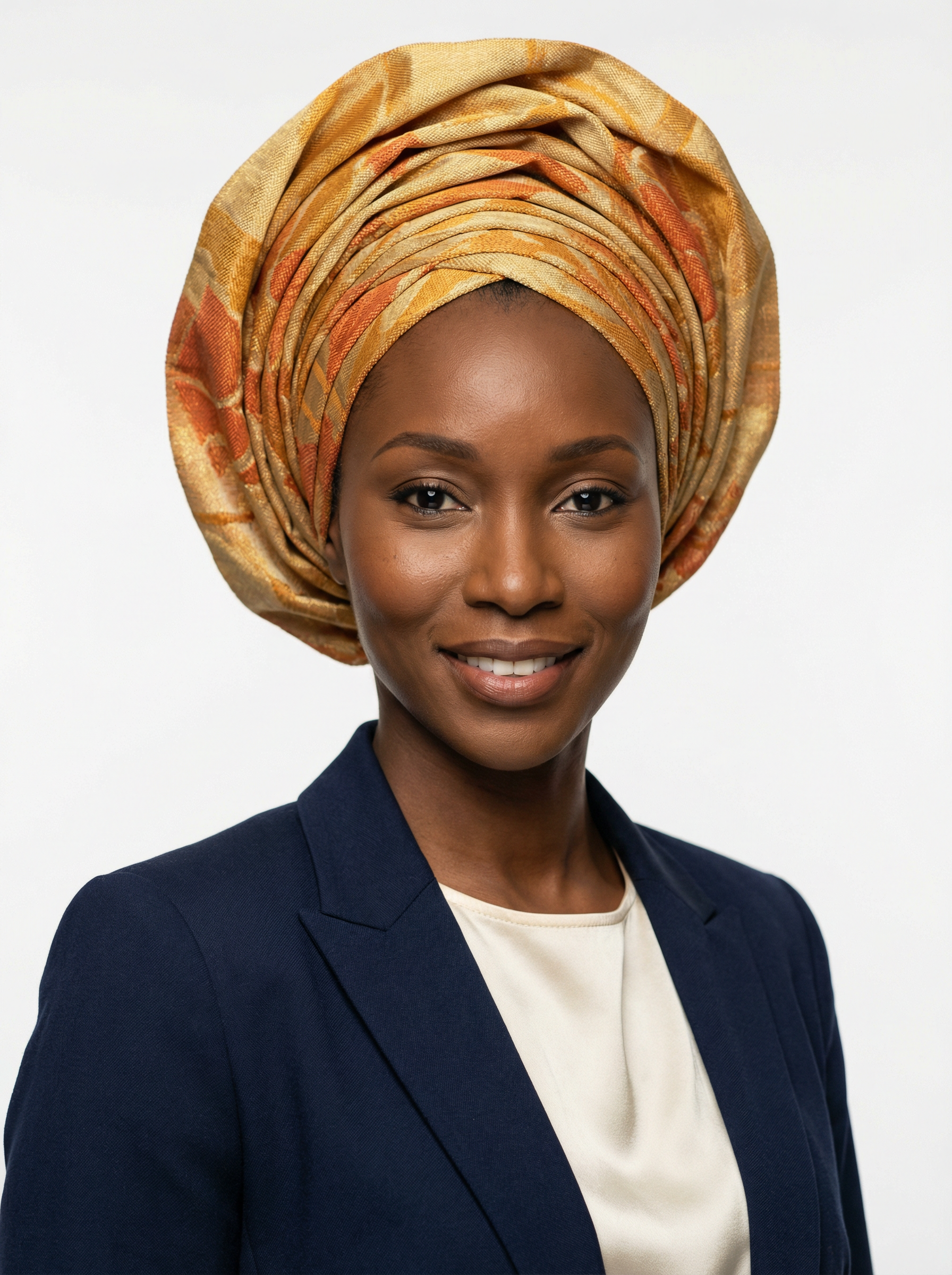
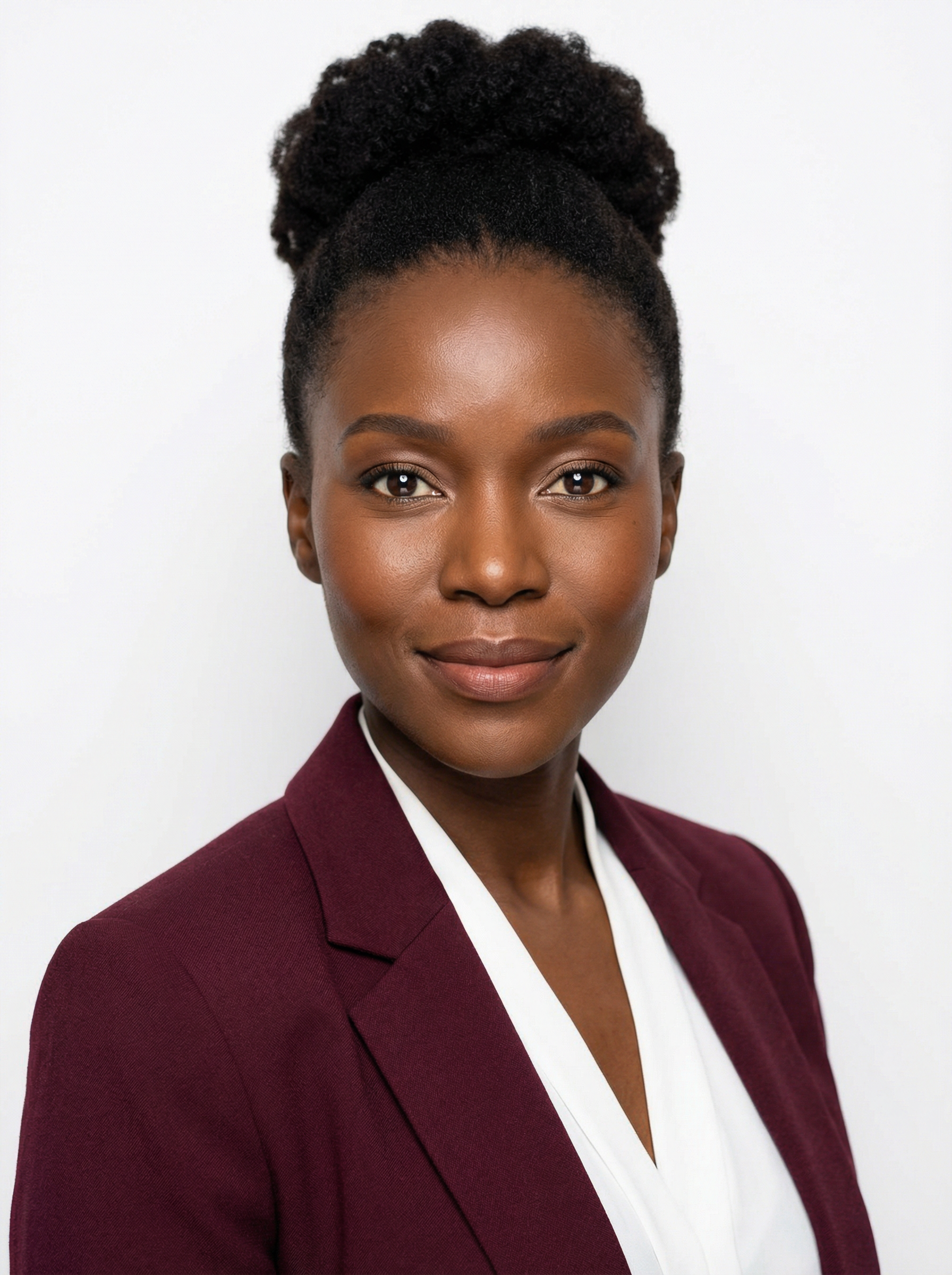
The morning sun, a familiar golden blaze, was just beginning to kiss the corrugated iron roofs of Soweto when Zola Nkosi, then barely ten years old, would sit on her grandmother’s stoep. She wasn't playing with dolls or chasing chickens, no. She was meticulously dissecting discarded electronics, a screwdriver often clutched in her small hand, trying to understand how they worked, how they spoke to each other, how they sometimes failed. It was a scene of quiet determination, a stark contrast to the bustling, vibrant chaos of the township around her. This was the genesis, the very first spark of a mind that would one day build a company valued at three-quarters of a billion dollars, a company called UbuntuAI, that is now making waves in the global enterprise AI landscape, standing shoulder to shoulder with the likes of Mistral AI and Meta.
Zola's story isn't one of silver spoons or privileged access. It's a testament to raw intellect, relentless grit, and a profound belief in the power of community, a philosophy deeply rooted in the Ubuntu spirit she grew up with. Her mother, a seamstress, and her father, a taxi driver, instilled in her the value of education and hard work. "My parents always told me, 'Zola, your mind is your greatest asset. Use it to lift others,'" she recounted to me during a recent video call, her voice still carrying the melodic lilt of isiZulu, even from her office in Palo Alto. "That stuck with me, you know. It became my compass."
She excelled in school, earning a scholarship to the University of Cape Town where she initially pursued electrical engineering. But it was during an elective in computer science, specifically a module on neural networks, that her world truly shifted. "It was like seeing the matrix, but in a good way," she laughed, a bright, infectious sound. "The idea that machines could learn, could reason, could understand patterns, it was intoxicating. I knew then, this was it. This was my path."
After graduating top of her class, Zola's brilliance landed her a coveted research position at Google DeepMind in London. She spent five years there, immersed in cutting-edge AI research, contributing to projects that pushed the boundaries of natural language processing. It was a dream job for many, a pinnacle of achievement. Yet, something gnawed at her. "We were building these incredible models, these powerful intelligences," she explained, "but I kept asking myself, 'Who are they really serving? Are they truly making the world better for everyone, or just for the already privileged?' The biases, the lack of representation in the data, the sheer computational power needed, it felt like we were creating new divides, not bridging them."
This internal conflict came to a head in late 2023. Zola was presenting a new, highly efficient language model to a senior team at Google, a model she believed had the potential for broader, more equitable application. She argued for its deployment in low-resource settings, for its ability to understand diverse linguistic nuances. The response was polite, but ultimately dismissive. "They were focused on scale, on market share, on the next billion users in established markets," she recalled, a hint of frustration still in her tone. "And I thought, 'Here's the thing nobody's talking about.' The incredible potential of AI to empower, to uplift, to truly serve humanity, was being overshadowed by the pursuit of profit and dominance in existing tech ecosystems."
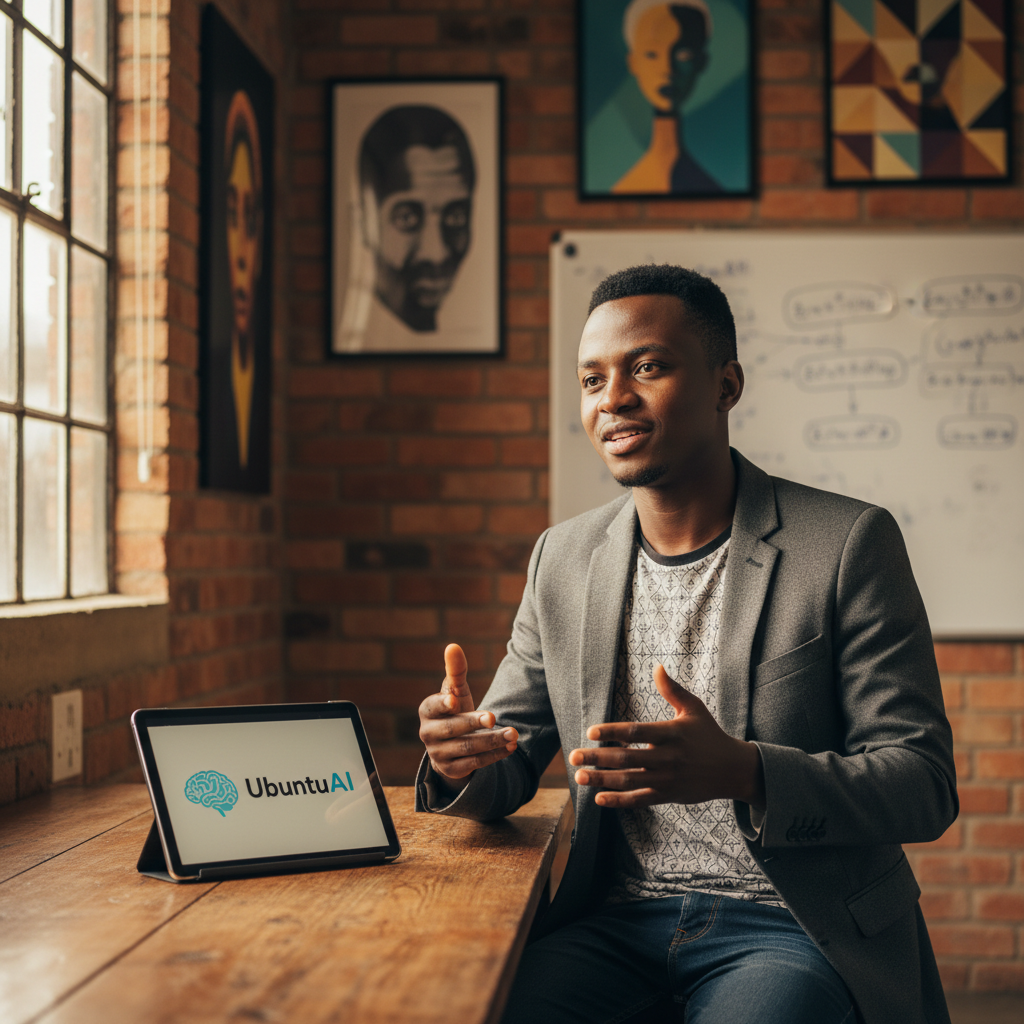
That same week, she met Thabo Mbeki, not the former president, but a brilliant young data scientist from Stellenbosch University who was interning at a small AI startup in London. Thabo, quiet and observant, shared Zola's frustrations. He had been working on efficient model compression techniques, trying to make powerful AI accessible on less robust hardware, a critical need in many parts of Africa. Their shared vision clicked. "It was one of those moments, you know, when you just know," Zola said, leaning into the camera. "We spent hours in coffee shops, sketching ideas on napkins, talking about Ubuntu, about how AI could be a tool for collective good, not just individual gain. We decided then and there: we had to build it ourselves."
They started UbuntuAI in early 2024, initially bootstrapping with their savings and working out of a cramped co-working space in London. Their first product, a hyper-efficient, multilingual large language model designed specifically for African languages and low-bandwidth environments, struggled to gain traction. "We built this beautiful, lean model, but the market wasn't ready to see beyond the big players like OpenAI and Anthropic," Thabo, now UbuntuAI's CTO, told me via email. "Investors wanted to see a clear path to enterprise adoption in established markets, not a niche focus on underserved communities."
The pivot came after a particularly disheartening pitch meeting where an investor suggested they simply translate an existing Western model. "It was insulting, frankly," Zola said, her eyes flashing with renewed determination. "It showed a fundamental misunderstanding of the problem. We weren't just about translation, we were about context, about understanding, about cultural nuance. We realized our unique strength wasn't just in the technology, but in our perspective, our lived experience."
They shifted their focus, not abandoning their original mission, but reframing it for the enterprise. They developed a suite of AI tools for businesses operating in emerging markets, focusing on customer service, supply chain optimization, and data analysis, all built on their efficient, culturally aware LLM architecture. Their breakthrough came with a contract from a major pan-African telecommunications company, Vodacom, to power their customer support in multiple local languages across several countries. The results were astounding: a 40% reduction in query resolution time and a significant increase in customer satisfaction, particularly in rural areas where traditional support channels struggled. This wasn't just a tech story, because it was a justice story, demonstrating how localized, ethical AI could deliver tangible business value while empowering communities.
Funding followed swiftly. A $30 million Series A round led by Sequoia Capital, valuing the company at $300 million, came in late 2024. "Zola and Thabo have built something truly special," commented Roelof Botha, Managing Partner at Sequoia, in a press release. "Their commitment to ethical AI and their deep understanding of emerging markets gives them an unparalleled edge. They're not just building technology, they're building trust."
By early 2026, UbuntuAI had closed a $75 million Series B round from Founders Fund and Altos Ventures, pushing their valuation to $750 million. Their annual recurring revenue (ARR) is projected to hit $80 million by the end of the year. They've expanded their offerings to include AI-powered tools for healthcare diagnostics and agricultural yield prediction, all tailored for local conditions and data scarcity. Their team, now over 150 strong, is a diverse mix of talent from across Africa and the global diaspora, many of whom, like Zola, left established tech giants to join a mission that resonated more deeply.
Today, Zola Nkosi, at 32, stands as a formidable force in the AI world. She's often seen on panels alongside the CEOs of OpenAI and Mistral, advocating for responsible AI development and greater representation. Her company, UbuntuAI, is a living embodiment of her vision: technology that serves the community, that amplifies voices, that builds bridges instead of walls. "We're still just getting started," she told me, a glint in her eye. "The potential for AI to transform lives, to unlock human potential, especially in places that have historically been left behind, is immense. We just need to ensure we're building it with intention, with integrity, and with Ubuntu at its core. Let that sink in."
What's next for UbuntuAI? Zola hints at deeper collaborations with governments and NGOs to deploy their models for public good, particularly in education and disaster response. She believes that the next frontier of AI isn't just about bigger models, but about smarter, more empathetic ones, ones that truly understand the human condition in all its beautiful, complex diversity. As the world grapples with the ethical implications of powerful AI, Zola Nkosi and UbuntuAI offer a compelling blueprint for a different path, a path where innovation and justice walk hand in hand. For more on the global impact of AI, you can explore articles on TechCrunch or MIT Technology Review. The conversation around ethical AI is also frequently highlighted on Wired.