The digital town square, once heralded as a bastion of free expression, is now increasingly policed by algorithms. In the United States, the intersection of artificial intelligence, content moderation, and the First Amendment has become a contentious and often opaque battleground. As AI systems become more sophisticated, their role in determining what constitutes permissible speech online grows, raising profound questions about censorship, platform power, and the future of democratic discourse.
The risk scenario is clear: unchecked AI content moderation systems, often deployed by powerful tech giants like Meta, Google, and OpenAI, could inadvertently or deliberately stifle legitimate speech, amplify misinformation, or become tools for state-sponsored censorship. This is not a hypothetical future; it is a present reality unfolding across social media platforms, search engines, and generative AI models. The sheer volume of online content, estimated to be uploaded at rates far exceeding human capacity to review, has made AI an indispensable, yet deeply problematic, arbiter of speech.
Technically, these AI systems operate through a combination of machine learning models trained on vast datasets of text, images, and video. These models are designed to identify patterns indicative of policy violations, such as hate speech, incitement to violence, or spam. Natural Language Processing, or NLP, is central to this effort, allowing AI to parse meaning and context from human language. Computer vision algorithms analyze images and videos for prohibited content. The challenge lies in the inherent subjectivity of speech and the nuances of human communication. A sarcastic comment, a political satire, or a culturally specific idiom can easily be misinterpreted by an algorithm lacking true human understanding. When a model flags content, it can lead to automated removal, shadowbanning, or account suspension, often without human review or a clear appeals process. The scale of operation means that even a small error rate can impact millions of users.
Expert debate on this issue is sharply divided. On one side, proponents argue that AI is essential for maintaining safe online spaces and preventing the spread of harmful content, including child exploitation material, terrorist propaganda, and severe harassment. "Without AI, these platforms would be ungovernable," states Dr. Evelyn Chang, a leading researcher in AI ethics at Stanford University, in a recent public forum. "The volume is simply too immense for human moderators alone to handle effectively, and human moderators face severe psychological tolls." Companies like Meta and Google often point to their investments in AI safety and their efforts to reduce bias in their models, citing the need to protect users from genuine threats. They contend that their policies are transparent and their appeals processes robust, though critics frequently dispute this.
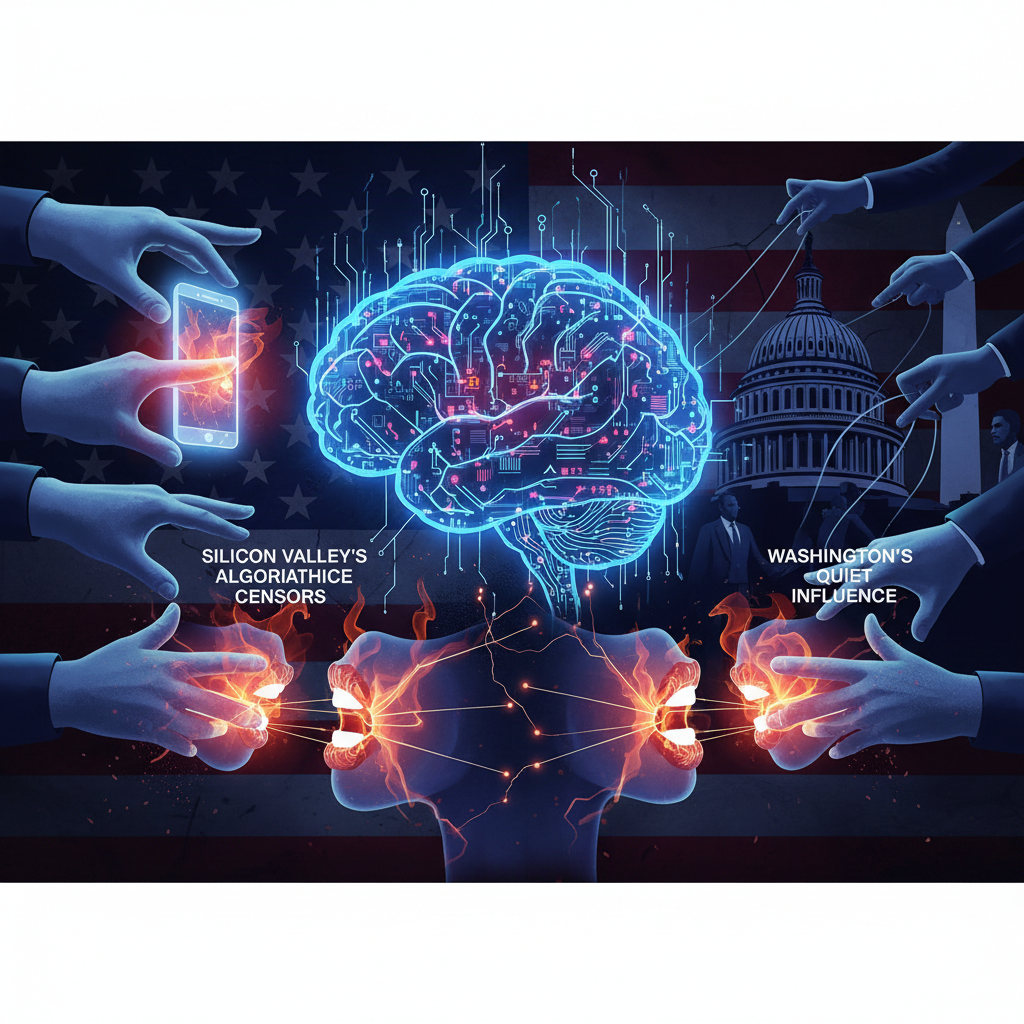
Conversely, civil liberties advocates and free speech proponents express deep concern. "We are outsourcing fundamental First Amendment decisions to proprietary algorithms owned by private corporations, often with little oversight," argues Professor David Greene, a constitutional law expert at the Electronic Frontier Foundation EFF. "The lack of transparency in how these algorithms are trained, what data they use, and how they make decisions creates a black box where due process is an illusion." This opacity is compounded by the fact that these platforms are not merely passive conduits; they are increasingly acting as publishers, making editorial decisions through their algorithms. Furthermore, the lobbying records tell a different story than the public pronouncements. Tech companies pour millions into Washington to shape legislation, often advocating for frameworks that grant them broad discretion in content moderation while simultaneously shielding them from liability for the content they host. My investigation reveals that Washington's AI policy is shaped by these players, often behind closed doors.
The real-world implications for the USA are substantial. Consider the 2024 election cycle, where AI-generated deepfakes and sophisticated misinformation campaigns proliferated. Platforms struggled to differentiate between satire, legitimate political commentary, and outright falsehoods. Many users reported arbitrary content removals or suspensions, particularly those expressing dissenting political views, leading to accusations of algorithmic bias. Small businesses and independent creators have seen their livelihoods impacted by automated demonetization or content suppression, often with little recourse. The chilling effect on speech is palpable; users self-censor to avoid algorithmic penalties, thereby narrowing the scope of public discourse. The very notion of a free and open internet, a cornerstone of American digital identity, is being eroded by these powerful, often opaque, systems.
Moreover, the influence extends beyond direct content removal. Generative AI models, such as OpenAI's ChatGPT or Google's Gemini, are increasingly used to create content. Their internal guardrails, designed to prevent the generation of harmful or biased text, can inadvertently censor legitimate queries or perspectives. If a user asks a generative AI for information on a controversial topic, and the AI refuses to provide it or offers a heavily sanitized version, it implicitly shapes the user's access to information and their understanding of the world. This subtle form of algorithmic gatekeeping is arguably more insidious than outright censorship, as it often goes unnoticed.
What should be done? A multi-pronged approach is necessary. First, there must be greater transparency from tech companies regarding their AI content moderation policies, the datasets used for training, and the performance metrics of their algorithms. Independent audits, perhaps mandated by a new federal agency or an expansion of an existing one like the Federal Trade Commission, could provide much-needed oversight. Second, robust and accessible appeals processes with human review are paramount. Users whose content is removed or whose accounts are restricted deserve a fair hearing, not just an automated rejection. Third, policymakers in Washington must resist the urge to legislate broad content mandates that could be easily weaponized by AI systems. Instead, they should focus on establishing clear legal frameworks that protect free speech while addressing genuine harms, differentiating between illegal content and merely offensive or controversial speech.
Finally, investment in explainable AI, or XAI, is crucial. If we can understand why an AI made a particular moderation decision, it becomes easier to identify and correct biases or errors. This is a complex technical challenge, but one that is vital for upholding democratic values in the digital age. The current trajectory, where powerful algorithms operate largely in the dark, is unsustainable for a society that values freedom of expression. The time for passive observation is over; active intervention is required to ensure that AI serves as an enabler of speech, not its silent censor. For more insights into the evolving landscape of AI and its societal impact, consider exploring reports from MIT Technology Review. The stakes are too high to allow algorithms to dictate the boundaries of our discourse. Furthermore, the ongoing debate about AI's role in shaping information access and content creation is echoed in discussions surrounding its impact on creative industries, as highlighted in articles like Pika Labs and the TikTok of Tomorrow: Why Vietnam's Creators Are Watching This AI Video Revolution [blocked], underscoring the pervasive nature of these challenges.
As citizens, we must demand accountability from both the tech giants and our elected officials. The future of free speech in America depends on it. The digital public square must remain a place where diverse voices can be heard, not just those approved by an algorithm or a corporate policy team.