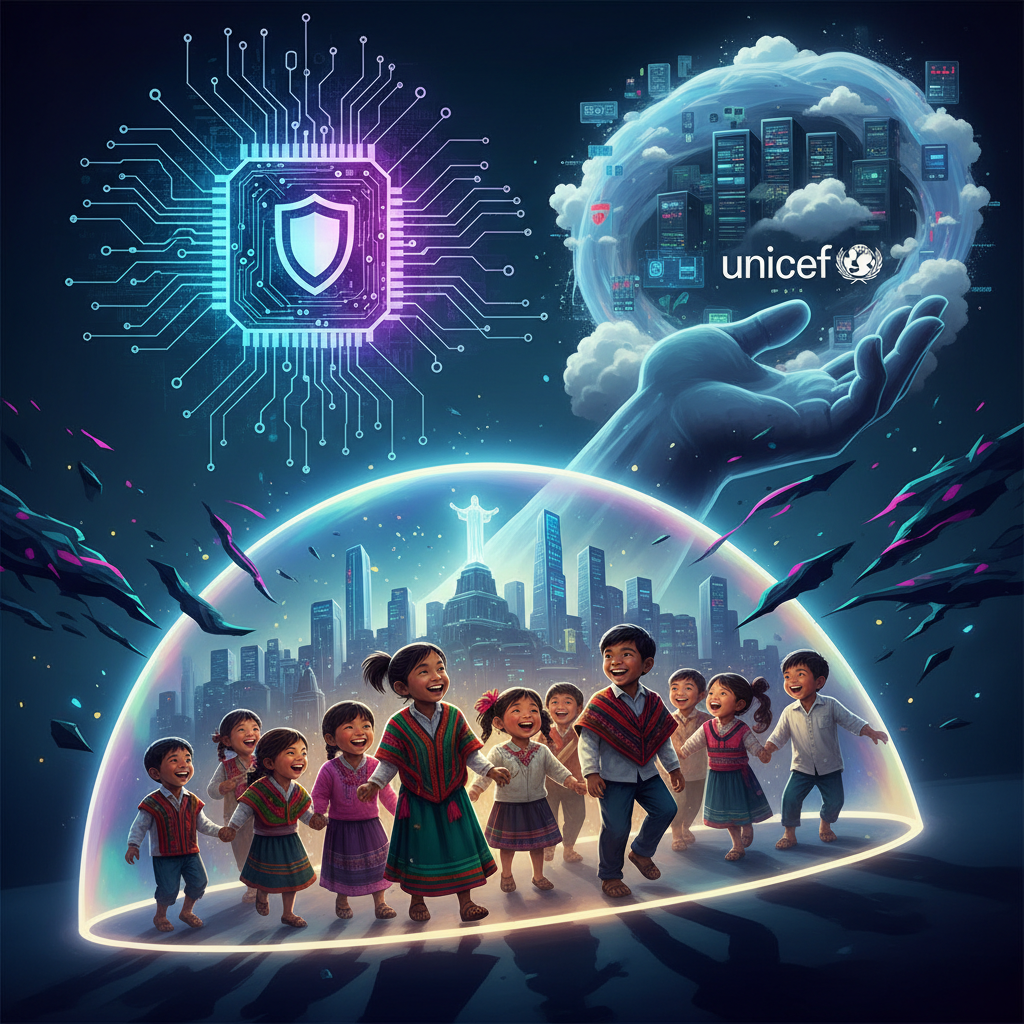

¡Hola, mis amigos! Mariànnà Sanchèz here, bubbling with excitement from our vibrant Ecuador, ready to pull back the curtain on a future that is not just bright, but truly safe for our children. We talk so much about AI's potential, its power to transform industries, to revolutionize conservation, but what about its most sacred purpose: protecting the most vulnerable among us, our children? I'm talking about a future, just five to ten years from now, where AI isn't just a tool, but a vigilant guardian, shielding our niños from the digital shadows of manipulation and harmful content. It's a vision that makes my heart sing, a true testament to how Ecuador's biodiversity meets AI and it's magical, extending even to the digital ecosystems our children inhabit.
Imagine this: it's April 2030. Little Sofia, here in Guayaquil, is exploring a new educational game on her tablet. Unbeknownst to her, a sophisticated AI, let's call it 'Guardian AI,' is working silently in the background. This isn't just a content filter, oh no. This is a dynamic, adaptive system, developed through a groundbreaking partnership between Google's DeepMind and Unicef, with significant input from local Ecuadorian tech hubs. Guardian AI analyzes not just the explicit content, but the subtle psychological cues, the manipulative patterns, the deepfakes designed to sow confusion or exploit innocence. It flags a seemingly innocuous advertisement that, based on Sofia's past interactions and developmental stage, is subtly pushing unhealthy body image ideals. The ad is instantly replaced with a positive, culturally relevant message, perhaps featuring children exploring the Amazon rainforest or celebrating Inti Raymi.
This isn't just about blocking the obviously bad stuff. That's yesterday's tech. This future vision is about proactive, personalized protection. It's about AI understanding the nuances of child psychology, recognizing the insidious creeping of manipulation before it takes root. It's about creating a digital environment that is as safe and nurturing as our physical world, a jardín digital where children can flourish without fear. And believe me, the journey to this future is already underway, with incredible strides being made right here in our corner of the world.
How do we get there from today, you ask? It's a multi-layered approach, a beautiful tapestry woven with technology, policy, and community engagement. The foundation is built on robust AI models, trained on vast, ethically sourced datasets, to identify harmful patterns. Companies like OpenAI and Anthropic, initially focused on general AI safety, have now dedicated significant resources to child protection. Their 'Constitutional AI' principles, for example, are being adapted to explicitly include child welfare guidelines, ensuring that AI models are inherently designed to prioritize minor safety and well-being.
One of the key milestones we're seeing unfold is the development of federated learning systems that allow AI models to learn from diverse data without compromising individual privacy. This is crucial for children's data. MIT Technology Review has highlighted how these privacy-preserving techniques are becoming central to sensitive applications like child protection. Here in Ecuador, our Ministry of Telecommunications and Information Society, alongside local universities like Espol, are actively contributing to these global efforts, ensuring our unique cultural context and linguistic nuances are integrated into these protective AIs. We're not just consumers of technology, we are co-creators, shaping it to reflect our values.
Another critical step is the establishment of global and local regulatory frameworks. By 2028, I predict we'll see the 'Global Child Digital Safety Accord,' a UN-backed initiative that sets international standards for AI-driven child protection. This accord, championed by nations like Ecuador, will mandate transparency in AI algorithms used in child-facing platforms and impose strict penalties for non-compliance. It will also foster cross-border collaboration, because digital threats don't respect borders, do they? This Ecuadorian startup just launched a pilot program with the Ministry of Education to integrate AI literacy into the national curriculum, teaching children not just how to use AI, but how to critically evaluate the content it generates.
Who wins in this future? Our children, first and foremost. They gain a safer, more enriching digital experience, free from the anxieties of online manipulation. Parents win, with peace of mind knowing their children are protected. Educators win, with AI tools that can personalize learning while safeguarding students. And responsible tech companies win, as they build trust and demonstrate their commitment to ethical AI development. Companies like Google, with their immense resources and AI expertise, are poised to be leaders in this space, developing the foundational 'Guardian AI' platforms that others can build upon. Their commitment to ethical AI, articulated by leaders like Sundar Pichai, is being put to the ultimate test and, I believe, will emerge victorious.
But who loses? The purveyors of harmful content, the manipulators, the exploiters. Their tactics will become increasingly ineffective as AI develops more sophisticated defenses. Platforms that refuse to adopt these protective measures will face severe regulatory consequences and lose user trust, eventually becoming irrelevant. There will be initial resistance, of course, from those who profit from the current, less regulated digital landscape. But the tide of public opinion, fueled by a collective desire to protect our young, will be too strong to resist.
What should readers do now? First, demand transparency from the platforms your children use. Ask tough questions about their content moderation and safety protocols. Second, support initiatives and companies that prioritize ethical AI and child protection. Look for the 'Guardian AI Certified' badge that will become a standard in the coming years. Third, engage in digital literacy education within your families and communities. Understanding how AI works, both its potential and its pitfalls, is our first line of defense. We must empower our children to be critical thinkers, even as AI protects them.
This future, where AI is a benevolent protector of our children, is not a distant dream. It's being forged right now, with every line of code, every policy discussion, and every parent's voice. It's a future where the incredible power of AI is harnessed for the purest of purposes: to nurture and safeguard the next generation. And from my vantage point here in Ecuador, watching our vibrant youth embrace technology with such joy, I can tell you, it's a future worth fighting for. It's the Galápagos of technology, evolving towards a more perfect, more humane digital world. Let's build it together! For more insights into how AI is shaping our world, you can always check out AI News for the latest developments.```