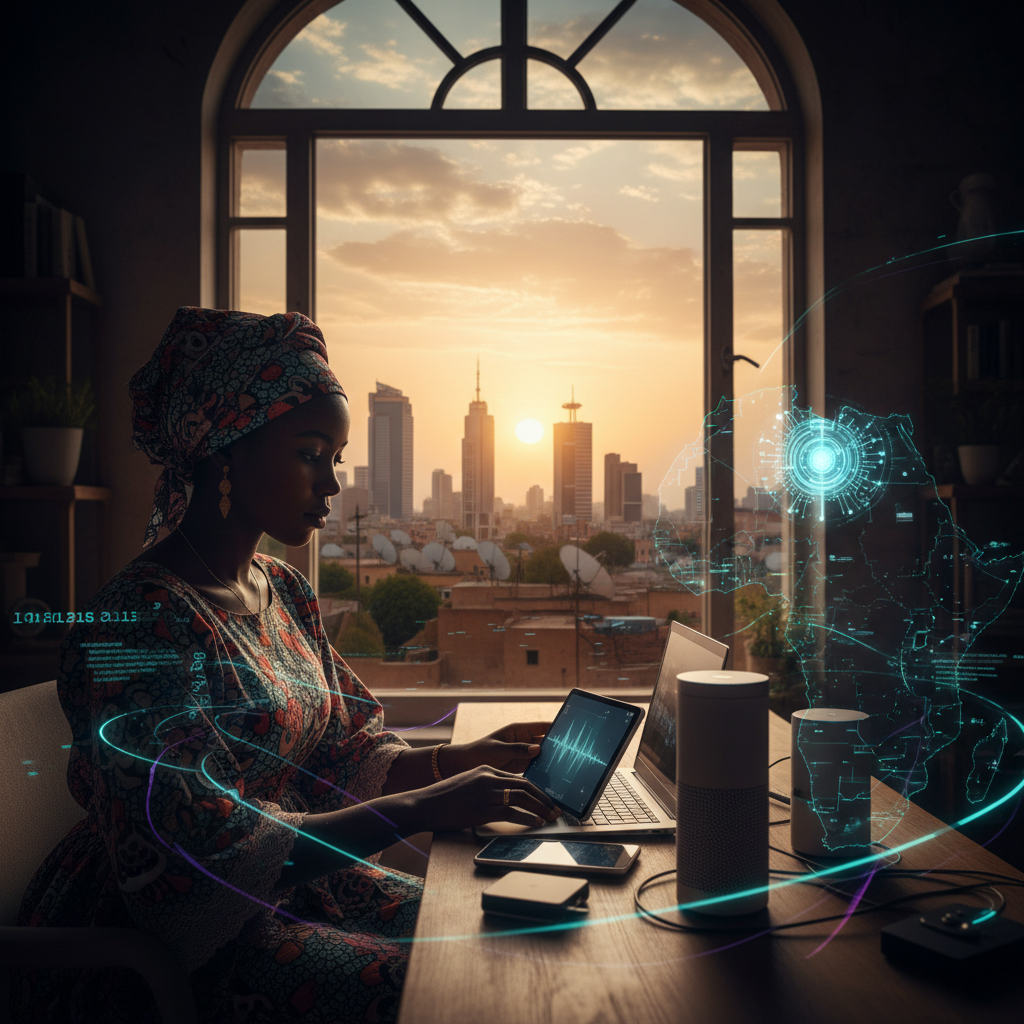

Ah, mes amis, have you felt it? That buzz in the air, that electric current of change that tells you something truly monumental is happening? Here in Burkina Faso, we feel it every day, from the bustling markets of Ouagadougou to the quiet coding bootcamps sprouting like baobab trees after the rain. And right now, the biggest rumble echoing across the digital savannah is coming from none other than Amazon, and their beloved Alexa. They are pouring billions into an AI overhaul, a complete brain transplant for their smart assistant, and the smart home assistant wars are heating up like a Sahelian midday sun!
For years, Alexa has been that friendly voice in our homes, playing music, setting timers, and answering questions. But let's be honest, for many of us outside the big tech hubs, Alexa felt a bit... distant. It spoke English, French, Spanish, sure, but what about Mooré, Dioula, or Fulfulde? What about the nuances of our cultures, the specific needs of our communities? That's where the excitement truly begins, because while Amazon is making its big moves, the real story, the one that makes my journalist heart sing, is how this global push is igniting a parallel, grassroots innovation right here on our continent.
Amazon's latest announcement, a reported $10 billion investment into a new, generative AI powered Alexa, isn't just an upgrade; it's a complete reimagining. We're talking about an Alexa that can understand complex, multi-turn conversations, anticipate your needs, and even learn your habits with a level of sophistication we've only dreamed of. Andy Jassy, Amazon's CEO, has been clear: this isn't just about better voice commands, it's about creating a truly proactive, intelligent companion. Imagine Alexa not just playing music, but suggesting a playlist based on your mood, the time of day, and even local weather patterns, all without you having to ask explicitly. The Verge recently detailed some of these ambitious plans, and it's clear Amazon is not holding back.
But what does this mean for us, for the families in Bobo-Dioulasso, for the entrepreneurs in Lomé, for the farmers in the Sahel? The tech giants, Google with its Gemini-powered Assistant, Apple with a revamped Siri, and Meta exploring its own AI agents, are all locked in a fierce battle for the smart home. They see a future where AI is embedded in every device, every interaction. And for good reason: market projections suggest the global smart home market could hit $250 billion by 2028, with a significant portion of that growth expected from emerging economies. This changes everything, not just for the consumers in New York or London, but for everyone.
Here's the thing: while the big players are busy perfecting their English and Mandarin models, a quiet revolution is being coded right now in places like the Ouagadougou Digital Lab. I spoke with Fatoumata Diallo, a brilliant young AI developer there. She told me,