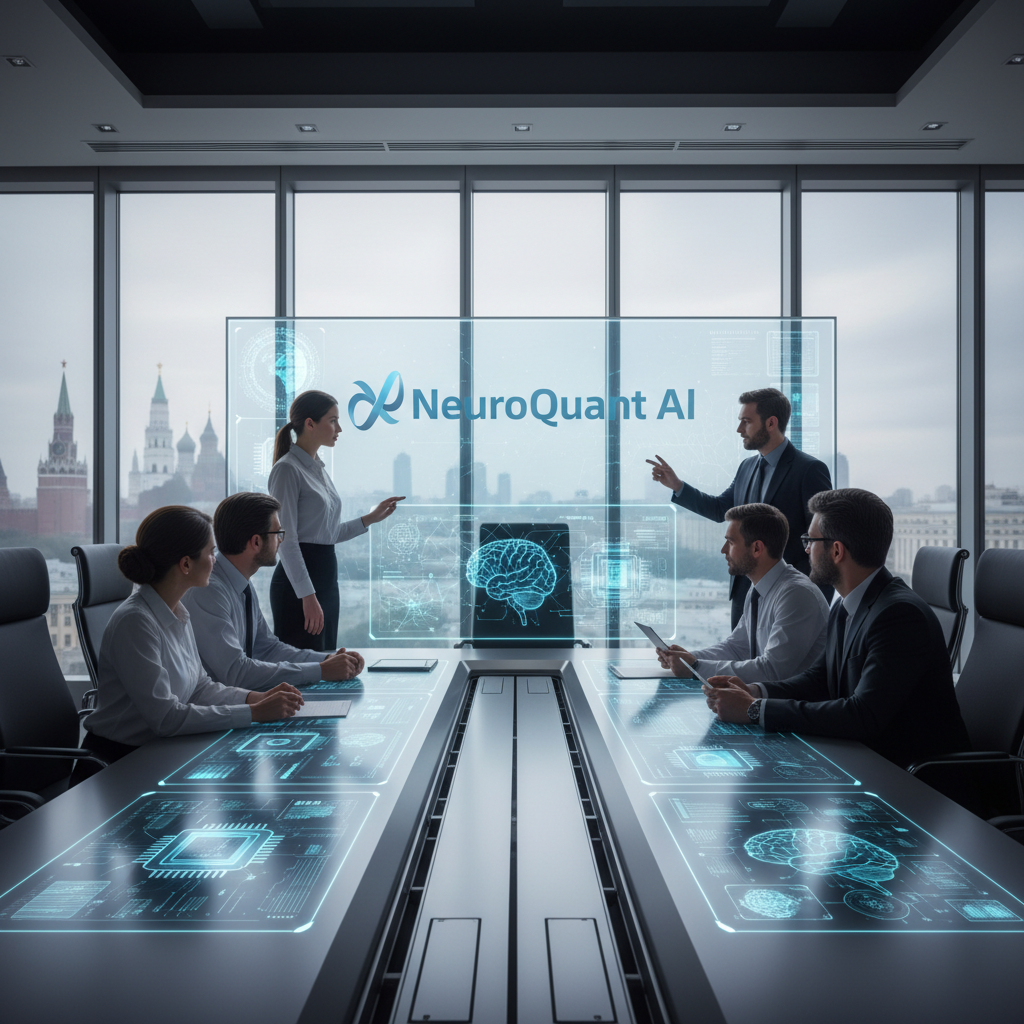

The hum of servers, a symphony of progress and power, echoes through the glass-walled offices of NeuroQuant AI in Moscow's Skolkovo Innovation Center. It is here, amidst the quiet intensity of engineers and data scientists, that a new frontier in healthcare is being forged. On a recent Tuesday morning, Dr. Anya Petrova, NeuroQuant AI's Chief Medical Officer, meticulously reviewed a 3D rendering of a patient's brain scan, her fingers dancing across a holographic display. The system, powered by NVIDIA's latest Blackwell architecture, highlighted anomalies with a precision that would have been unimaginable just a few years ago. This scene, replicated in their London hub, encapsulates the dual identity of a company navigating the complex intersection of cutting-edge technology, global ambition, and geopolitical realities.
NeuroQuant AI, a name that has only recently begun to whisper through the corridors of venture capital and medical research, is not just another AI startup. It is a testament to the relentless pursuit of computational power in the service of human health, and an intriguing case study in how Russian technological prowess, despite sanctions, continues to find avenues for global impact. My sources in the tech sector confirm that their diagnostic capabilities, particularly in early-stage neurological disease detection, are generating significant buzz.
The Genesis: From Academia to Accelerated Computing
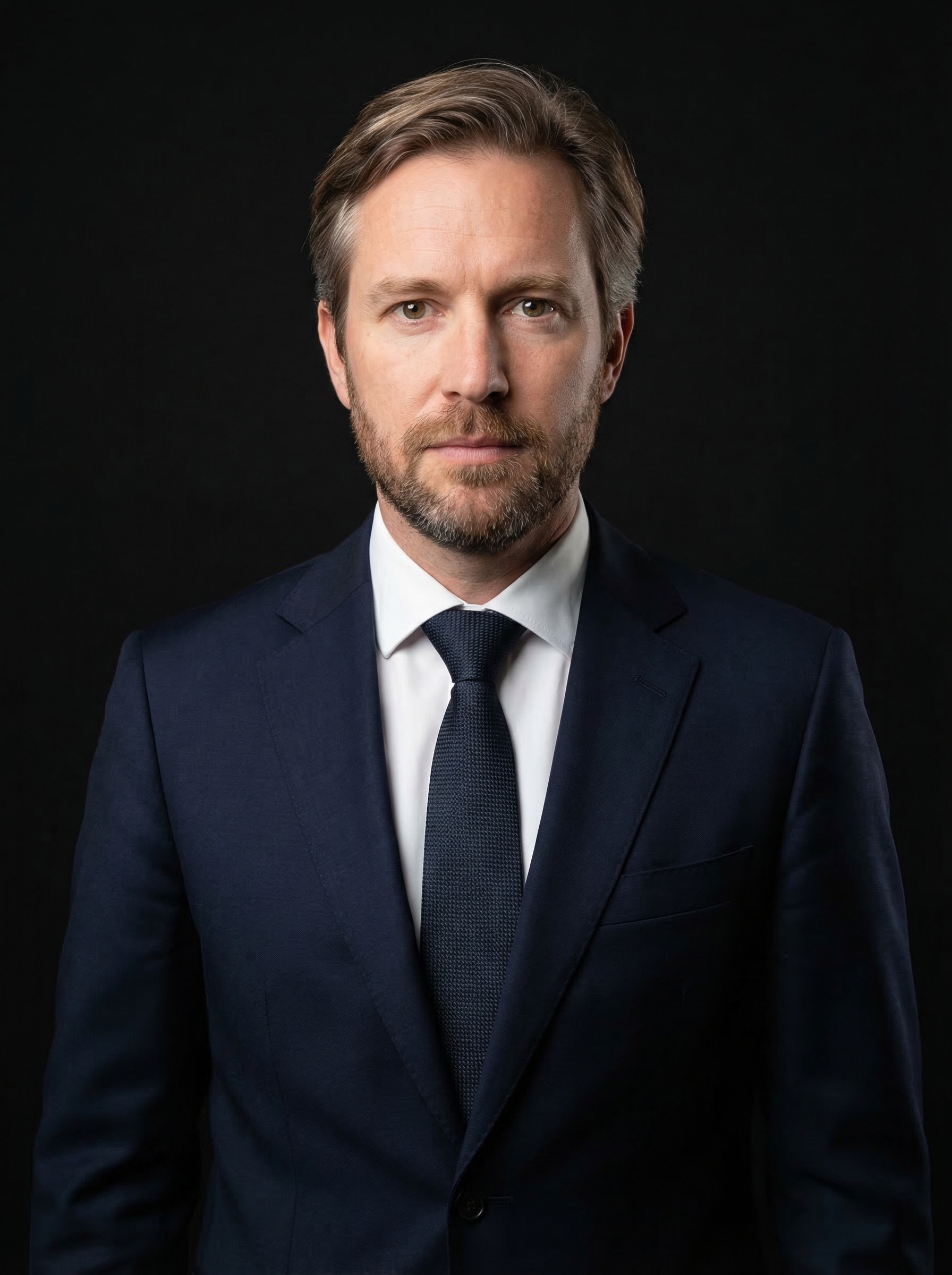
The company's origin story begins not in a Silicon Valley garage, but in the hallowed halls of the Lomonosov Moscow State University. Dr. Mikhail Volkov, NeuroQuant AI's visionary CEO, a former astrophysicist with a penchant for complex algorithms, co-founded the company in late 2019 with Dr. Petrova, a renowned neurologist. Their initial goal was modest: to apply advanced machine learning techniques to vast datasets of medical imagery, seeking patterns invisible to the human eye. The breakthrough came with their early adoption of GPU-accelerated computing, recognizing early on that traditional CPUs were simply inadequate for the scale of data they aimed to process. "We realized that the future of medical diagnostics was inextricably linked to the future of high-performance computing," Dr. Volkov explained to me during a rare interview, his gaze intense. "NVIDIA's Cuda platform, even in its earlier iterations, was the only viable path forward for the kind of deep learning we envisioned."
Their early work, initially focused on epilepsy prediction, quickly drew attention. By 2021, they had secured a $12 million Series A funding round led by London-based Albion Ventures, with participation from several Russian private equity firms. This initial capital allowed them to expand their team and establish their first international office in London, a strategic move to access European medical markets and talent. Subsequent rounds, a $45 million Series B in 2023 led by Singapore's Temasek Holdings, and a $100 million Series C earlier this year anchored by Japan's SoftBank Vision Fund, propelled them into the global spotlight. This funding trajectory underscores the international appetite for disruptive healthcare AI, even when originating from a geopolitically sensitive region. Their current annual revenue run rate, I am told, comfortably exceeds $150 million, a remarkable feat for a company still in its relatively nascent stages.
The Business Model: Precision Diagnostics as a Service
NeuroQuant AI's core business model revolves around offering its proprietary diagnostic platform as a service to hospitals, research institutions, and pharmaceutical companies. They do not sell hardware or software licenses directly. Instead, clients integrate NeuroQuant AI's cloud-based or on-premise solutions, which then process medical imaging data, such as MRI, CT, and PET scans, to provide highly accurate and rapid diagnostic insights. Their algorithms are particularly adept at identifying subtle biomarkers for neurodegenerative diseases like Alzheimer's and Parkinson's, as well as complex oncological conditions. This approach allows them to monetize their intellectual property and computational expertise without requiring clients to make massive upfront investments in specialized hardware.
Key customers include leading medical centers like the Mayo Clinic, Great Ormond Street Hospital, and pharmaceutical giants such as Pfizer and Novartis, who utilize NeuroQuant AI's platform for accelerating drug discovery and clinical trial stratification. The company employs approximately 400 individuals globally, with roughly half based in Moscow and the remainder distributed across London and a smaller research outpost in Tokyo. This distributed structure reflects both their talent acquisition strategy and their efforts to mitigate geopolitical risks.
Competitive Landscape and Differentiation
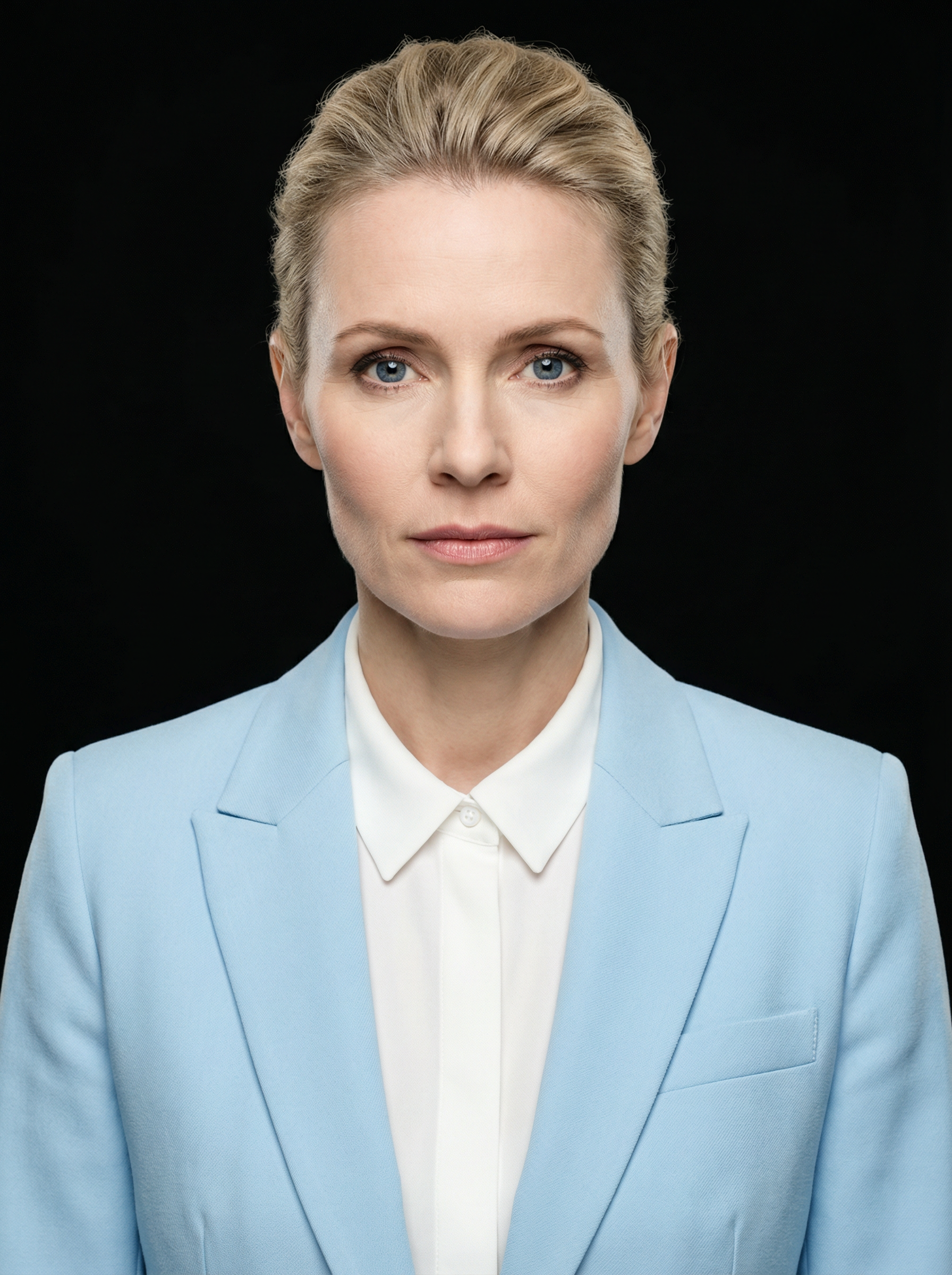
The healthcare AI market is, predictably, crowded. Competitors range from established tech giants like Google Health and IBM Watson Health, to well-funded startups such as PathAI and Tempus. NeuroQuant AI differentiates itself through several key factors. Firstly, their deep specialization in neurological and oncological imaging gives them a precision edge. Secondly, their early and aggressive adoption of the most powerful GPU architectures, now including NVIDIA's Blackwell, provides a significant computational advantage. "While others are still optimizing for older architectures, we are already leveraging Blackwell's FP8 capabilities for unprecedented inference speeds," stated Dr. Elena Ivanova, Head of Research at NeuroQuant AI, based in Tokyo. This allows them to process larger datasets and develop more complex models faster. Thirdly, their unique blend of Russian mathematical rigor and Western clinical validation provides a robust foundation for their algorithms.
The Team, Culture, and Challenges
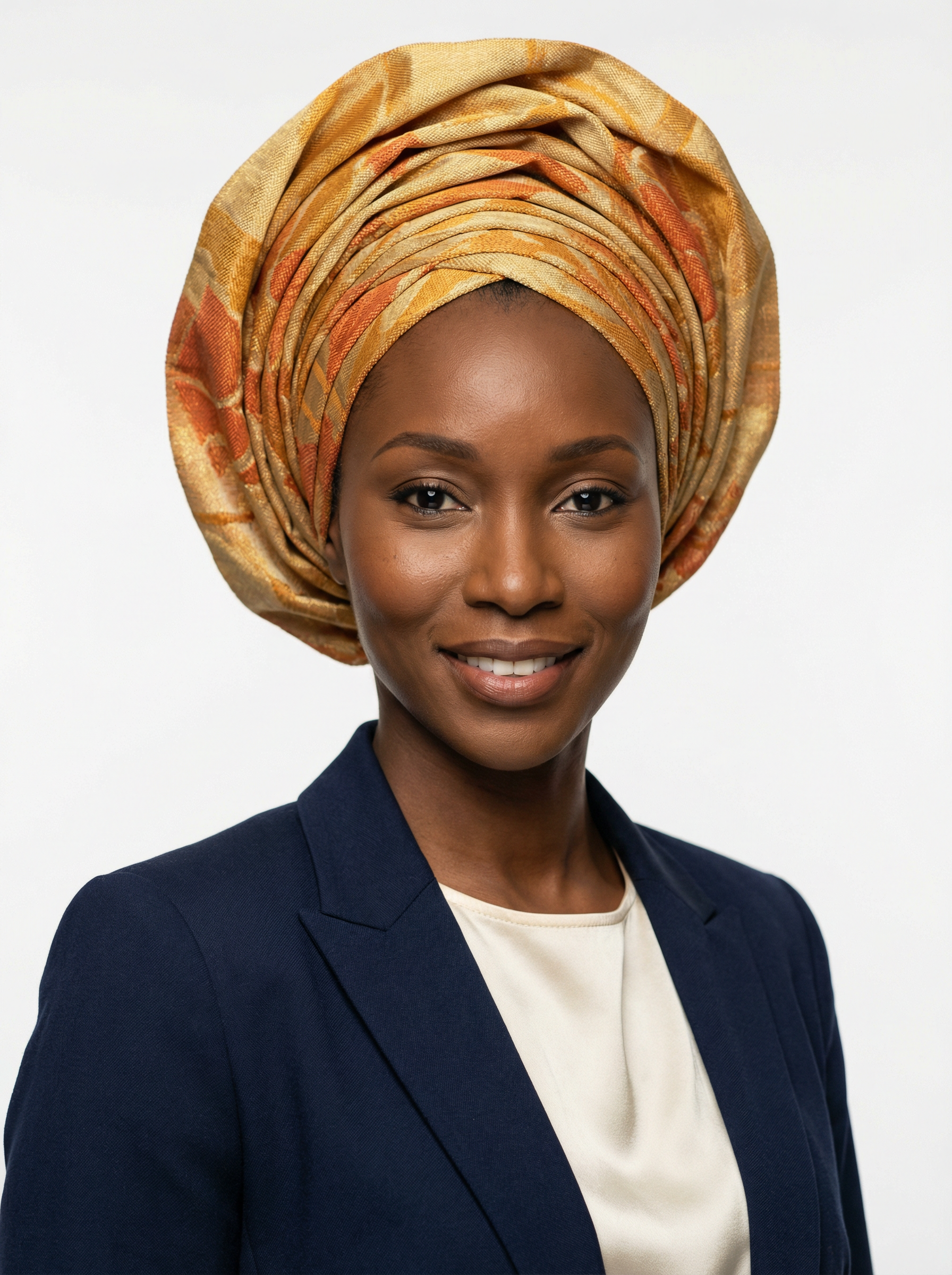
Dr. Volkov's management style is described as intensely analytical, demanding precision and innovation from his teams. The company culture, a blend of Moscow's academic intensity and London's pragmatic commercialism, fosters a spirit of relentless problem-solving. Key hires, like Dr. Petrova from the Sechenov University and Dr. Ivanova, a former Google DeepMind researcher, underscore their commitment to top-tier talent. However, scaling a company with significant operations in Russia presents unique challenges. Sanctions, while not directly targeting healthcare AI, create an intricate web of compliance and logistical hurdles. The Kremlin's digital strategy reveals a growing emphasis on domestic AI development, which while supportive in some ways, also introduces complexities regarding data sovereignty and intellectual property. This balancing act requires careful navigation.
The Bull Case and the Bear Case
The bull case for NeuroQuant AI is compelling. The global healthcare AI market is projected to reach hundreds of billions of dollars within the next decade, driven by an aging population, rising chronic disease rates, and the insatiable demand for more efficient diagnostics. NeuroQuant AI's technological lead, strong customer base, and diversified funding position them for significant growth. Their ability to attract top talent globally, despite their Russian roots, speaks volumes about their scientific credibility. According to Reuters, investments in healthcare AI continue to surge, indicating a robust market.
However, the bear case cannot be ignored. Regulatory environments for medical AI are still evolving, and a patchwork of national and international laws could impede their global expansion. Intense competition from well-capitalized tech giants could squeeze margins. Moreover, the geopolitical climate remains a persistent shadow. While NeuroQuant AI has carefully structured its operations to separate its international business from its Russian entity, the risk of escalating sanctions or political pressure always looms. "The path to global leadership is never without its obstacles, especially when navigating complex geopolitical currents," observed Professor Sergei Lavrov, an expert in international technology policy at the Higher School of Economics in Moscow.
What Lies Ahead
NeuroQuant AI is currently investing heavily in explainable AI, aiming to make their diagnostic outputs more transparent and interpretable for clinicians. They are also exploring partnerships with medical device manufacturers to integrate their AI directly into imaging equipment. Moscow's AI ambitions tell a bigger story, one of a nation striving for technological relevance despite global isolation. NeuroQuant AI, with its dual identity and cutting-edge technology, stands as a potent symbol of this complex reality. Whether it can maintain its delicate balance between scientific innovation and geopolitical pragmatism will determine its ultimate success in reshaping the future of global healthcare. The journey of NeuroQuant AI is a reminder that in the world of advanced technology, the lines between science, business, and geopolitics are often blurred, and the pursuit of progress continues, regardless of borders. More insights into the broader AI landscape can be found on TechCrunch.