
The vibrant tapestry of fashion, much like the intricate songket patterns woven in Terengganu, has always been about anticipating the next thread, the next color, the next silhouette. But in an era of hyper-speed trends and mounting environmental concerns, the industry is finding itself at a crossroads. Enter artificial intelligence, not as a destroyer of creativity, but as a powerful loom, weaving together data, design, and demand to create a more efficient and sustainable future. This is not just about fancy algorithms; it is about fundamentally rethinking how clothes are made, bought, and even discarded. Let me explain why this matters for Southeast Asia.
For decades, fashion operated on a cycle of intuition and guesswork. Designers would predict trends, manufacturers would produce in bulk, and retailers would hope for the best. This often led to massive overproduction, unsold inventory, and a colossal environmental footprint. The World Bank estimates that the fashion industry is responsible for up to 10% of global carbon emissions, more than international flights and maritime shipping combined. This is a staggering figure, especially when we consider the sheer volume of textile waste ending up in landfills, often from clothes barely worn a handful of times.
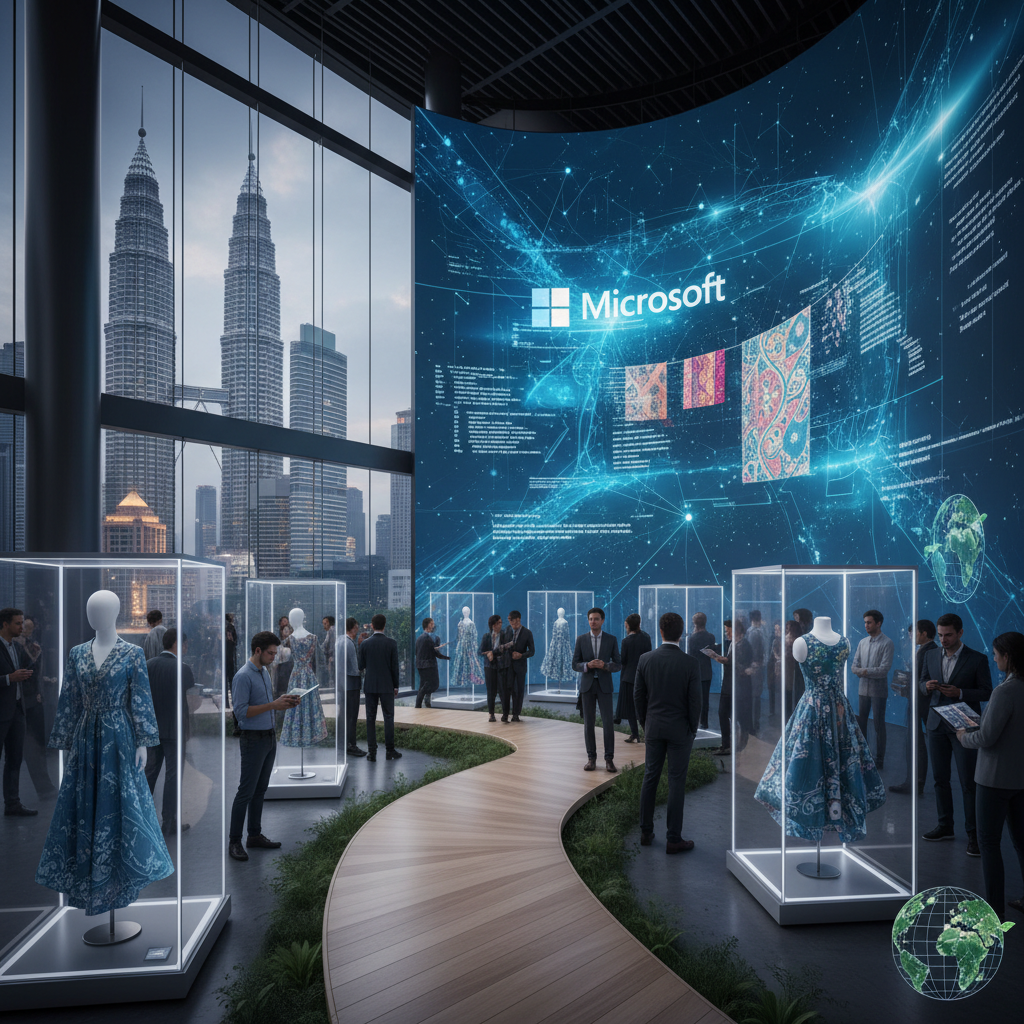
Now, AI is stepping in to address these inefficiencies. One of the most impactful applications is in trend prediction. Imagine an AI that can analyze social media feeds, runway shows, sales data, and even geopolitical events to forecast what consumers will want months, even a year, in advance. Companies like Microsoft, through their Azure AI services, are providing the computational backbone for fashion brands to build these sophisticated predictive models. These models are not just looking at hashtags; they are discerning subtle shifts in consumer sentiment, cultural movements, and even macroeconomic indicators. For instance, a rise in sustainable living content online might signal a preference for natural fibers or upcycled garments.
“The ability to accurately predict trends reduces waste by allowing brands to produce closer to demand,” explains Dr. Sarah Lim, a leading fashion technologist based in Singapore. “We are moving away from a push model, where products are pushed onto consumers, to a pull model, where consumer demand pulls production. AI is the engine driving this transformation.” This data-driven approach is a far cry from the traditional fashion houses, where a designer's gut feeling reigned supreme. The architecture is fascinating, involving deep learning models trained on vast datasets of images, text, and sales figures, capable of identifying patterns indiscernible to the human eye.
Beyond prediction, AI is revolutionizing the customer experience, particularly with virtual try-on technology. Remember the days of endless queues in fitting rooms, or the frustration of ordering clothes online only for them to not fit? Virtual try-on, powered by computer vision and augmented reality, is changing that. Companies like Google and Meta are investing heavily in this space, with Meta's AI research contributing to more realistic avatar creation and clothing simulation. Imagine using your smartphone to scan your body, creating a hyper-realistic digital twin, and then virtually trying on an outfit from a local boutique in Kuala Lumpur or a global brand, seeing exactly how it drapes, fits, and moves. This not only enhances the online shopping experience but also significantly reduces returns, another major source of waste and logistical inefficiency.
For Malaysia, a nation with a thriving textile industry and a growing e-commerce sector, these advancements present immense opportunities. Our local designers, often celebrated for their fusion of traditional motifs with contemporary styles, can leverage AI for market insights, helping them tailor collections that resonate with both local and international audiences. Imagine a batik designer using AI to predict which color palettes or patterns will be most popular in the upcoming Raya season, or a modest fashion brand optimizing their inventory based on real-time global demand. This is not about replacing human creativity; it is about augmenting it, giving designers powerful tools to refine their vision and reach wider markets. TechCrunch often highlights startups in this very space, showing how innovation is bubbling up globally.
However, the most profound impact of AI in fashion might be in driving sustainability. Beyond reducing overproduction, AI can optimize supply chains, identify sustainable material alternatives, and even assist in circular economy initiatives. For example, AI can track the lifecycle of garments, from raw material sourcing to end-of-life, helping brands understand their environmental impact and find ways to extend product utility through repair, resale, or recycling. Companies are exploring how AI can sort textile waste more efficiently, identifying different fiber compositions for better recycling outcomes, a challenge that has long plagued the industry. MIT Technology Review has covered extensively how AI is being deployed for environmental solutions across various industries.
Malaysia is positioning itself perfectly to embrace these changes. With our strong digital infrastructure and a government keen on fostering innovation, particularly in the digital economy, we can become a hub for sustainable fashion tech in Southeast Asia. Initiatives like the Malaysia Digital Economy Corporation (mdec) are actively promoting AI adoption across various sectors, including creative industries. Our universities are also producing a new generation of talent skilled in both design and data science, ready to bridge these two worlds.
Of course, challenges remain. The initial investment in AI infrastructure and talent can be substantial. There is also the ethical consideration of data privacy, especially with personal body scans for virtual try-ons. Ensuring that AI models are not perpetuating biases found in historical fashion data, such as those related to body types or skin tones, is also crucial. As with any powerful technology, responsible deployment is key.
Ultimately, AI is not just a tool for efficiency; it is a catalyst for transformation. It is helping the fashion industry shed its skin of excess and embrace a future that is more thoughtful, more personalized, and crucially, more sustainable. From the bustling textile markets of Jalan Tuanku Abdul Rahman to the global e-commerce platforms, AI is stitching together a new narrative for fashion, one where innovation and responsibility are inextricably linked. The future of fashion, powered by intelligent algorithms, promises to be as rich and diverse as the cultures it serves, and Malaysia is ready to contribute its unique thread to this global tapestry.