
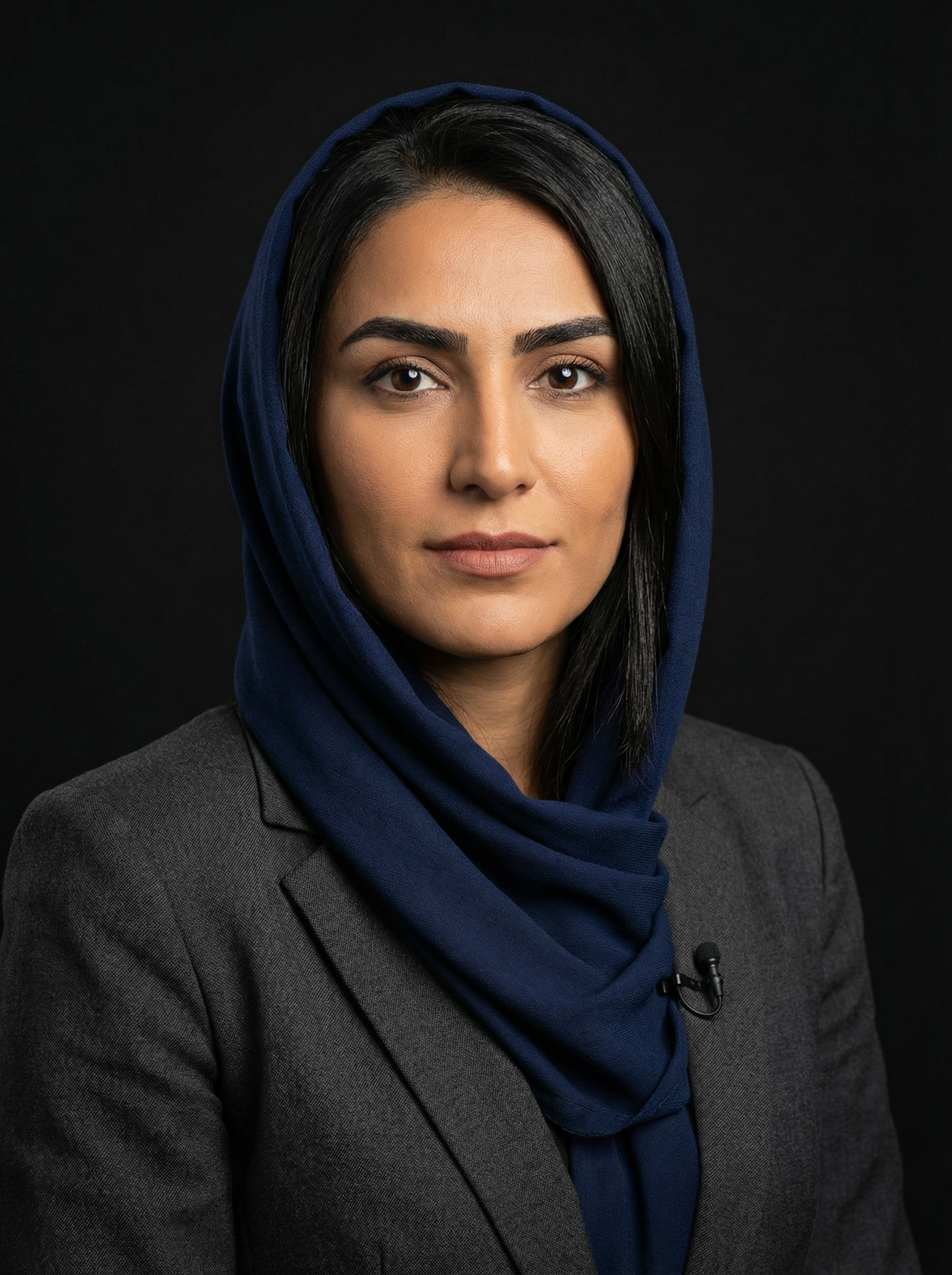
The dust of Kabul often carries stories untold, voices unheard, and justice deferred. In a nation grappling with decades of conflict and a legal system under immense strain, the notion of artificial intelligence offering a path to fairness might seem like a distant dream, or perhaps, a dangerous fantasy. Yet, from this very crucible, a vision of equitable AI is emerging, championed by Dr. Zara Khan, a woman whose life has been deeply intertwined with the pursuit of justice.
Dr. Khan, a former judge in Afghanistan's family courts, witnessed firsthand the agonizing slowness, the inconsistencies, and the profound human cost of a justice system struggling with limited resources, historical biases, and complex local customs. "I saw mothers waiting years for custody decisions, families ruined by property disputes, and individuals languishing in pre-trial detention simply because the system was overwhelmed," she recounts, her voice quiet but firm. Her "aha moment" was not a sudden flash of insight, but a slow, painful realization during a particularly harrowing case involving a woman accused of a minor offense, whose fate was sealed by procedural delays and a lack of clear precedent. "It became clear that human dedication alone, however fierce, was not enough. We needed a tool, a partner, to untangle the knots of bureaucracy and bring clarity to chaos." This was not about replacing human judgment, she emphasizes, but about empowering it.
The Problem: A Justice System Under Duress
Afghanistan's legal framework is a complex tapestry woven from traditional Sharia law, civil codes, and various decrees, often interpreted differently across regions. The challenges are manifold: a shortage of trained legal professionals, limited access to reliable legal records, and a pervasive lack of transparency. For the average citizen, navigating this system is akin to traversing a minefield blindfolded. Predictive policing, sentencing algorithms, and similar AI applications, often discussed in Western contexts, are fraught with peril here, given the scarcity of clean, unbiased historical data and the potential for these tools to exacerbate existing societal inequalities. The very idea of an algorithm dictating a person's future in such a delicate environment demands extreme caution and a deep understanding of local nuances.
Dr. Khan founded Adalat AI, meaning 'Justice AI' in Dari, with a singular mission: to develop AI tools that enhance, rather than undermine, the principles of fairness and due process in fragile judicial systems. Her approach is rooted in an understanding that technology should serve the most vulnerable, not simply replicate the biases of the powerful. "We are not building a system to predict crime based on zip codes, a concept that is deeply flawed and ethically bankrupt," she explains. "Instead, we are building tools to ensure that every case, every individual, receives due consideration, that legal precedents are accessible, and that procedural fairness is upheld."
The Technology: Contextual AI for Judicial Support
Adalat AI's flagship product, 'HukmNav,' is a suite of AI-powered applications designed to assist judges, lawyers, and legal aid workers. It is not a black-box predictive model. Instead, HukmNav focuses on three core areas:
- Case Management and Prioritization: Utilizing natural language processing (NLP) to analyze case documents, identify key legal issues, and flag urgent matters, such as cases involving minors, domestic violence, or prolonged pre-trial detention. This helps courts prioritize cases that demand immediate attention, reducing backlogs by up to 30% in pilot programs.
- Legal Research and Precedent Analysis: A vast, curated database of Afghan legal texts, Sharia interpretations, and past court rulings, accessible through an intuitive interface. HukmNav employs sophisticated retrieval augmented generation (RAG) techniques, similar to those used by OpenAI's GPT models or Anthropic's Claude, but trained specifically on Afghan legal corpus, to provide judges with relevant precedents and legal arguments, ensuring consistency in rulings. This is crucial in a system where formalized, easily searchable digital records are rare.
- Procedural Compliance and Fairness Auditing: An AI agent that monitors case progression, identifies potential procedural irregularities, and alerts judicial staff to ensure adherence to legal timelines and due process. It can detect anomalies that might indicate bias or undue influence, acting as an internal audit mechanism. This is not about judgment, but about flagging discrepancies for human review.
"Our AI is designed to be an assistant, a diligent clerk, a tireless researcher, not a judge," says Dr. Khan. "It provides objective information and flags potential issues, allowing human judges to make informed decisions with greater speed and consistency. Behind every algorithm is a human story, and our technology is built to honor that story, not overshadow it." The data used for training is meticulously cleaned and anonymized, focusing on legal texts and adjudicated case outcomes, not on individual demographics or sensitive personal information, to mitigate bias.
Market Opportunity: A Global Need for Ethical Justice AI
The immediate market for Adalat AI is Afghanistan itself, where the need is profound. However, Dr. Khan envisions a broader application. Many nations with developing legal systems, or those recovering from conflict, face similar challenges: overwhelmed courts, lack of resources, and a struggle for transparency. The global market for legal tech is projected to reach over $50 billion by 2030, with a significant portion dedicated to AI-driven solutions. While much of this focuses on corporate law in developed economies, the humanitarian and public sector legal tech market is nascent but growing rapidly. "We estimate that over 60 countries could benefit from a context-aware, ethically designed judicial AI system like ours," states Omar Sharif, Adalat AI's Chief Operating Officer, a former UN legal advisor. "The potential for impact, and for sustainable growth, is immense. This is about dignity, about ensuring that justice is not a luxury, but a right accessible to all."
Adalat AI recently closed a seed round of $5 million, led by a consortium of impact investors and the Afghanistan Reconstruction and Development Fund, with additional strategic investment from Google's philanthropic AI for Good initiative, recognizing the unique, ethical approach taken by the startup. TechCrunch highlighted their innovative approach in a recent piece on emerging markets AI solutions.
Competitive Landscape: Distinguishing from the Giants
The AI in criminal justice space is contentious. Companies like Palantir have faced criticism for their predictive policing tools, which have been accused of perpetuating systemic biases. Other firms, often backed by large tech players, focus on e-discovery or corporate legal research, a different segment entirely. Adalat AI distinguishes itself through its explicit commitment to ethical AI development, its focus on judicial support rather than predictive policing, and its deep contextual understanding of complex legal environments. While companies like LexisNexis and Thomson Reuters offer legal research tools, they lack the specific contextualization for Afghan law and the procedural fairness auditing capabilities that Adalat AI provides. Furthermore, Adalat AI's open architecture allows for integration with existing, often rudimentary, digital court systems, a flexibility many larger, proprietary solutions lack. Their commitment to local data sovereignty also sets them apart, ensuring sensitive legal information remains within national borders and under local control.
"Our competitors are often focused on maximizing efficiency for profit, or on deploying 'one-size-fits-all' solutions that ignore local realities," explains Dr. Khan. "We are building for resilience, for fairness, and for the unique needs of communities that have been historically underserved by technology. This is not just a product; it is a philosophy."
What's Next: Expansion and Ethical Leadership
Adalat AI plans to expand its pilot programs to several provinces across Afghanistan, gathering more data and refining its algorithms. The next phase involves developing modules for legal aid organizations, empowering them to serve more clients with greater efficiency. Dr. Khan is also actively engaging with international legal bodies and human rights organizations to advocate for responsible AI deployment in justice systems globally. She believes that the lessons learned in Afghanistan, a place where the stakes are incredibly high, can inform best practices for AI in justice worldwide. Her vision extends beyond Afghanistan's borders, aiming to make Adalat AI a beacon for ethical, context-aware AI solutions in other post-conflict or developing nations, particularly in regions of Africa and Southeast Asia facing similar judicial challenges. The company is already in preliminary discussions with legal reform initiatives in parts of the Sahel region and Southeast Asia, exploring how their framework can be adapted. MIT Technology Review recently featured a discussion on the need for localized AI solutions in justice, echoing Adalat AI's mission.
In a world often dazzled by the raw power of AI, Dr. Zara Khan reminds us that true innovation lies not just in what technology can do, but in how it serves humanity. Her work with Adalat AI is a powerful testament to the idea that even in the most challenging circumstances, the pursuit of justice can find a formidable ally in thoughtfully designed artificial intelligence, guided by a profound ethical compass. It is a story of hope, resilience, and a steadfast belief in the potential for technology to uplift, rather than diminish, the human spirit. The journey is long, but the first steps taken in Kabul are echoing with quiet power, promising a future where justice is truly for all. For more on the ethical considerations of AI, readers might find this Wired article insightful.