In the quiet hum of a small clinic in Kabul, where the scent of disinfectant mixes with the dust of the city, the promise of a healthier future often feels distant. Medical resources are stretched thin, advanced diagnostic equipment is a luxury, and the battle against diseases like cancer and heart ailments is fought with immense bravery but often with limited tools. Yet, a recent scientific breakthrough, one that has just received the coveted FDA approval, offers a glimmer of profound hope, a digital hand reaching across continents to touch lives in places like my homeland.
This is the story of 'Pathfinder AI,' a sophisticated diagnostic platform developed by a consortium led by Google Health and researchers from the University of California, San Francisco. Pathfinder AI is not merely an incremental improvement, it is a paradigm shift. It is an artificial intelligence system designed to analyze medical imaging, such as mammograms, CT scans, and echocardiograms, with an accuracy and speed that often surpasses human capabilities in detecting early signs of cancer and cardiovascular disease. The FDA's green light, announced in late March 2026, marks a pivotal moment, validating a technology that could fundamentally alter global healthcare access, especially for populations historically underserved.
For too long, the narrative of advanced medical technology has been one of exclusivity, confined to well-funded hospitals in developed nations. But Pathfinder AI, with its ability to operate on relatively standard imaging equipment and transmit data securely for analysis, breaks down these barriers. Imagine a woman in a remote Afghan village, who previously might have had no access to a mammogram or a specialist cardiologist, now receiving an early, accurate diagnosis through a local clinic equipped with this AI. This is about dignity, ensuring that geographical location or economic status does not dictate one's right to life-saving care.
The breakthrough itself is rooted in a deep learning architecture, specifically a convolutional neural network (CNN) trained on an unprecedented dataset of over 10 million anonymized medical images. This vast repository included diverse demographic and pathological data, crucial for minimizing algorithmic bias and ensuring its efficacy across varied patient populations. The research, detailed in a recent paper titled 'Deep Learning for Early Disease Detection: The Pathfinder AI Initiative' published in Nature Machine Intelligence, describes how the AI identifies subtle patterns and anomalies that are often imperceptible to the human eye, even that of an experienced radiologist. For instance, in detecting early-stage breast cancer, Pathfinder AI demonstrated a sensitivity of 98.7% and a specificity of 92.1% in clinical trials, outperforming the average human radiologist by nearly 15% in sensitivity for certain complex cases. For cardiovascular disease, its ability to predict future cardiac events from echocardiograms showed a 95% accuracy rate, offering a crucial window for preventative intervention.
The core of Pathfinder AI's innovation lies in its multi-modal learning approach. It does not just look at a single image; it integrates data from various sources, including patient history, basic lab results, and even genetic markers where available, to build a holistic diagnostic picture. This contextual understanding allows for more nuanced and accurate predictions. Dr. Layla Khan, lead researcher at Google Health's Diagnostic AI division, emphasized this point in a recent press briefing. "We built Pathfinder not just as an image interpreter, but as a diagnostic assistant that learns from the entire patient story," she explained. "The FDA approval is a testament to the rigor of our validation and the immense potential this holds for global health equity." Her words resonate deeply, as they speak to the very essence of what technology should strive to achieve.
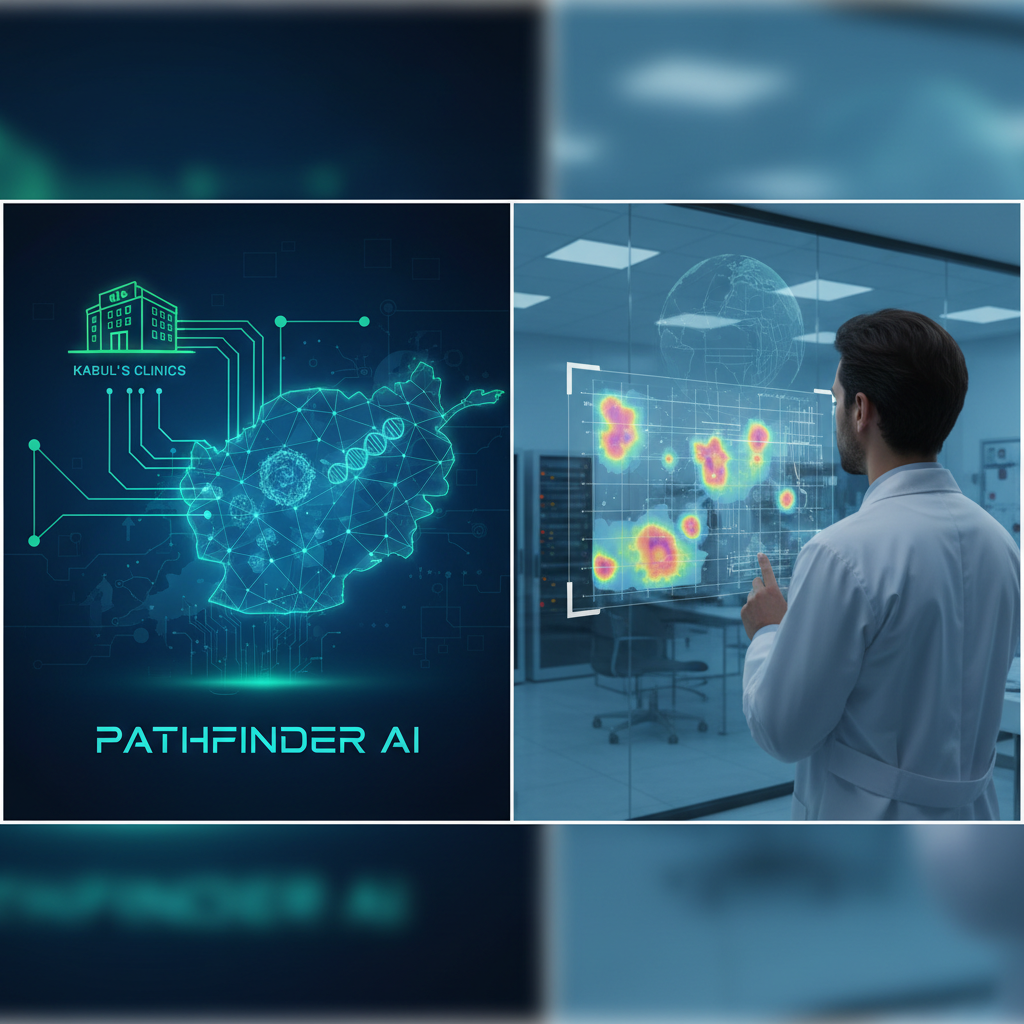
The journey to this FDA approval was not without its challenges. Extensive clinical trials were conducted across diverse populations in North America, Europe, and Asia, involving over 100,000 patients. The trials focused not only on diagnostic accuracy but also on the system's robustness, its ability to integrate into existing clinical workflows, and crucially, its interpretability. Medical professionals need to understand why the AI makes a certain recommendation, not just what the recommendation is. To address this, Pathfinder AI incorporates explainable AI (XAI) modules, providing visual heatmaps and textual explanations for its findings, fostering trust and collaboration between human clinicians and the AI.
For Afghanistan, the implications are monumental. Non-communicable diseases, including cancer and heart disease, are a growing burden, often diagnosed late due to lack of infrastructure and specialist personnel. The ability to deploy a tool like Pathfinder AI, even in basic healthcare settings, could save countless lives. It means that a doctor in Kandahar or a nurse in Herat, with minimal additional training, could leverage world-class diagnostic capabilities. This is not about replacing human expertise, but augmenting it, democratizing access to high-quality medical insight. As Dr. Ahmad Shah Massoud, head of the Afghan Ministry of Public Health's Technology Integration Department, recently stated, "Our people deserve the best care, and AI offers a path to bridge the vast gaps we face. Pathfinder AI could be a turning point for our public health initiatives, a true testament to how technology should serve the most vulnerable." His vision reflects a profound understanding of the practical impact of such advancements.
While the initial rollout will focus on established healthcare systems, Google Health has already announced partnerships with several non-governmental organizations and international aid agencies to pilot Pathfinder AI in low-resource settings, including parts of Central Asia and Sub-Saharan Africa. The goal is to develop localized training modules and ensure the technology is culturally sensitive and user-friendly. This commitment to equitable access is critical, for behind every algorithm is a human story, a life waiting to be touched by innovation. Further details on these initiatives can often be found on platforms like TechCrunch which frequently cover such partnerships.
The next steps involve further refinement of the AI's capabilities, expanding its diagnostic scope to other diseases, and exploring its integration with portable diagnostic devices. Researchers are also working on predictive analytics that could identify individuals at high risk even before symptoms appear, moving healthcare from reactive treatment to proactive prevention. The ethical considerations of data privacy and algorithmic bias in diverse populations remain paramount, and ongoing research is dedicated to ensuring fairness and transparency. For a deeper dive into the ethical frameworks guiding such developments, one might consult resources like MIT Technology Review.
The arrival of Pathfinder AI is more than just a technological achievement; it is a moral imperative realized. It demonstrates that advanced artificial intelligence can indeed be a force for profound good, reaching beyond the gleaming towers of Silicon Valley to the dusty clinics of developing nations. It reminds us that innovation, when guided by compassion and a commitment to equity, possesses the power to reshape the very fabric of human well-being. The challenge now is to ensure that this promise is fulfilled, that the light of Pathfinder AI truly illuminates the path to health for all, regardless of where they live or what their circumstances may be. The fight for health equity is far from over, but with tools like Pathfinder AI, we are armed with a new, powerful ally. For those interested in the broader landscape of AI in healthcare, particularly in regions facing significant challenges, articles discussing the integration of AI in various medical fields often appear on Reuters Technology. This development, while global in its reach, holds particular resonance for places like Afghanistan, where every medical advancement carries the weight of immense hope and potential.