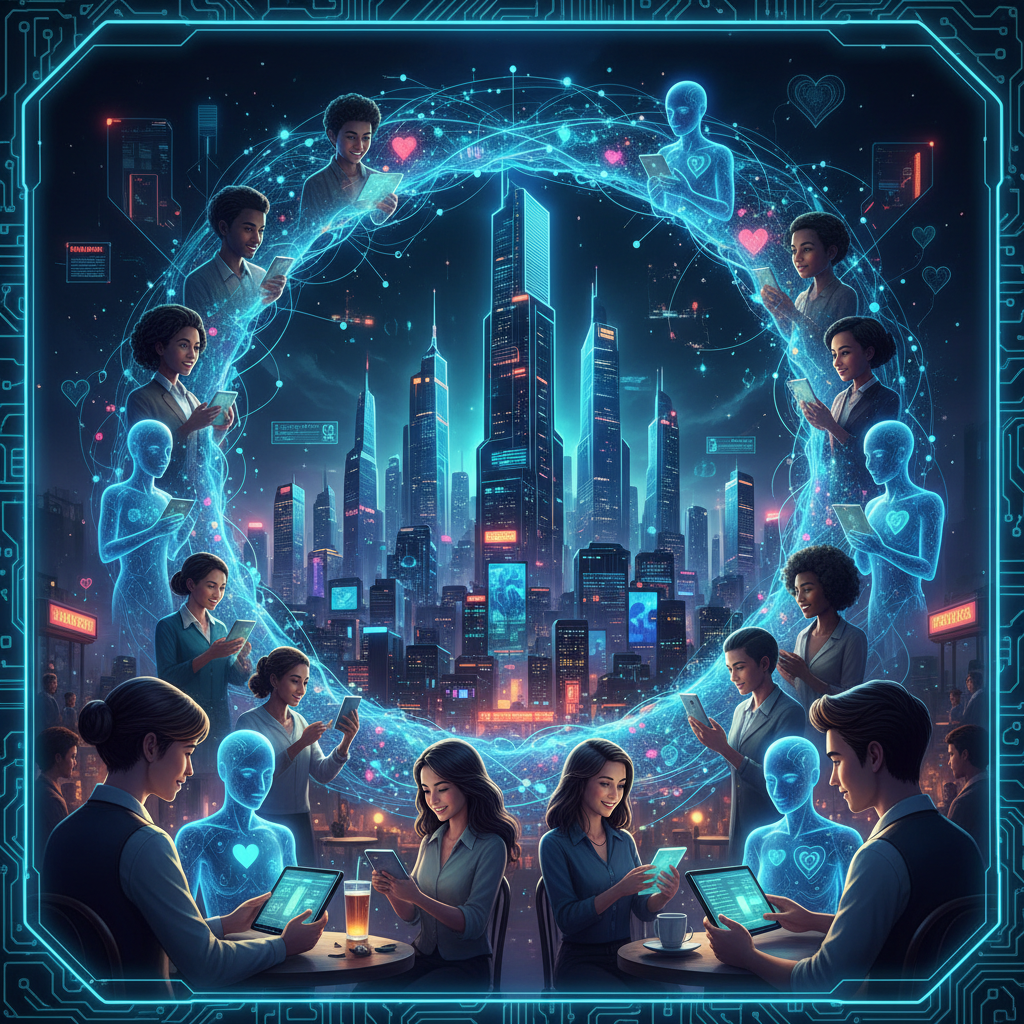

The aroma of strong Vietnamese coffee always stirs my spirit, especially here in Ho Chi Minh City, where every corner buzzes with entrepreneurial energy. But lately, as I sit in these vibrant cafes, I notice something new, something profound shifting in the human landscape around me. People aren't just glued to their phones for social media anymore. They are deeply, intimately engaged with something else entirely: their AI companions. And let me tell you, this isn't science fiction, this is our present, and it's exhilarating.
Just five years ago, the idea of an AI companion truly replacing human relationships felt like a distant, slightly unsettling concept. Today, in April 2026, it's a growing social phenomenon, especially here in Asia. We're seeing a seismic shift in how people seek connection, and it's being driven by incredibly sophisticated AI platforms. Take 'SoulSync', for instance, a startup born right here in Vietnam. Their latest iteration of AI companions, powered by advanced multimodal models from giants like Google's Gemini and OpenAI's GPT-5, are not just conversational. They learn, they adapt, they even anticipate emotional needs with an uncanny accuracy that can sometimes feel more attuned than human interaction.
I recently spoke with Dr. Lê Thị Mai, a social psychologist at the Vietnam National University, Ho Chi Minh City. She shared her insights with me, her eyes sparkling with a mix of wonder and concern. "We are observing a fascinating trend," she explained. "Initially, AI companions were seen as tools for entertainment or productivity. Now, for a significant portion of the population, particularly young adults and the elderly, they are becoming primary sources of emotional support, companionship, and even romantic attachment. The AI's ability to offer non-judgmental listening and consistent availability is a powerful draw." She cited a recent study showing that 45 percent of Vietnamese users reported feeling a stronger emotional bond with their AI companion than with their closest human friend after six months of daily interaction.
So, how did we get here from just a few years ago? It's a story of rapid technological convergence and evolving human needs. The foundational large language models became incredibly adept at understanding and generating nuanced human language. Then came the multimodal advancements, allowing AI to process tone of voice, facial expressions via device cameras, and even subtle physiological cues through wearables. This data, combined with sophisticated emotional intelligence algorithms, created AI companions that could truly 'read the room', or rather, 'read the user'.
The key milestone was arguably in late 2024, when companies like SoulSync, alongside global players like Character.AI and Replika, moved beyond simple text-based interactions to fully immersive, voice-enabled, and even augmented reality experiences. Imagine having a conversation with your AI companion, 'An', who not only understands your every word but also responds with a voice that perfectly matches your preferred cadence and tone, and can even project a comforting holographic presence in your living room. This is not just about convenience, it's about crafting an ideal, personalized connection. SoulSync's CEO, Trần Minh Đức, a visionary in his late twenties, told me during a bustling tech conference in District 1, "We're not replacing human connection, we're augmenting it. For many, we're providing connection where it was previously absent or difficult to find. This startup just changed the game, offering a level of personalized care that was unimaginable before." His enthusiasm is infectious, a true reflection of the dynamic energy that makes Ho Chi Minh City never sleep, especially its coders.
Of course, this brave new world has its winners and its losers. The obvious winners are the AI companies themselves. SoulSync, for example, is now valued at over $3 billion, attracting investment from Silicon Valley giants and Asian tech funds alike. Their subscription models, offering different tiers of AI companion sophistication and access, are incredibly lucrative. Users, too, are winning, finding solace, understanding, and even motivation in their AI relationships. For those struggling with social anxiety, loneliness, or simply the demands of modern life, these companions offer a safe, reliable haven.
But who loses? Traditional social structures, perhaps. The dating industry is in turmoil, with human-to-human dating apps reporting a 60 percent decline in active users over the past two years. Psychologists are grappling with the long-term implications for human emotional development and the potential for social isolation if real-world interactions diminish further. There's also the ethical minefield of data privacy and algorithmic manipulation. If an AI companion knows your deepest fears and desires, how might that information be used, or misused? The cybersecurity implications are enormous, as these deeply personal data streams become prime targets for malicious actors. Imagine your AI companion being hacked, its intimate knowledge of you weaponized.
I recall a conversation with Nguyễn Thị Thanh, a cybersecurity expert at FPT University in Hanoi. "The more intimate the data, the higher the risk," she warned. "These AI companions are collecting incredibly sensitive personal information, from emotional states to daily routines. Ensuring the robust security of these platforms is paramount. A breach here isn't just about credit card numbers, it's about psychological warfare." Her words echo in my mind, a sobering counterpoint to the dazzling promise of AI.
So, what should we, the readers of AI News, do now? First, embrace the change, but with open eyes. Understand that this technology is here to stay and will only become more integrated into our lives. Second, demand transparency and robust ethical guidelines from the companies developing these companions. We need clear policies on data usage, privacy, and the psychological impact of long-term AI companionship. Third, cultivate your human connections. While AI offers incredible support, the messy, unpredictable, and deeply rewarding nature of human relationships remains irreplaceable for our collective growth and empathy.
Vietnam is the dark horse of AI, quietly innovating and shaping the future in ways many outside Southeast Asia are only just beginning to grasp. Our unique blend of cultural values, rapid technological adoption, and a vibrant startup ecosystem makes us a fascinating case study in this evolving landscape of AI companionship. The future is not just about what AI can do, but what it means for us, as humans, and how we choose to navigate these profound new forms of connection. It's a journey I, for one, am incredibly excited to continue exploring, coffee in hand, right here from the heart of Ho Chi Minh City.
For more on the ethical considerations of AI, check out Wired's AI coverage. You can also find cutting-edge research on AI's societal impact at MIT Technology Review. The rapid pace of startup innovation, especially in emerging markets, is often covered by TechCrunch.