The global narrative surrounding artificial intelligence in agriculture often paints a picture of boundless optimization, of fields tended by algorithms, and of unprecedented yields. From the fertile plains of Iowa to the rice paddies of Vietnam, technology companies like Google and Microsoft are positioning their AI platforms as the panacea for food security and agricultural efficiency. But here in Bolivia, where our fields climb to altitudes that would challenge most machinery, and where ancient farming practices still hold sway, one must ask: is this trend a genuine revolution for the world's farmers, or just another digital mirage? Let's talk about what actually works at 4,000 meters.
Historically, agriculture in Bolivia, and indeed across much of South America, has been a testament to resilience and adaptation. Our ancestors cultivated crops like quinoa and potatoes in conditions that defy modern agronomy, developing sophisticated terracing and water management systems long before the advent of satellites or machine learning. The challenge has always been one of scale, access, and mitigating the unpredictable whims of climate. For decades, improvements came incrementally, through better seed varieties, basic mechanization, and improved irrigation. The 'green revolution' brought its own set of tools, some beneficial, some less so for our unique ecosystems.
Fast forward to today, April 2026, and the conversation is dominated by AI. Companies are investing billions. According to a recent report, the global market for AI in agriculture is projected to reach over $4 billion by 2028, with a compound annual growth rate exceeding 20 percent. This growth is fueled by promises of precision farming, where drones equipped with hyperspectral cameras monitor crop health, AI algorithms predict pest outbreaks, and automated systems optimize irrigation down to the last liter. Google's 'FarmView' initiative, for instance, leverages satellite imagery and its Gemini AI models to offer insights into soil composition and plant stress, aiming to reduce fertilizer usage by up to 15 percent and increase yields by 5-10 percent in pilot programs across North America and Europe. Similarly, Microsoft's 'FarmBeats' platform integrates sensor data from farms with AI models in the cloud to provide actionable intelligence to farmers.
These are impressive figures on paper, but the reality on the ground, particularly in regions like the Bolivian Altiplano, is far more nuanced. Our farmers often work small plots, sometimes less than a hectare, using methods passed down through generations. The capital investment required for drone fleets, advanced sensors, and high-speed internet connectivity is simply out of reach for the vast majority. Moreover, the data sets used to train these sophisticated AI models are predominantly derived from large-scale, monoculture farms in temperate climates. Can an algorithm trained on corn fields in Kansas accurately advise on quinoa cultivation in the highlands of Potosí, where soil types, microclimates, and traditional practices are vastly different?
"The enthusiasm for AI in agriculture is understandable, given the global food demand," states Dr. Elena Quispe, an agro-ecologist at the Universidad Mayor de San Andrés in La Paz. "However, we must differentiate between what is technologically possible and what is practically applicable and equitable. Many of these AI solutions are designed for industrial agriculture, not for the smallholder farmer who might not even have reliable electricity, let alone broadband." She emphasizes that for AI to be truly transformative here, it must be adapted to local contexts, leveraging local knowledge, and be affordable. "Bolivia's challenges require Bolivian solutions, not just imported technologies." For a broader perspective on AI's global impact, see Reuters' technology coverage.
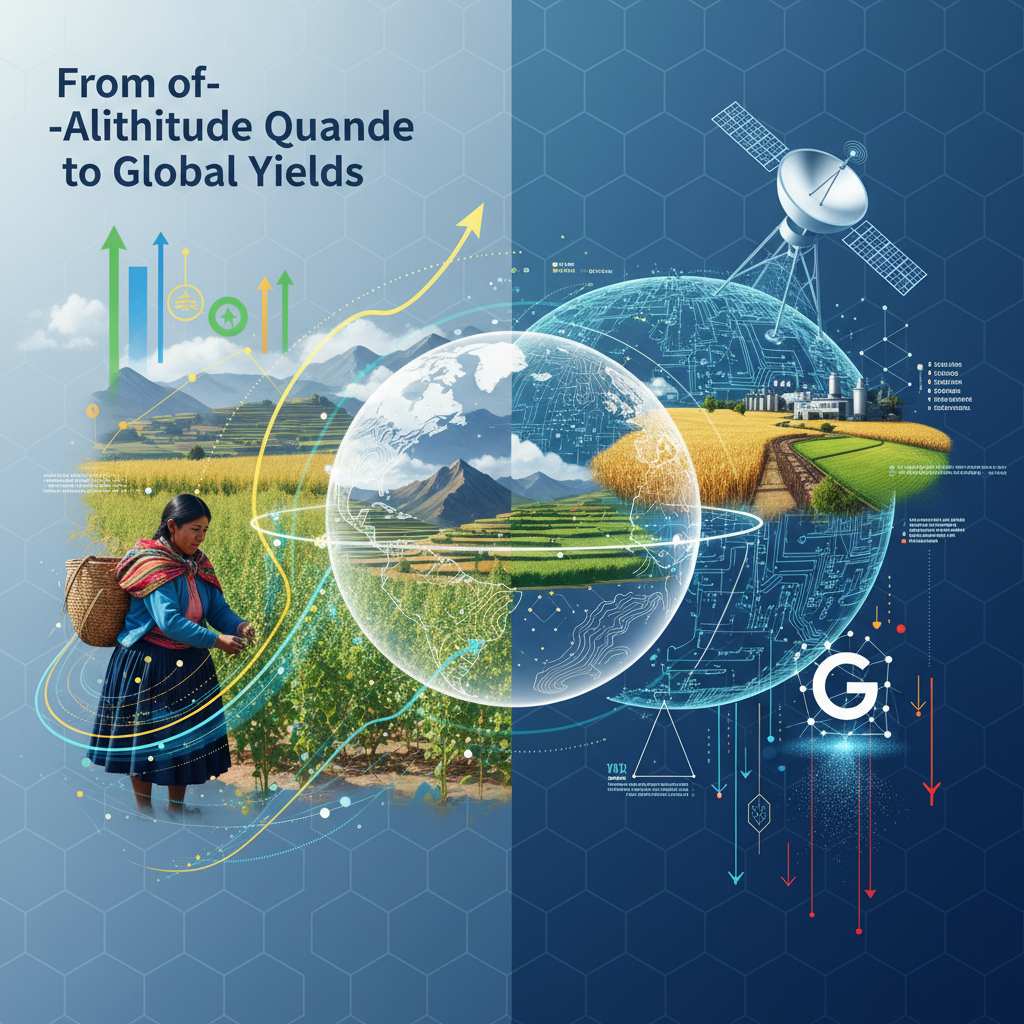
Indeed, the concept of 'data deserts' is particularly relevant. While Google's satellites can image any field, the ground-truth data needed to train specific AI models for our diverse crops and unique environmental stressors is scarce. "We need localized data collection efforts, perhaps even citizen science initiatives, to build relevant AI models," suggests Ing. Ricardo Mamani, a software engineer working with agricultural cooperatives in Cochabamba. "Otherwise, these algorithms risk perpetuating biases or offering irrelevant advice. We cannot simply overlay a Silicon Valley solution onto an Andean reality and expect success. The altitude of innovation demands a different approach." He points to nascent efforts by local startups, often using simpler, open-source AI models and locally sourced sensor data, as a more promising path.
There are, however, glimmers of hope that are more grounded. Some AI applications focus on accessibility rather than high-tech infrastructure. Mobile applications, powered by simpler AI, are emerging to help farmers diagnose plant diseases by simply taking a photo with their smartphone. Companies like Plantix, while not a tech giant, use computer vision to identify crop ailments and suggest remedies, proving that practical AI does not always require a supercomputer. These tools, which function even with intermittent connectivity, represent a more realistic entry point for many Bolivian farmers. The key is to develop systems that enhance existing practices, rather than seeking to replace them entirely.
Another critical aspect is the economic model. Who benefits from the data collected by these AI systems? Is it the farmer who provides the data, or the tech company that processes it? Ensuring data sovereignty and fair compensation for agricultural data is paramount, particularly for indigenous communities whose traditional knowledge is invaluable. Without clear ethical guidelines and benefit-sharing mechanisms, these technologies could exacerbate existing inequalities rather than alleviate them.
My verdict on AI in agriculture is one of cautious optimism, heavily weighted by pragmatism. The trend is certainly not a fad; the underlying technology has genuine potential. However, its manifestation as the 'new normal' in places like Bolivia will depend entirely on its adaptability, affordability, and respect for local contexts. The grand visions of fully autonomous farms, while captivating, often overlook the fundamental human element of agriculture, particularly in regions where farming is not just an industry, but a way of life, a cultural heritage. For AI to truly feed the world, it must first understand the world, in all its diverse and challenging terrains. It must be a tool for empowerment, not just a system for extraction. Learn more about the ethical implications of AI at Wired's AI section.
The path forward involves collaboration: tech companies working with local agricultural experts, governments investing in digital infrastructure in rural areas, and most importantly, listening to the farmers themselves. The solutions that will truly make a difference will likely be hybrid ones, blending ancient wisdom with modern algorithms, tailored to the specific needs of each community. Only then can AI move beyond the realm of Silicon Valley hype and become a tangible asset for food security, even at the highest altitudes.