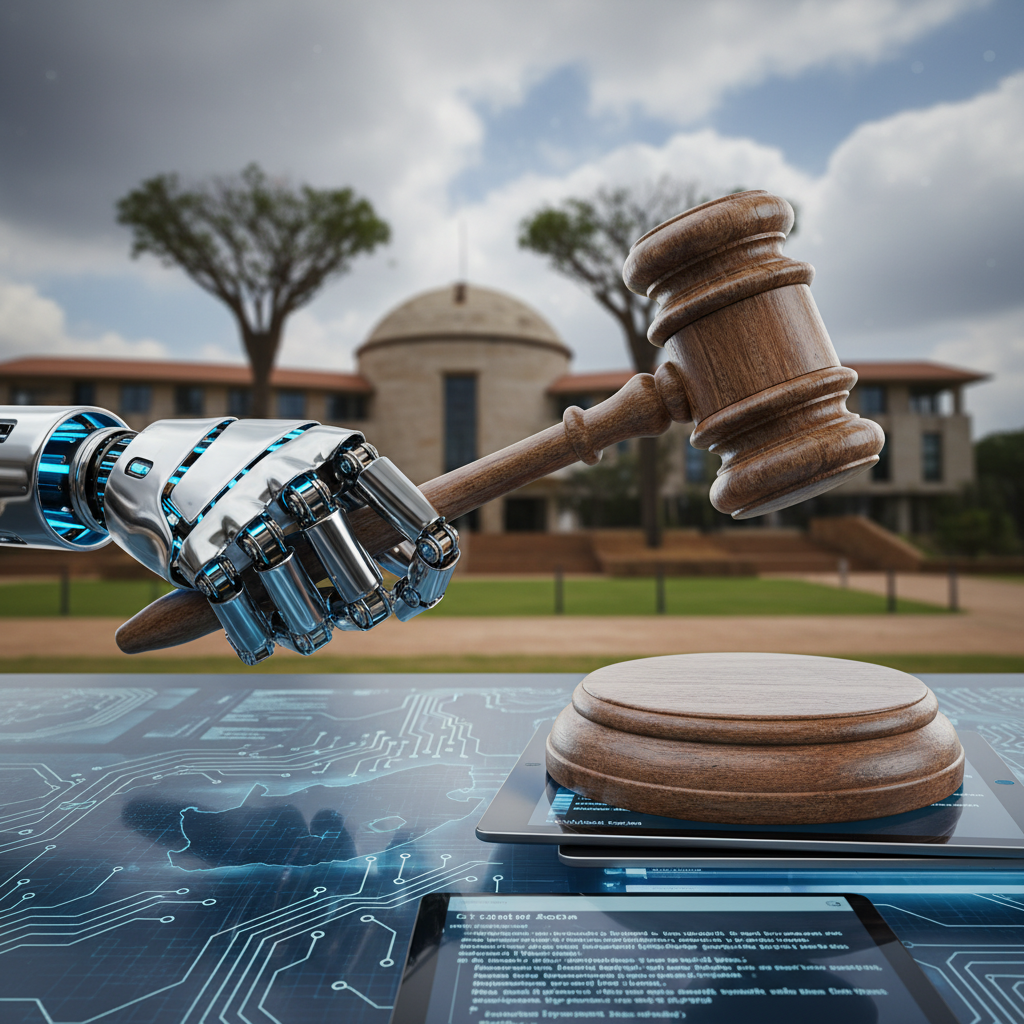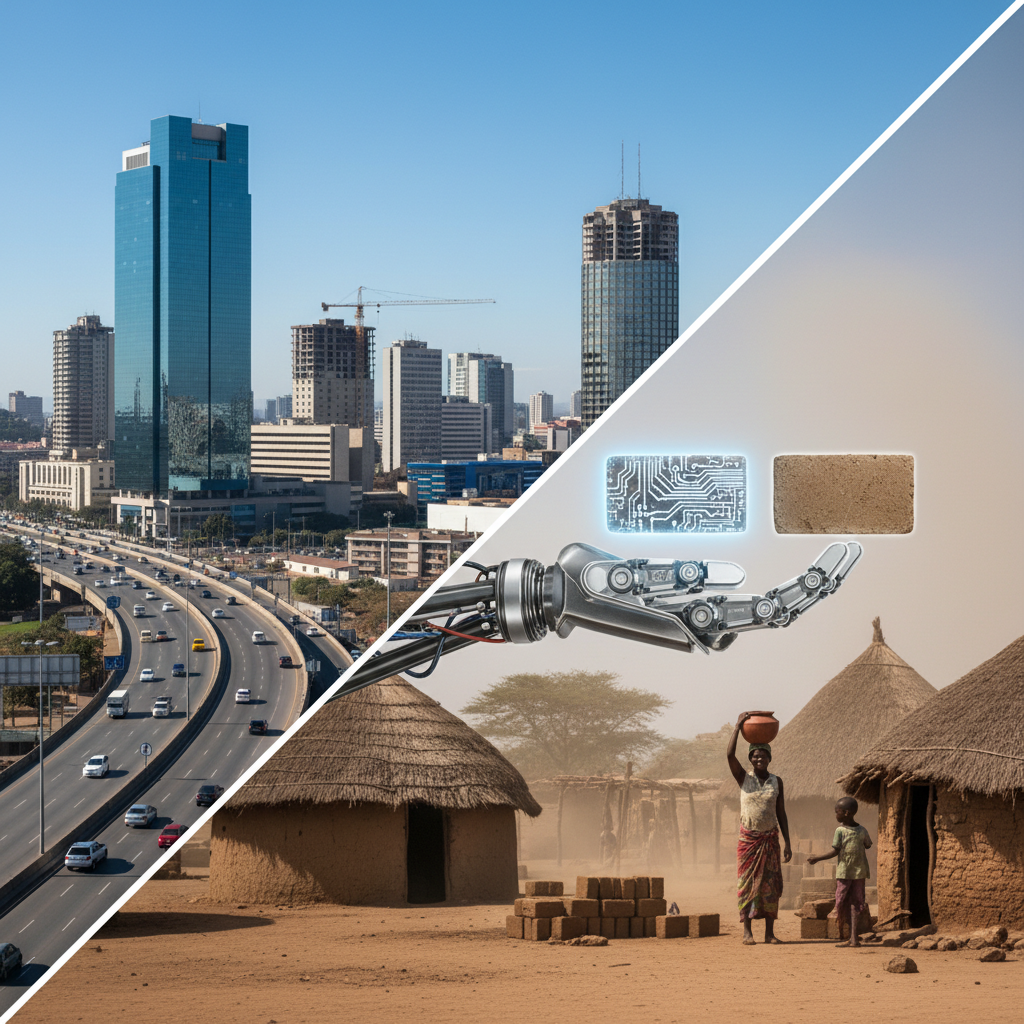

Let me tell you something, my friends. While the tech titans in their polished glass towers are busy chasing the next generative art fad or perfecting digital assistants that still can't understand my Shona accent, something far more profound is stirring. Right here, on the dusty, vibrant streets of Harare, and across the sprawling landscapes of Zimbabwe, we are on the cusp of a construction revolution, powered by artificial intelligence. And it's not just about building faster, it's about building smarter, safer, and with a vision that stretches decades into our future.
For too long, the narrative around AI has been dominated by Western tech giants, their products often designed for problems that feel a million miles away from our daily realities. But when I look at the challenges and opportunities in our construction sector, I see AI not as a foreign imposition, but as a natural extension of our ingenuity, a tool to help us leapfrog decades of conventional development. We are talking about optimizing design, enhancing safety, and streamlining project management in ways that were once the stuff of science fiction. The future is African, and it's being built, literally, with AI.
Consider the sheer scale of urban development needed across our continent. Cities like Harare are growing, and with that growth comes the urgent need for housing, infrastructure, and commercial spaces. Traditionally, this is a slow, resource-intensive, and often error-prone process. But imagine a future where AI algorithms can analyze local climate data, material availability, and even cultural design preferences to generate optimal building designs in minutes. This isn't just theoretical; companies like Autodesk are already integrating AI into their design software, allowing architects to explore thousands of design iterations that meet specific performance criteria, from energy efficiency to structural integrity. This means less waste, faster planning, and buildings that are truly fit for purpose, designed for our unique environment, not some generic template from abroad.
I was speaking with Dr. Tendai Moyo, a structural engineer and lecturer at the National University of Science and Technology in Bulawayo, just last month. He put it so eloquently, saying, "The beauty of AI in design optimization for us in Zimbabwe is its potential to democratize access to world-class engineering. Small firms, even individual builders, could leverage these tools to create highly efficient and resilient structures, tailored to local conditions and sustainable practices. It's about empowering local talent." This isn't just about fancy algorithms; it's about practical application and local empowerment. It's about bringing sophisticated tools to the hands of those who are building our nation, brick by brick.
Then there's the critical issue of safety. Construction sites, globally, are notoriously dangerous. In Zimbabwe, like many developing nations, safety standards can sometimes lag, leading to preventable accidents. This is where AI offers a truly transformative solution. Picture this: drones equipped with computer vision flying autonomously over construction sites, identifying potential hazards in real time. AI-powered cameras monitoring worker behavior, flagging instances where safety protocols are being breached, or where fatigue might be setting in. This isn't about surveillance for its own sake; it's about proactive intervention, saving lives, and preventing injuries.
Companies like Smartvid.io, for instance, are already deploying AI to analyze video feeds from construction sites, identifying unsafe conditions or behaviors with remarkable accuracy. While they are primarily active in North America, the underlying technology is universal. Imagine this technology adapted for our context, integrated with local safety regulations, and deployed across our major infrastructure projects, from the new parliament building to the expansion of our national road networks. The impact on worker welfare would be immense. Mr. John Matore, head of safety for a major local construction firm, recently told me, "We are exploring pilot programs with AI-powered cameras. The goal is not to punish, but to predict and prevent. If AI can reduce our accident rate by even 10 percent, that's a significant win for our people and our projects." This is the kind of practical, life-saving innovation that truly excites me.
Project management, the often-overlooked backbone of any large-scale endeavor, is another area ripe for AI disruption. Anyone who has ever been involved in a major construction project knows the headaches: budget overruns, scheduling delays, material shortages, and communication breakdowns. AI can act as a super-powered project manager, sifting through vast amounts of data to predict potential delays before they happen, optimize resource allocation, and even manage supply chains more efficiently. Predictive analytics, powered by machine learning, can forecast project timelines with unprecedented accuracy, allowing for better planning and risk mitigation. This means projects delivered on time, within budget, and with fewer surprises.
Microsoft, through its Azure AI services, offers tools that can be integrated into existing project management software, providing predictive insights and automating routine tasks. While these are global solutions, their application here in Zimbabwe could be revolutionary. Think about the massive infrastructure projects underway or planned, from dams to power plants. The efficiency gains from AI-driven project management could translate into billions of dollars saved and faster delivery of essential services to our communities. It's not just about profit margins; it's about national development.
Of course, there are challenges. Access to reliable internet infrastructure, the cost of advanced AI hardware, and the need for skilled personnel to implement and maintain these systems are real hurdles. But these are not insurmountable. We are seeing a surge in tech education initiatives across Zimbabwe, and our young people are hungry for knowledge. Furthermore, the cost of AI technologies is constantly decreasing, making them more accessible than ever before. We don't need to reinvent the wheel; we need to adapt and apply existing technologies to our unique context.
What truly excites me is the potential for AI to foster a new generation of African creativity in construction. Imagine AI tools that can help preserve and integrate traditional Zimbabwean architectural elements into modern designs, blending our rich cultural heritage with cutting-edge technology. Think of AI generating sustainable building materials from locally sourced resources, reducing our reliance on imports and fostering local industries. This isn't just about efficiency; it's about identity, about building a future that looks and feels distinctly ours.
This isn't some far-off dream. This is happening now. The conversations are happening in our universities, in our boardrooms, and on our construction sites. The seeds are being planted. And while the world often looks to Silicon Valley for innovation, I believe the real, tangible, impactful innovation, the kind that truly transforms lives and landscapes, will emerge from places like Zimbabwe. Watch this space, because the sound of progress you hear is not just the clang of steel, but the hum of algorithms, building a brighter, bolder future for us all.
For more insights into how AI is shaping industries globally, check out TechCrunch's AI section. You might also find interesting perspectives on AI's broader societal impact on MIT Technology Review. The journey of AI in construction, particularly in emerging economies, is a story that will unfold over the next decade, and I, for one, am here for every single chapter.