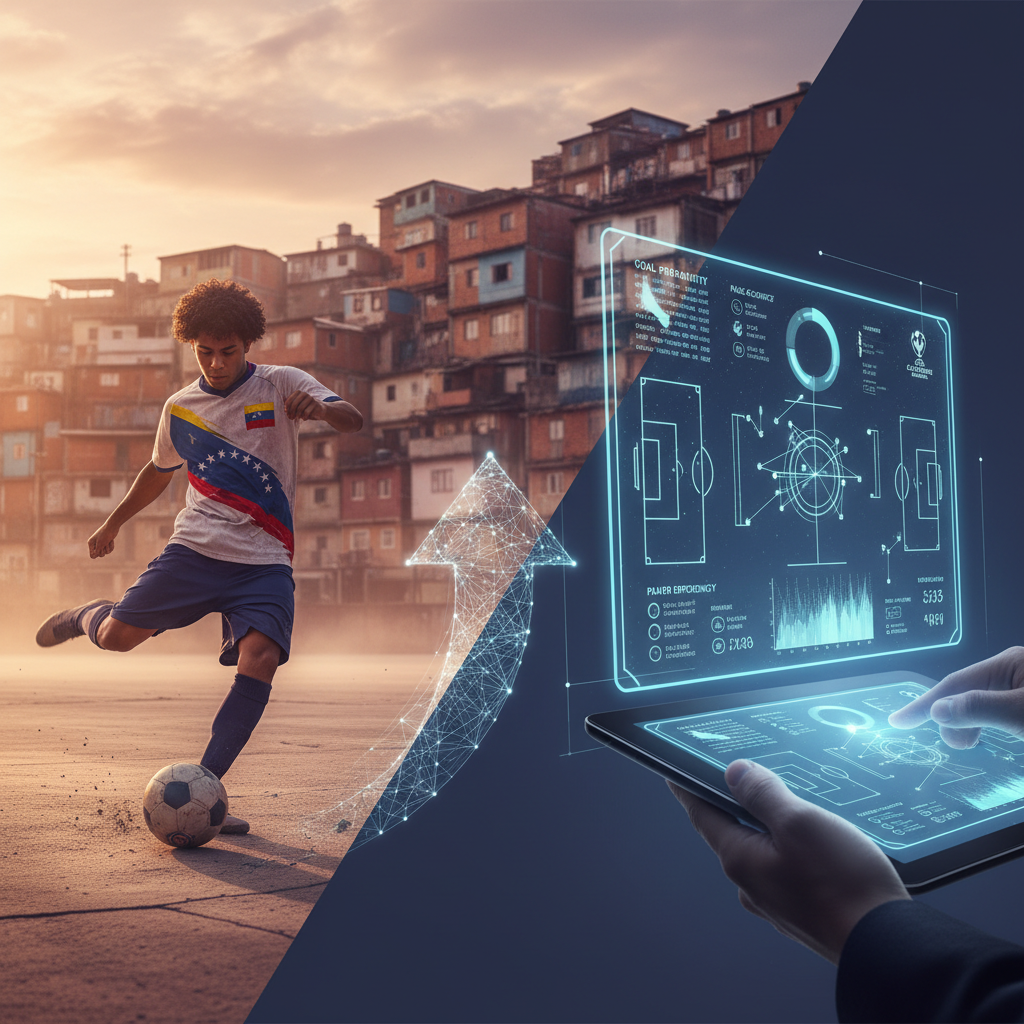

You hear it everywhere these days, right? AI, AI, AI. It is supposed to fix everything, predict everything, make everything better. In sports, the narrative is no different. From the glitzy stadiums of Europe to the high-tech training centers in the United States, the talk is all about how artificial intelligence is revolutionizing player performance, predicting injuries, and even boosting fan engagement. But here in Venezuela, where our football pitches are often more dirt than grass and our baseball diamonds are community efforts, you have to wonder: is this just another expensive toy for the global elite, or does it hold a genuine promise for places like ours?
Unpopular opinion from Caracas: I think it is both, and the real story is far more interesting than the headlines suggest.
What Exactly Is AI in Sports Analytics?
At its core, AI in sports analytics is about using advanced computational methods to process vast amounts of data generated by athletes, games, and fans. Think about it. Every sprint, every pass, every jump, every heart rate monitor reading, every fan interaction on social media. It all generates data. AI, particularly machine learning algorithms, takes this raw data and finds patterns, makes predictions, and offers insights that the human eye, no matter how expert, simply cannot discern. It is like having a super-powered scout, doctor, and marketing guru all rolled into one, working 24/7. It is not magic, it is just very, very sophisticated pattern recognition.
Why Should You Care? Beyond the Billion-Dollar Contracts
Now, you might be thinking, 'Sebastiàn, what does this have to do with me, watching a game of beisbol from my porch in La Guaira?' Well, it is about more than just the multi-million dollar contracts of international stars. It is about fairness, opportunity, and the very future of sports development, even in countries facing immense challenges. If AI can identify talent earlier, prevent career-ending injuries, or even make fan experiences more engaging, it changes the game for everyone. It could democratize access to elite-level insights, leveling the playing field in ways we are only beginning to imagine. The crisis created something unexpected: a hunger for efficiency and ingenuity that AI might just satisfy.
Consider our own local leagues. Imagine a young talent in Barquisimeto, playing with worn-out equipment. If AI can objectively measure his potential, identify subtle biomechanical flaws that could lead to injury, or even suggest personalized training regimens, that is a game changer. It is about maximizing every ounce of potential, something we Venezuelans understand deeply.
How Did It Develop? From Spreadsheets to Deep Learning
The journey of analytics in sports did not start with AI. It began decades ago with simple statistics, coaches poring over game films, and analysts meticulously tracking player movements with pen and paper. Think of the early days of baseball, where statisticians became legends for their ability to quantify player value. Then came computers, allowing for more complex statistical models. Moneyball, the famous story of the Oakland Athletics, showed the power of data-driven decision making, even if it was still largely human-driven analysis of statistical models.
The real leap came with the explosion of data collection technologies: wearable sensors, high-speed cameras, GPS trackers, and sophisticated optical tracking systems. Suddenly, we were drowning in data. This is where AI stepped in. Machine learning algorithms, particularly deep learning models, became capable of sifting through these massive datasets to find non-obvious correlations. Companies like Google DeepMind and NVIDIA, with their powerful computing infrastructure, have been instrumental in pushing these boundaries, making what was once science fiction into everyday reality for top-tier sports organizations. It is a rapid evolution, moving from simple averages to predictive models that can assess risk with remarkable accuracy.
How Does It Work in Simple Terms? Think of a Domino Game
Imagine you are playing domino with your friends in a busy bodega. You are not just looking at the tiles in your hand, are you? You are watching what everyone else plays, remembering what has been played, trying to predict what they have left, and planning your next move. AI in sports is like that, but on a scale that makes your domino game look like child's play.
It works by feeding enormous amounts of data into algorithms. These algorithms then 'learn' from the data. For player performance, they might learn what combination of speed, agility, and shot placement leads to a goal. For injury prediction, they might learn that a certain change in running gait, combined with fatigue levels and past injury history, significantly increases the risk of a hamstring strain. For fan engagement, they might learn what type of content, delivered at what time, on what platform, generates the most interaction from specific demographics.
It is all about identifying patterns and probabilities. It does not tell a coach exactly what to do, but it provides insights, like a very smart assistant saying, 'Hey, based on everything we have seen, player X is 70% more likely to get injured if they play more than 90 minutes this week,' or 'This particular drill improves player Y's passing accuracy by 15%.' The human element, the coach's intuition, the player's grit, it all still matters, but now it is informed by data-driven intelligence.
Real-World Examples: From the Pitch to the Stands
-
Player Performance Optimization: Major football clubs like Real Madrid and Barcelona use AI platforms, often powered by companies like Catapult Sports or Stats Perform, to track every movement of their players during training and matches. This data helps coaches understand energy expenditure, tactical effectiveness, and areas for improvement. "We used to rely on gut feeling and video analysis, which is still crucial," says Dr. Elena Rojas, Head of Performance Science for a prominent European club, "but AI gives us an objective, granular view of every player's physical and technical output. It is like having a microscope on their performance." This allows for highly personalized training plans, optimizing strengths and shoring up weaknesses.
-
Injury Prediction and Prevention: This is a huge one, especially for athletes whose careers can be ended by a single misstep. The NBA, for instance, has explored using AI to analyze player load, sleep patterns, and biomechanical data to predict when an athlete might be at higher risk for injury. Startups like Sparta Science are developing AI-driven force plate analysis to identify movement inefficiencies that could lead to injury. "We are seeing a significant reduction in soft tissue injuries," notes Miguel Ángel Pérez, a physiotherapist working with a top-tier baseball team in the Venezuelan Professional Baseball League. "The AI flags subtle changes in movement patterns months before a human eye would catch them. It is a preventative revolution." This could mean longer, healthier careers for athletes, a massive economic and human benefit. MIT Technology Review has covered extensively how these predictive models are becoming more sophisticated and accurate.
-
Fan Engagement and Personalization: AI is not just for the athletes. Sports organizations are using it to understand their fan base better than ever. From predicting ticket sales to personalizing content on social media, AI helps create a more immersive experience. Imagine receiving a notification on your phone about your favorite player's highlights, tailored specifically to your viewing habits, or an offer for merchandise from your preferred team that AI knows you are likely to buy. Companies like Satisfi Labs use AI-powered chatbots to answer fan questions instantly, improving stadium experiences. "Our fans in Latin America are incredibly passionate," explains Carla Méndez, Marketing Director for a global sports league, "and AI helps us connect with them on a deeper, more personal level. It is about fostering that sense of belonging, whether they are in the stadium or watching from home in Maracaibo." For more on how AI is reshaping fan experiences, you can check out articles on The Verge.
-
Talent Identification: This is where it gets really interesting for countries like Venezuela. AI can analyze vast databases of amateur athletes, looking for specific physical attributes, technical skills, and even psychological profiles that correlate with future success. It can spot potential in places traditional scouting might overlook. "Venezuela's tech diaspora is reshaping AI globally," says Dr. Sofia Ramirez, a data scientist who left Caracas years ago and now works for a major sports analytics firm in Boston. "We are building models that can identify raw talent in underserved communities, giving kids a chance they might never have had otherwise. It is not about replacing scouts, but empowering them with data." This is a powerful application, offering a pathway for talent from all corners of the world.
Common Misconceptions: Not a Crystal Ball, Not a Robot Coach
One of the biggest misconceptions is that AI will replace coaches, scouts, or even players. That is simply not true. AI is a tool, an incredibly powerful one, but a tool nonetheless. It provides insights, not decisions. A coach still needs to interpret the data, understand the human element, and make strategic choices. A scout still needs to see the heart and determination in a young player's eyes. AI also is not a perfect crystal ball. It deals in probabilities, not certainties. It can say there is an 80% chance of injury, but that does not mean it will happen, nor does it tell you exactly how to prevent it, only that risk factors are present. It is an assistant, not a dictator.
Another myth is that it is infallible. AI models are only as good as the data they are trained on. If the data is biased, incomplete, or inaccurate, the AI's insights will be too. This is a constant challenge, ensuring data quality and ethical use.
What to Watch For Next: The Democratization of Data and the Human Touch
The next few years will see AI in sports become even more integrated and accessible. We will see smaller clubs and even amateur leagues adopting more affordable AI solutions. The cost of data collection and processing is coming down, making these powerful tools available to a wider audience. This could be a huge boon for sports development in regions like Latin America, where raw talent is abundant but resources are often limited. Imagine a community sports academy in Petare using AI to optimize its training programs, giving local kids a better shot at professional careers. This is not just a dream; it is becoming a reality.
We will also see a greater emphasis on the human-AI partnership. Coaches and athletes will become more literate in data, understanding how to ask the right questions and interpret the insights provided by AI. The focus will shift from just collecting data to deriving actionable intelligence that genuinely enhances human performance and decision-making. The human element, the passion, the unpredictable magic of sport, will always remain. AI is simply here to help us understand it better, and perhaps, make it even more compelling. It is a story of innovation, yes, but also a story of resilience, and that, my friends, is a story we know well here in Venezuela. We are not just spectators in this global AI game; we have the talent and ingenuity to be players, too. The crisis created something unexpected, and that something is often a drive to innovate against all odds. That is the true spirit of progress. For more insights into AI's broader impact, you might find articles on TechCrunch to be quite informative.