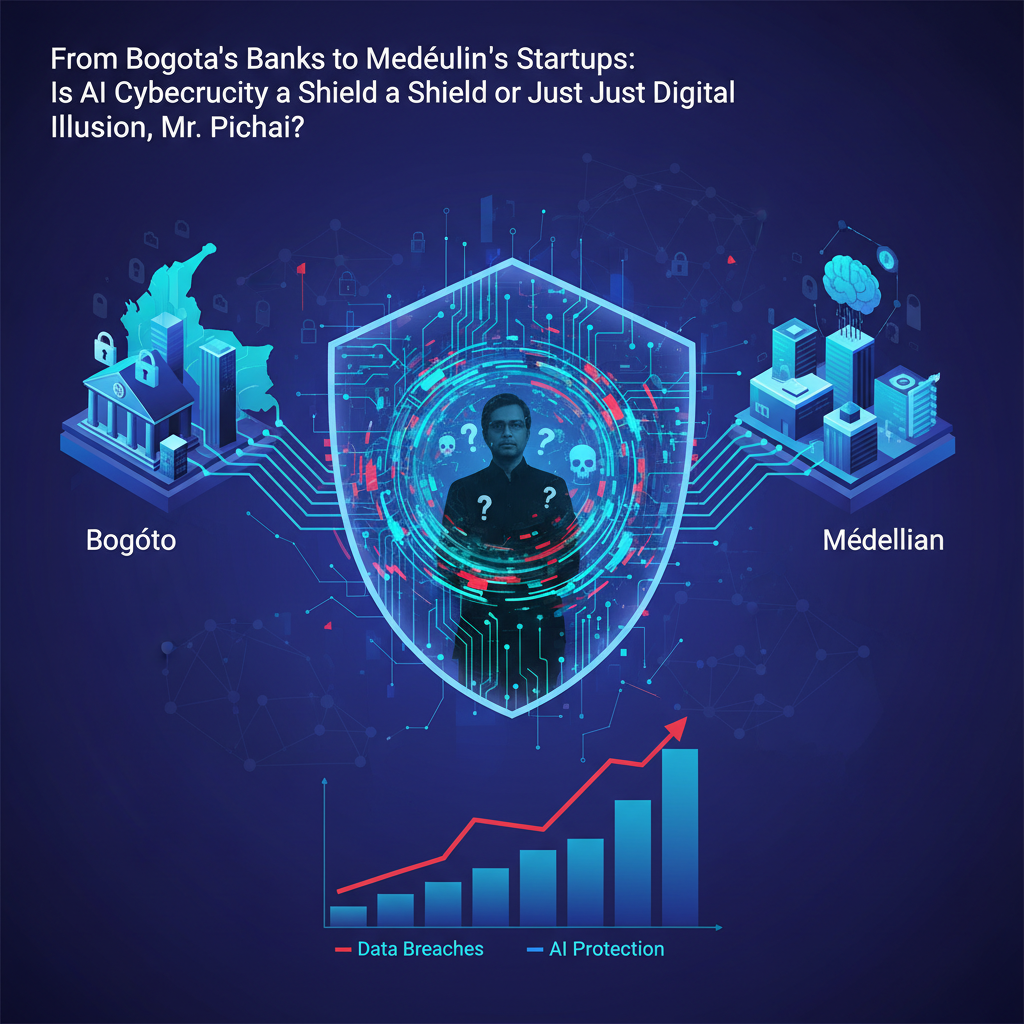

Is the digital world truly becoming safer, or are we simply building more elaborate sandcastles against an ever-rising tide of cyber threats? This question weighs heavily on my mind, especially when I consider the rapid adoption of AI-powered cybersecurity solutions across enterprise networks, from the bustling financial districts of Bogotá to the innovative tech hubs of Medellín. The industry buzz is deafening, with promises of real-time threat detection and proactive defense. But as a journalist from Colombia, someone who has seen firsthand how technology can both uplift and endanger, I have to ask: Is this trend a genuine revolution, or just another shiny object distracting us from deeper vulnerabilities?
Historically, cybersecurity has been a reactive game. We built firewalls, installed antivirus software, and waited for breaches to happen, then scrambled to patch them up. It was like guarding a fortress by inspecting the walls only after the catapults had struck. The early 2010s saw the rise of Security Information and Event Management, or Siem, systems. These tools aggregated logs from various sources, trying to correlate events and identify patterns. They were a step forward, certainly, but often overwhelmed by the sheer volume of data, leading to alert fatigue and missed threats. Imagine trying to find a single grain of sand on a beach, and that grain is a sophisticated cyberattack.
Fast forward to today, April 2026, and the narrative has shifted dramatically. AI, particularly machine learning and deep learning, is being heralded as the ultimate guardian. Companies like Palo Alto Networks, CrowdStrike, and even Google’s own security divisions are deploying AI models to analyze network traffic, user behavior, and endpoint data at speeds and scales unimaginable just a few years ago. The idea is compelling: AI can learn what 'normal' looks like and instantly flag anomalies, identifying zero-day exploits and advanced persistent threats before they cause catastrophic damage. Reports from Reuters suggest the global AI cybersecurity market is projected to reach over $60 billion by 2028, growing at a compound annual growth rate exceeding 25%. This isn't just a niche market anymore; it's a colossal shift.
Here in Colombia, the stakes are particularly high. Our nation, still navigating the complexities of post-conflict recovery, is increasingly reliant on digital infrastructure for everything from public services to economic development. A major cyberattack could cripple essential services, erode public trust, and undermine years of progress. We’ve seen a 40% increase in cyberattacks targeting Colombian businesses in the past year alone, according to a recent report by the Colombian Chamber of Commerce. Financial institutions, government agencies, and even healthcare providers are constantly under siege. This is about more than technology, because it's about justice, about protecting the very fabric of our emerging digital society.
I spoke with Dr. Elena Ramírez, a leading cybersecurity expert at the Universidad de los Andes in Bogotá. She believes AI is indispensable, but not a silver bullet. "AI models are excellent at pattern recognition and anomaly detection, which is crucial for real-time defense," Dr. Ramírez explained. "However, they are not infallible. Adversarial AI, where attackers intentionally craft data to fool detection systems, is a growing concern. It's an arms race, always has been, and AI just raises the stakes." Her perspective reminds me of our own history, where new solutions often bring new challenges.
Juan Carlos Vélez, CEO of CiberEscudo, a Colombian cybersecurity startup that leverages AI for small and medium-sized enterprises, offered a more optimistic view. "For too long, robust cybersecurity was only accessible to large corporations with deep pockets. AI is democratizing protection," Vélez told me. "Our platform, built on open-source AI frameworks, allows even a small coffee exporter in the Eje Cafetero to defend against sophisticated ransomware attacks that might have previously shut them down. Colombia's AI story deserves to be heard, and it's one of resilience and innovation." His words resonate deeply, highlighting the potential for AI to foster digital inclusion, a topic I care passionately about.
However, there are still significant hurdles. The cost of implementing and maintaining advanced AI cybersecurity systems can be prohibitive for many organizations, especially in developing nations. The talent gap, the shortage of skilled AI and cybersecurity professionals, is another major challenge. We need more engineers, more data scientists, more ethical hackers who understand these complex systems. Sundar Pichai, CEO of Google, has often spoken about the democratizing power of AI, but the reality on the ground, especially regarding the resources needed to deploy and manage these sophisticated tools, still presents a significant barrier for many.
My verdict? AI-powered cybersecurity is far from a fad; it is undeniably the new normal. The sheer volume and complexity of modern cyber threats demand automated, intelligent responses that human teams simply cannot provide alone. The days of purely manual threat hunting are numbered. However, it is not a complete solution. It is a powerful tool, a formidable shield, but one that requires constant vigilance, human oversight, and continuous adaptation. We must invest not only in the technology itself, but also in the education and training of our people, ensuring that these tools are used effectively and ethically. We must also address the accessibility gap, making sure that the benefits of this advanced protection are not confined to the privileged few. Latin America is rising, and with it, our digital aspirations. To truly thrive, we must ensure our digital foundations are secure, not just for the giants, but for every small business, every citizen, every corner of our vibrant society. This is the real challenge, and the real opportunity, of AI cybersecurity today.