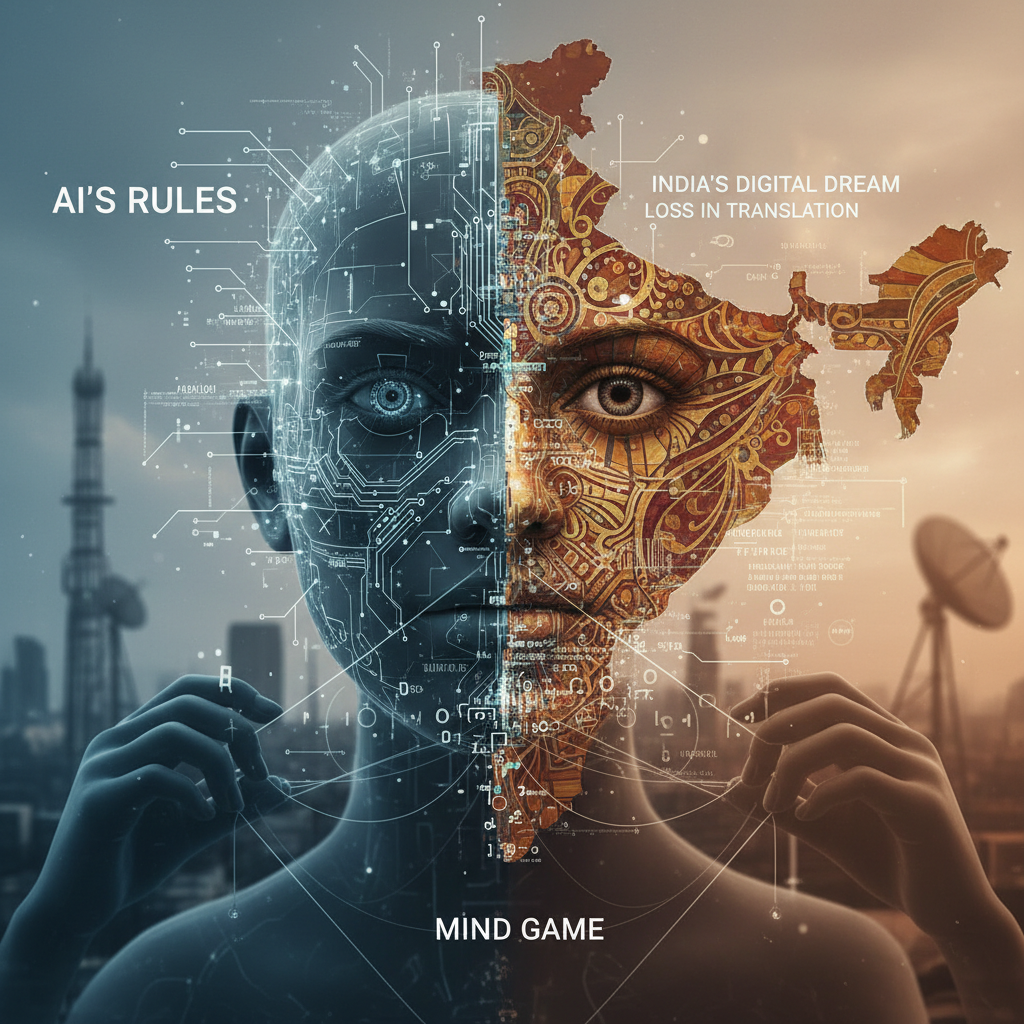
Namaste, tech enthusiasts! Rajèsh Krishnàn here, buzzing with excitement from the vibrant streets of Bengaluru, where the future feels like it's being coded into existence every single day. Today, we're talking about something truly special, something that makes my heart beat like a tabla drum solo: Apple Vision Pro and the incredible, often unseen, hand of Indian AI in its spatial computing magic. This isn't just about a gadget, my friends. This is about a paradigm shift, a whole new way we interact with digital worlds, and India is having its moment in making it happen.
When Apple first unveiled Vision Pro, the world gasped. A device that seamlessly blends digital content with your physical space, controlled by your eyes, hands, and voice. It felt like science fiction, right? But behind that sleek, futuristic design, there's a colossal amount of artificial intelligence working tirelessly. And a significant chunk of that AI brainpower, the algorithms that understand your gaze, interpret your gestures, and predict your intentions, is being refined, optimized, and innovated right here in India.
Think about it. Spatial computing isn't just about rendering pretty 3D objects. It's about understanding context. It's about knowing where you're looking, what you're reaching for, and even the nuances of your environment. This requires sophisticated computer vision, natural language processing, and machine learning models that can operate with ultra low latency and incredible accuracy. And who better to tackle these challenges than the brilliant engineers and researchers in India, a country that has become a global powerhouse for AI development?
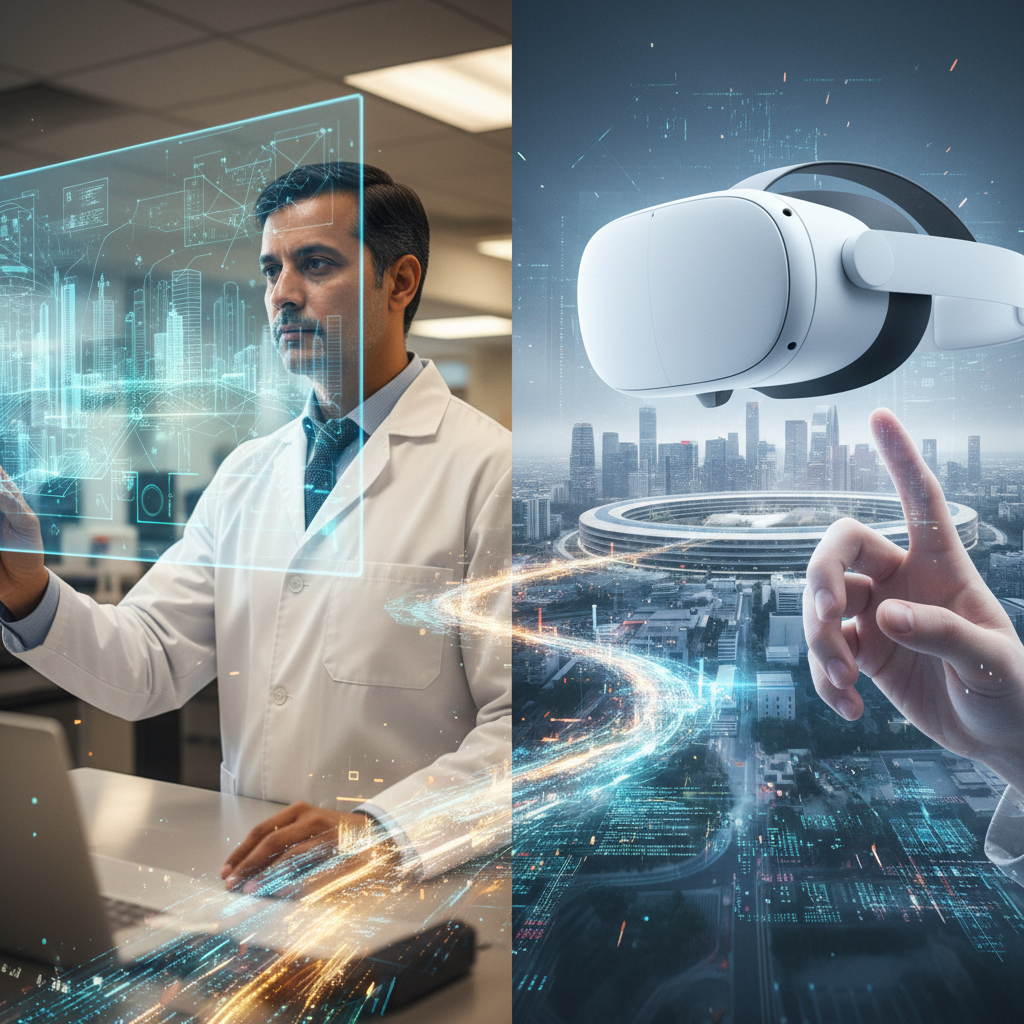
I recently had a chat with Dr. Anjali Sharma, a leading AI researcher at a prominent Bengaluru-based startup that specializes in real time computer vision for spatial applications. She told me, "The beauty of spatial computing lies in its intuitive nature. For Vision Pro, this means AI needs to be almost invisible, anticipating user needs without explicit commands. Our teams are deeply involved in developing the next generation of gesture recognition and gaze tracking algorithms, making interactions feel natural, almost magical." She emphasized that the sheer volume of diverse data and the problem solving acumen found in India are unparalleled. "We are building the intelligence that truly brings the 'spatial' to spatial computing," she added, her eyes sparkling with passion.
Indeed, the scale is mind boggling. Apple's Vision Pro, with its dual 4K micro Oled displays, packs more pixels than a 4K TV for each eye. To render immersive experiences at that resolution, in real time, while simultaneously tracking a user's every micro movement, requires an AI infrastructure of epic proportions. Indian talent is contributing significantly to optimizing these AI models for efficiency, ensuring they run smoothly on the device's custom R1 chip, which is dedicated to processing input from the 12 cameras, five sensors, and six microphones.
Our startups are not just outsourcing partners; they are innovation hubs. Companies like Tesseract Technologies, based out of Hyderabad, are reportedly working on AI driven object recognition for spatial anchors, allowing digital content to persist and interact realistically with the physical world. Imagine placing a virtual cricket score overlay on your living room wall, and having it stay exactly there, even as you walk around. That's the kind of precision AI is enabling.
Furthermore, the educational sector is already seeing the potential. Universities like IIT Madras are launching specialized courses in spatial AI and extended reality, preparing the next generation of engineers. "We are seeing an unprecedented demand for skills in spatial AI," shared Professor Rajesh Kumar, head of the AI department at IIT Delhi. "Our students are not just learning to code, they are learning to think spatially, to design intelligent systems that understand and augment human perception. This is just the beginning of a massive wave." He believes that India's demographic dividend and its strong foundation in Stem education position it perfectly to lead in this emerging field.
But it's not all sunshine and virtual roses. Challenges remain. The sheer computational power required for truly seamless spatial AI is immense. Data privacy and ethical considerations around constant environmental scanning are also critical. As we integrate AI deeper into our spatial experiences, questions about data ownership and potential biases in recognition systems become even more pressing. India, with its diverse population, offers a unique opportunity to build inclusive AI models, but it also means we must be extra vigilant about fairness.
Looking ahead, the synergy between Apple's hardware prowess and India's AI software genius is a potent combination. We're not just talking about entertainment or gaming. Think about surgical training where doctors can practice complex procedures in a spatial environment, guided by AI. Imagine architects walking through their designs before they are built, collaborating with colleagues across continents in a shared virtual space. Or even remote assistance for complex machinery, where an expert can virtually overlay instructions onto a technician's real world view.
This isn't just about a niche product; it's about the future of human computer interaction. And for India, a country that has consistently pushed the boundaries of software innovation, spatial AI represents another incredible opportunity to lead. Our engineers are not just writing code; they are crafting the very fabric of tomorrow's digital existence. The journey has just begun, and I, for one, can't wait to see the incredible innovations that will emerge from this exciting confluence of spatial computing and Indian AI. Keep your eyes peeled, because the future, quite literally, is all around us. For more insights into how AI is reshaping industries globally, check out TechCrunch's AI section. And for a deeper dive into the ethical implications of these technologies, MIT Technology Review always offers thought provoking analysis. This is Rajèsh Krishnàn, signing off from DataGlobal Hub, always optimistic about what's next!