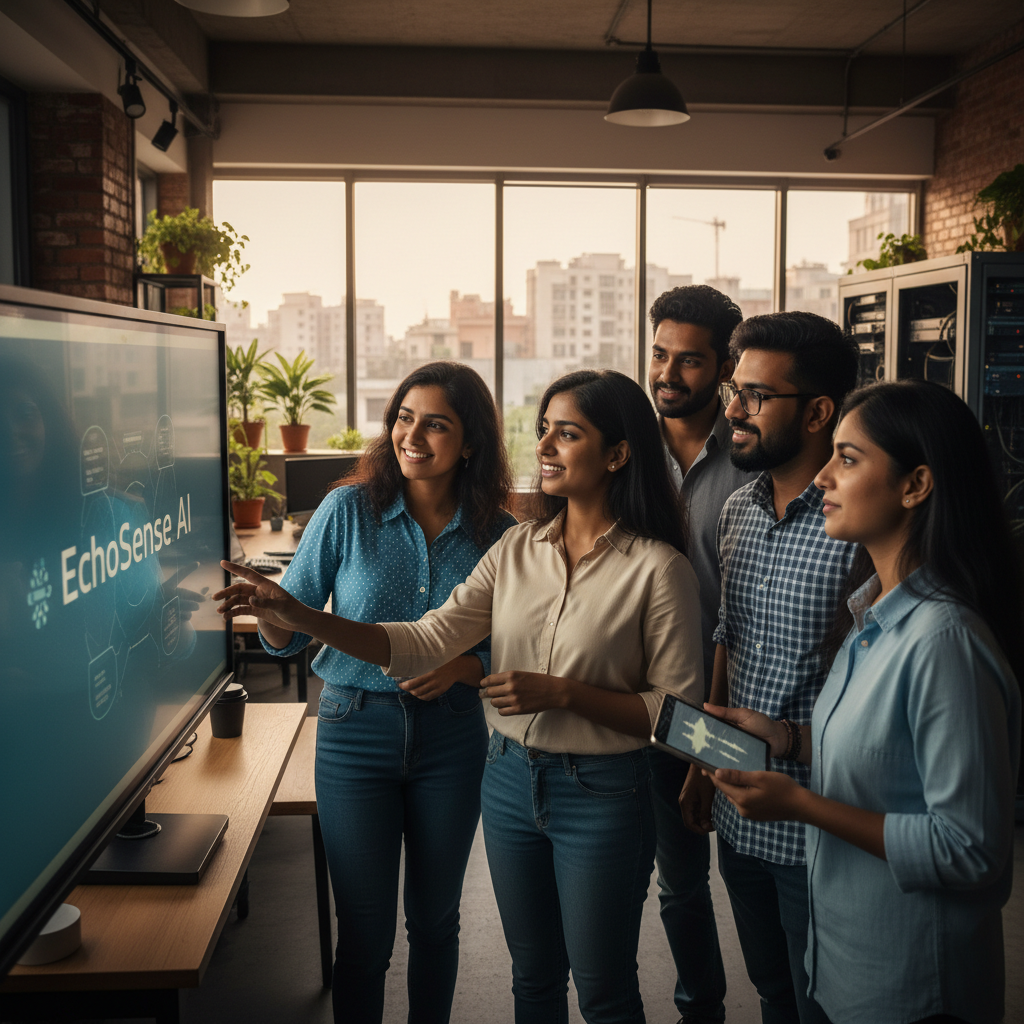
Namaste and welcome, my dear readers, to another thrilling dive into the pulsating heart of India's tech revolution! If you've been following DataGlobal Hub, you know I get absolutely giddy talking about the incredible innovation bubbling up from our shores. And today, oh today, I have a story that will make your chai taste even sweeter, a tale of ingenuity that tackles one of the biggest digital dilemmas of our time: the mighty Meta algorithm. We're talking about how AI decides what you see, what you hear, and frankly, what you believe on platforms like Facebook and Instagram. It's powerful stuff, often a black box, and sometimes, let's be honest, it feels like it's stuck in a Silicon Valley bubble. But fear not, because a startup from our very own Bangalore is changing the game! Meet EchoSense AI. This is just the beginning, my friends. This is truly India having its moment.
The Visionary: From IIT Madras to Meta's Blind Spots
Our story begins with Dr. Ananya Sharma, a name you'll be hearing a lot more of, I promise you. A brilliant mind, Ananya graduated from IIT Madras, then spent years deep in the trenches of machine learning research at a major American tech giant, not Meta itself, but one of its closest competitors. She saw firsthand the incredible power of AI to connect people, to share stories, to build communities. But she also saw its glaring limitations, especially when it came to diverse, multilingual, and culturally nuanced content.
"I remember one evening, I was scrolling through my feed, and it was all very Western-centric, very English-language focused, even though I follow so many Indian creators," Ananya shared with me over a video call, her eyes sparkling with passion. "It struck me then, like a bolt of lightning during monsoon season: these global algorithms, as powerful as they are, often miss the subtle beauty, the intricate layers, of Indian discourse. They struggle with context, with local slang, with the incredible diversity of our languages and dialects. It's not just about translation, it's about true cultural understanding."
That was her 'aha moment,' the spark that ignited EchoSense AI. She realized that while Meta's Llama models and recommendation engines are phenomenal at scale, they often generalize, sometimes missing the forest for the trees, especially when that forest is as dense and vibrant as India. She left her cushy job, packed her bags, and returned to the buzzing energy of Bangalore, determined to build something that truly understood India, from its bustling bazaars to its quiet villages.
The Problem: Echo Chambers and Cultural Blind Spots
Let's be real, Meta's AI-powered content recommendation system, for all its sophistication, has its challenges. It's incredibly efficient at showing you more of what you've already engaged with, which can lead to those infamous 'echo chambers.' You like one Bollywood dance video, and suddenly your feed is a non-stop filmi extravaganza. While fun, it can also limit exposure to diverse viewpoints, news, and even local community content that might be highly relevant but doesn't fit the algorithm's narrow definition of 'engagement.'
For a country like India, with its 22 official languages, hundreds of dialects, and an unparalleled tapestry of cultures, this problem is amplified a thousandfold. A meme in Tamil might have a completely different cultural resonance than a similar one in Punjabi. A political discussion in Hindi might use specific idioms that a global AI model, trained predominantly on English data, simply cannot grasp. This isn't just about showing you more of what you like; it's about ensuring that important local information, community initiatives, and diverse perspectives actually reach the people who need them, without getting lost in translation or algorithmic misinterpretation.
"The current models, even the most advanced ones like Meta's Llama, are often trained on vast datasets that, while global, still have a significant bias towards certain languages and cultural contexts," explains Dr. Rohan Mehta, a leading AI ethicist at the Indian Institute of Science, Bangalore. "EchoSense AI is addressing a critical gap: building AI that doesn't just process language, but understands cultural semantics and socio-linguistic nuances at a granular level, especially for India's diverse user base."
The Technology: Contextual AI for a Diverse Nation
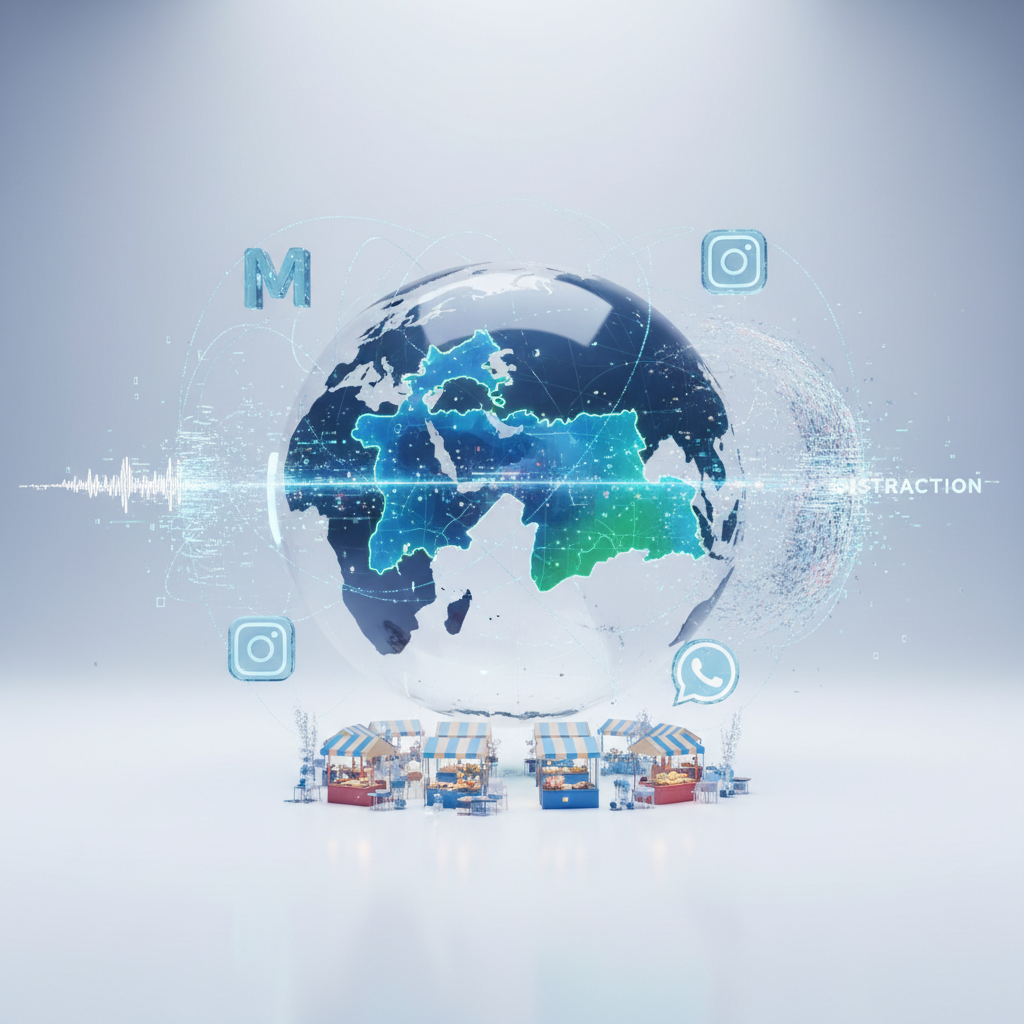
So, what exactly is EchoSense AI doing? They're not trying to replace Meta's core recommendation engine, oh no. That would be like trying to outscore Virat Kohli in a T20 match, a tough ask! Instead, they're building an intelligent overlay, a 'cultural context engine' that works with existing platforms. Their proprietary AI models, trained on massive, curated datasets of Indian content across multiple languages and regions, are designed to identify and understand the subtle cultural cues, local references, and community-specific jargon that often elude global models.
Ananya's team has developed what they call 'Contextual Relevance Scoring' (CRS). Instead of just predicting engagement based on past likes or shares, CRS also factors in the cultural significance, local impact, and diverse viewpoint representation of a piece of content. Imagine an algorithm that understands not just what a post says, but why it matters to a specific community in, say, Kerala, or what its implications are for a discussion in Uttar Pradesh. This is the magic of EchoSense. They are building AI that understands the 'Bharat' of India, not just the 'India' that speaks English.
Their technology leverages advanced natural language understanding (NLU) and multimodal AI, combining text analysis with image and video recognition, to grasp complex cultural narratives. They've also pioneered a 'federated learning' approach, collaborating with local content creators and community leaders to continuously refine their models, ensuring they stay relevant and unbiased. This approach is generating significant buzz, with many in the industry calling it a blueprint for culturally sensitive AI development. You can read more about similar advancements in NLU on MIT Technology Review.
The Market Opportunity: A Billion-Plus Users Awaiting True Connection
The market for EchoSense AI's solution is, quite simply, mind-boggling. India has over 700 million internet users, with social media penetration soaring. Meta platforms alone boast hundreds of millions of users in India. These users are hungry for content that truly resonates, that speaks to their local experiences, and that connects them with their communities in meaningful ways.
"The potential here is enormous," says Priya Singh, a venture capitalist from Sequoia Capital India, one of EchoSense AI's early investors. "We're talking about unlocking deeper engagement, fostering more inclusive online communities, and even enabling more effective local commerce and public service announcements. The ability to fine-tune content delivery for India's diverse demographics is a multi-billion dollar opportunity. It's not just about better recommendations, it's about better digital citizenship."
EchoSense AI recently closed a Series A funding round of $25 million, led by Sequoia and backed by several prominent angel investors from India's tech diaspora. This capital infusion is earmarked for scaling their engineering team, expanding their language datasets, and forging partnerships with more social media platforms.
The Competitive Landscape: Giants and Nimble Innovators
Of course, EchoSense AI isn't operating in a vacuum. Meta itself is constantly refining its algorithms, investing heavily in local language processing and cultural understanding. Google, with its powerful Gemini models, is also a formidable player in contextual AI. Then there are other startups globally trying to tackle algorithmic bias and content relevance.
However, EchoSense AI's competitive edge lies in its hyper-focused, India-first approach. While the global giants aim for universal solutions, EchoSense is drilling down into the specific, intricate needs of the Indian user base. Their deep cultural immersion, their unique datasets, and their collaborative model with local communities give them an unparalleled advantage. They are not just building technology for India, they are building it from India, with an understanding that only comes from living and breathing the culture. This localized expertise is something even the biggest players find hard to replicate quickly. For more insights on AI startups, check out TechCrunch's AI section.
What's Next: Beyond Recommendations, Towards Digital Harmony
Ananya and her team are not stopping at just recommendations. Their vision extends to using their Contextual Relevance Scoring to combat misinformation and hate speech more effectively in local languages, a challenge that plagues social media globally. Imagine an AI that can not only identify harmful content but also understand its specific cultural context and potential impact on a local community, allowing for more nuanced and effective moderation. They are also exploring applications in personalized education and local governance, ensuring that vital information reaches every corner of our vast nation.
"Our goal is to make social media a more enriching, more representative, and ultimately, a more harmonious space for every Indian," Ananya concluded, her voice filled with conviction. "We want to ensure that the digital India truly reflects the real India, in all its incredible diversity and vibrancy. This is not just a business for us; it's a mission."
And what a mission it is! EchoSense AI is a shining example of how Indian innovation is not just catching up, but often leading the way, tackling complex global problems with deeply local insights. The scale is mind-boggling, and the impact, I believe, will be truly transformative. Keep your eyes peeled, my friends, because EchoSense AI is poised to make waves, not just in India, but across the global digital landscape. The future, as always, looks incredibly bright from where I'm standing. Perhaps their work could even inform efforts to bridge digital divides in other regions, much like the discussions around AI in Afghanistan [blocked].