The digital world often feels like it's built in a handful of global tech hubs, far removed from our shores here in Aotearoa. But sometimes, a quiet revolution begins in unexpected places, nurtured by different values and a unique vision. Today, I want to introduce you to one such story, unfolding right here in New Zealand, involving a startup called Te Kōrero AI.
Their name itself, 'Te Kōrero', means 'the story' or 'the narrative' in Te Reo Māori. It is a fitting name for a company that aims to reshape the narrative of software development, making it more intuitive, efficient, and deeply understanding of human intent. They are making a bold bet on ultra-long-context models, pushing the boundaries of what large language models can comprehend and process.
The Founder's Journey: From Whānau to Code
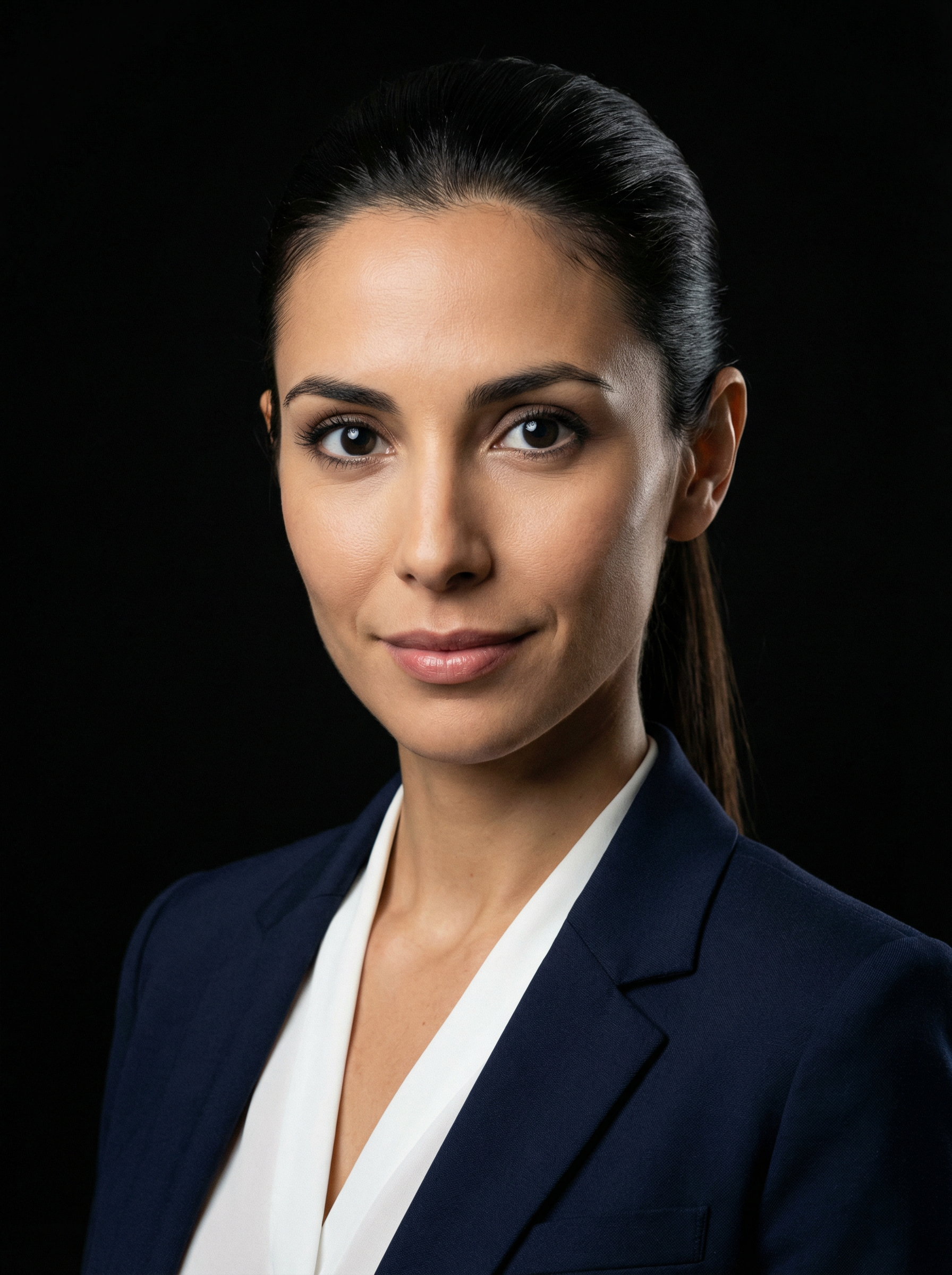
The vision behind Te Kōrero AI belongs to Dr. Anahera Rata, a brilliant computer scientist with a background deeply rooted in both traditional Māori knowledge and cutting-edge machine learning. Anahera grew up in a small coastal community in the Bay of Plenty, where the art of storytelling, the whakapapa of her ancestors, and the intricate patterns of weaving were as much a part of her education as mathematics and science. She pursued her PhD in natural language processing at the University of Auckland, but always felt a disconnect between the purely technical approach of Western AI and the holistic, interconnected worldview she knew.
Her "aha moment" came during a research project on ancient Māori manuscripts. She realized that existing language models, even the most advanced ones like OpenAI's GPT-4 or Anthropic's Claude, struggled with the nuances, the deep cultural context, and the sheer length of these historical texts. They could process individual sentences, perhaps even paragraphs, but lost the thread of the overarching narrative, the subtle intergenerational connections, and the embedded wisdom that unfolded over hundreds of pages. "It was like they were reading words, but not understanding the kōrero, the full story, the wairua or spirit of the text," Anahera told me over a cup of kawakawa tea in their modest Wellington office. "I knew there had to be a way to build models that could truly grasp context, not just tokens, but the entire tapestry of information." This experience ignited her quest to build models with unprecedented contextual understanding.
The Problem Te Kōrero AI is Solving: The Labyrinth of Legacy Code
Software engineering, especially in large enterprises, is often a journey through a labyrinth of legacy code. Systems are built over decades, with different languages, frameworks, and developers contributing to a complex, often poorly documented, beast. Understanding how a change in one module affects another, debugging elusive bugs across thousands of files, or refactoring massive codebases is a monumental task. This is where current AI coding assistants, while helpful for generating snippets or simple functions, fall short. They lack the memory, the 'context window', to understand an entire application, its architecture, its business logic, and its historical evolution.
"Imagine trying to understand a 500-page novel by only reading five pages at a time, and then forgetting the previous five," explains Kauri Te Rangi, Te Kōrero AI's Head of Engineering, a former senior developer at Google. "That's what most large language models do with codebases. They can't hold enough of the 'story' in their memory to be truly transformative for complex engineering tasks." This limitation leads to significant inefficiencies, developer burnout, and billions of dollars lost annually in maintenance and debugging costs globally. According to a recent report by Reuters, the global software development market is projected to reach over 1.3 trillion USD by 2027, and a significant portion of that is spent on maintaining existing systems.
The Technology: Ultra-Long Context and Cultural Grounding
Te Kōrero AI's core innovation lies in its proprietary architecture for ultra-long-context models, which they've dubbed 'Whakapapa-LM' a nod to genealogical connections and deep lineage. While companies like Google and Anthropic have pushed context windows to hundreds of thousands of tokens, Te Kōrero AI claims to have developed a method that allows their models to effectively process and reason over millions, even tens of millions, of tokens. This is not just about increasing the raw token limit, but about developing novel attention mechanisms and memory retrieval systems that maintain coherence and understanding across vast swathes of information.
"Our models are designed to understand the 'whakapapa' of a codebase," Anahera elaborates. "They can trace the lineage of a function, understand its dependencies across hundreds of files, and even infer the original design philosophy. This allows them to do things no other AI can currently achieve, like automatically refactoring entire modules, identifying subtle architectural flaws, or even generating comprehensive documentation for undocumented systems." They achieve this through a combination of sparse attention, hierarchical memory structures, and a unique training methodology that emphasizes relational understanding over mere token prediction. MIT Technology Review has highlighted the potential of such long-context models to unlock new paradigms in AI, and Te Kōrero AI is at the forefront of this wave.
Market Opportunity: A Trillion-Dollar Problem
The market opportunity for Te Kōrero AI's technology is immense. Every major enterprise, government agency, and software company grapples with the complexity of its codebase. The ability to dramatically reduce the time spent on maintenance, debugging, and refactoring, while accelerating new feature development, represents a massive value proposition. Early pilot programs with several New Zealand government departments and a large Australian financial institution have shown promising results, with reported productivity gains of up to 40 percent in specific engineering tasks.
"We're not just offering a better coding assistant, we're offering a paradigm shift in how software is built and maintained," says Dr. Hemi Poutama, a venture capitalist from Auckland-based fund, Mana Ventures, which led Te Kōrero AI's recent Series A round of NZD $50 million. "Their ability to understand entire systems, not just snippets, is a game-changer. This isn't just a local success story, it's a global one in the making." The funding round also saw participation from international investors, signaling strong confidence in their unique approach.
Competitive Landscape: Beyond the Giants
The competitive landscape is dominated by tech giants like Microsoft with GitHub Copilot, Google with Gemini's coding capabilities, and various open-source initiatives. However, Te Kōrero AI believes its ultra-long-context models provide a distinct competitive advantage. While Copilot excels at code completion and suggestion within a limited scope, it struggles with system-level understanding. "Our models don't just help you write the next line of code, they help you understand the entire book, and then rewrite chapters if necessary," Kauri Te Rangi explains. "That's a fundamentally different level of capability." They are also keenly aware of the ethical implications, particularly regarding data sovereignty and intellectual property, an area where Aotearoa's approach to AI is rooted in indigenous wisdom and a strong emphasis on kaitiakitanga, guardianship. They are developing robust frameworks to ensure code privacy and ownership, a critical concern for their enterprise clients.
What's Next: Expanding Horizons and Deepening Impact
Te Kōrero AI plans to use its recent funding to scale its engineering team, further refine its Whakapapa-LM, and expand its pilot programs to more international clients. They are particularly interested in sectors with highly complex, mission-critical software, such as aerospace, healthcare, and financial services. They also envision a future where their models can assist in translating legacy systems written in archaic languages into modern, maintainable code, effectively preserving and modernizing digital heritage.
For Anahera Rata, the journey is about more than just technological prowess. "Technology must serve the people, not the other way around," she asserts. "Our goal is to empower developers, free them from the mundane, and allow them to focus on true innovation. We want to build AI that understands the depth and breadth of human creation, just as our ancestors understood the interconnectedness of all things." It is a powerful vision, one that reminds us that sometimes, the most profound innovations emerge not from the loudest voices, but from those who listen deeply to the stories that need to be told, and the problems that truly need solving. Their work is a testament to the idea that a small nation at the bottom of the world can lead the way in shaping a more thoughtful, context-aware, and ultimately, more human-centric AI future. You can learn more about their work and the broader impact of AI on society by visiting Wired's AI section for deeper insights.