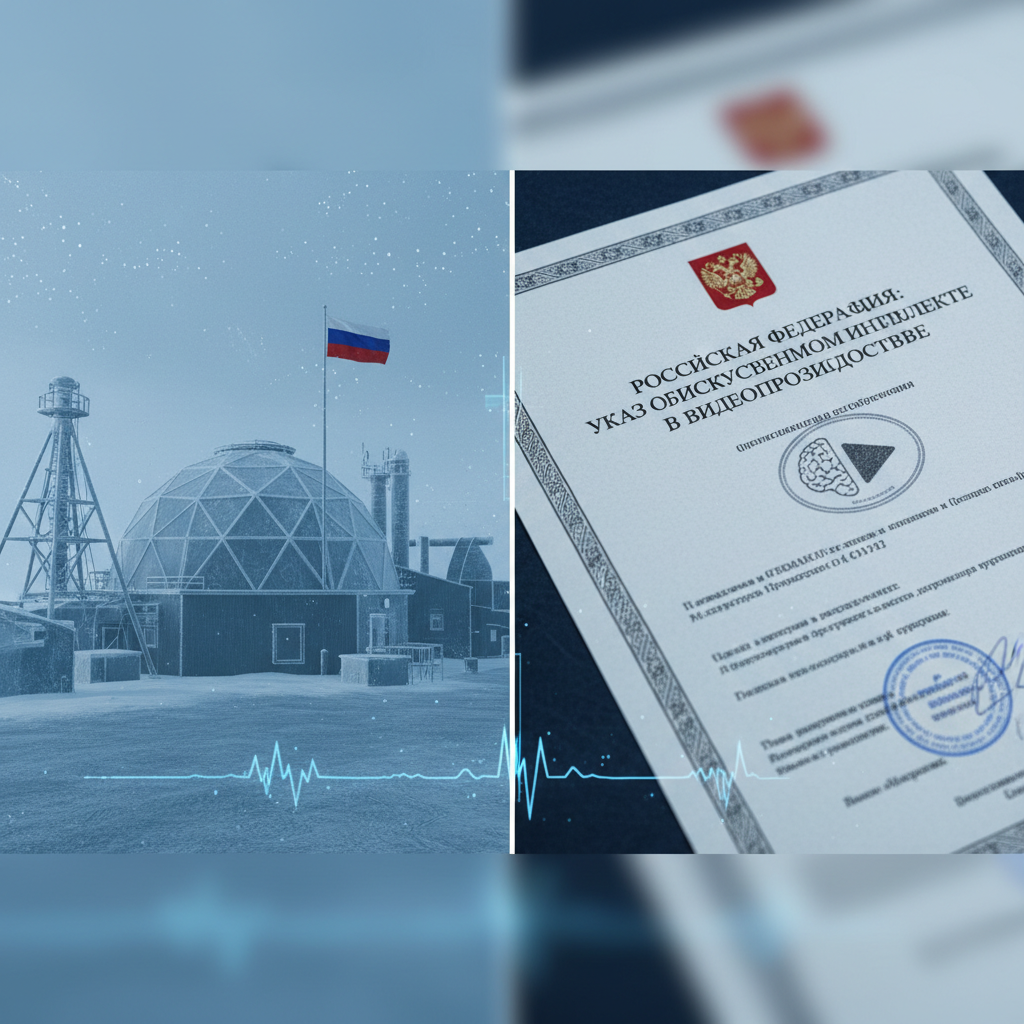

The relentless march of artificial intelligence, a phenomenon we observe even from the stark, pristine isolation of our Antarctic station, continues to reshape industries at an astonishing pace. One of the most dynamic battlegrounds today is the realm of AI-generated video, with companies like Pika Labs leading the charge to democratize high-quality visual content creation. Yet, as the capabilities of these platforms expand, so too does the imperative for robust governance. Russia, recognizing the profound implications of this technological wave, has recently signaled a significant policy shift that could reverberate through the global AI landscape, particularly for companies operating in the nascent 'YouTube of AI' space.
This policy move, still in its formative stages but gaining momentum within legislative circles, centers on mandating clear disclosure and provenance tracking for AI-generated video content distributed within Russia's digital borders. The proposed regulations aim to require platforms hosting such content, and creators publishing it, to explicitly label videos produced or significantly altered by AI. Furthermore, there are discussions around establishing a digital registry or watermark system to trace the origin and modification history of these synthetic media assets.
Who is behind this, and why? The primary impetus originates from the Ministry of Digital Development, Communications, and Mass Media, with strong backing from the State Duma's Committee on Information Policy, Information Technologies, and Communications. The rationale is multi-faceted. Firstly, there is a clear national security concern regarding the proliferation of deepfakes and misinformation, particularly in the context of geopolitical tensions. The ability to generate highly convincing, yet entirely fabricated, video content poses a significant threat to public discourse and trust. Secondly, the government aims to protect intellectual property rights for human creators, ensuring that AI models are not trained on copyrighted material without proper attribution or compensation, and that original works are not indistinguishably blended with AI-generated elements. Finally, there is an underlying desire to foster a responsible domestic AI industry, one that operates within clear ethical and legal boundaries, thereby building public confidence in AI technologies.
In practical terms, what does this mean? For a platform like Pika Labs, which offers intuitive tools for users to generate and modify video clips with simple text prompts, compliance would necessitate significant technical integration. Every video uploaded or generated and then shared publicly within Russia would require a metadata tag or a visible overlay indicating its AI origin. This could range from a simple text label, similar to those seen on social media for sponsored content, to more sophisticated cryptographic watermarks embedded directly into the video file. For individual creators, it means a legal obligation to disclose their use of AI, potentially facing penalties for non-compliance. The data from our Antarctic station reveals that even in environments where human interaction is minimal, the need for verifiable information remains critical for scientific integrity, a principle that translates directly to the digital realm.
The industry reaction has been, predictably, mixed. Major Russian tech companies, such as Yandex and VK, which are developing their own generative AI capabilities, have expressed cautious optimism. They recognize the need for regulation to prevent misuse and maintain public trust, but also voice concerns about the potential for stifling innovation. "While the intent to combat misinformation is laudable, the implementation must not create an undue burden on developers and content creators," stated Dr. Elena Petrova, Head of AI Ethics at Yandex, in a recent online forum. "We must find a balance that promotes transparency without impeding the creative process or technological advancement." International players like Pika Labs, which aims for global reach, would face the challenge of adapting their services to a fragmented regulatory landscape. Developing region-specific compliance features could increase operational costs and complexity, potentially leading to geo-blocking or curtailed service offerings in certain markets. TechCrunch has reported extensively on the global challenges faced by generative AI companies in navigating diverse regulatory frameworks.
From a civil society perspective, the proposed regulations are largely welcomed, albeit with caveats. Human rights organizations and media watchdogs see the potential for increased transparency as a vital tool in combating disinformation and propaganda. "The ability to discern human-created content from machine-generated content is fundamental to informed public discourse," commented Ivan Volkov, a legal analyst specializing in digital rights at the Moscow-based Center for Digital Liberties. "However, the devil is always in the details. We must ensure that these regulations are not used to suppress legitimate expression or to create a surveillance mechanism under the guise of AI governance." There is a palpable concern that broad mandates could lead to over-censorship or provide tools for state control over information, rather than simply ensuring authenticity. Science at the bottom of the world teaches us that precision in measurement and clarity in communication are paramount, lessons that apply equally to the complex policy challenges of AI.
Will this policy work? The success of Russia's AI video mandate hinges on several factors. Firstly, effective enforcement. Without robust technical means to detect undeclared AI content and clear penalties for non-compliance, the regulations risk becoming merely symbolic. This is particularly challenging given the rapid evolution of AI models, which can quickly bypass detection methods. Secondly, international cooperation is crucial. If Russia implements strict labeling requirements while other nations do not, it could create an uneven playing field and lead to content flowing through less regulated channels. Thirdly, public education is key. Users must be aware of the regulations and understand the importance of AI content disclosure to actively participate in maintaining a transparent digital environment. The challenge is immense, akin to trying to track every snowflake in a blizzard, but the necessity is undeniable.
At -40°C, technology behaves differently, and so too do the societal implications of its deployment. The Russian approach, while perhaps perceived as stringent by some, reflects a growing global sentiment that the wild west phase of generative AI is drawing to a close. As AI models become increasingly sophisticated, blurring the lines between reality and simulation, the demand for clear, verifiable provenance will only intensify. Whether this specific policy proves to be a blueprint for other nations or a cautionary tale of over-regulation remains to be seen, but it undeniably marks a significant step in the ongoing global effort to govern the powerful, and sometimes perilous, capabilities of artificial intelligence. The future of digital authenticity, and the platforms that shape it, will be defined not just by technological prowess, but by the legal and ethical frameworks we collectively construct. For further insights into global AI governance, one might consult resources like MIT Technology Review. The conversation around such policies is not confined to any single nation, but is a global dialogue, much like the scientific endeavors that unite researchers from every continent, including our own remote outpost.