The scent of freshly printed fabric, the gleam of intricate zari work, the vibrant chaos of a bustling market in Gujarat, these are the sights and smells that shaped my childhood, and they are the heart of India's creative spirit. For generations, our artisans have poured their souls into their craft, their hands weaving stories that transcend time. But what happens when these age-old traditions meet the lightning-fast innovation of artificial intelligence, specifically tools like Adobe Firefly?
By 2030, I believe we will witness a profound, almost magical, transformation. It won't just be about efficiency, though that's certainly part of it. It will be about empowerment, about amplifying voices that were once unheard, and about bringing India's incredible artistic heritage to a global stage with unprecedented ease. This story will change how you think about creativity and technology.
Imagine a young woman in a small village near Kutch, her family renowned for their traditional embroidery. For years, her designs were limited by what she could sketch by hand, or what she could afford to commission from a graphic designer in the city. Now, with a simple prompt into an AI tool like Firefly, she can instantly generate hundreds of design variations, experiment with color palettes inspired by ancient motifs, or even visualize how her embroidery would look on a modern silhouette. This isn't replacing her skill; it's augmenting it, giving her a super-power she never had before.
The Creative Democratization: How We Get There
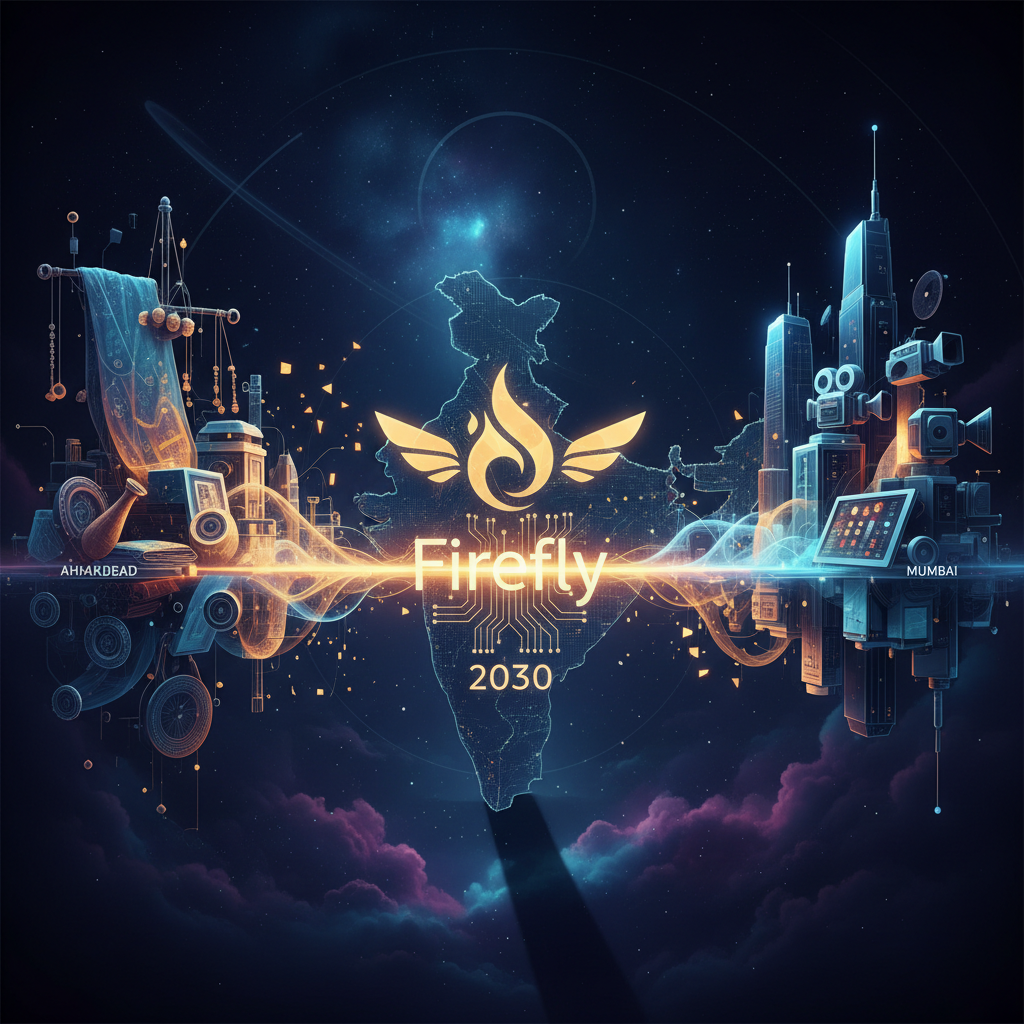
Today, Adobe Firefly is already making waves, allowing users to generate images from text, create vector graphics, and even manipulate existing images with remarkable precision. But this is just the seedling. In the next five to ten years, its capabilities will expand exponentially, becoming more intuitive, more integrated, and crucially, more accessible. The journey to 2030 will be marked by several key milestones.
Phase 1: Skill Augmentation (2024-2026)
Right now, Firefly is a powerful assistant for professional designers. It helps them brainstorm, create mood boards, and iterate faster. We see it streamlining tedious tasks, freeing up human creativity for higher-level conceptual work. Major design studios in Mumbai and Bengaluru are already integrating these tools into their workflows, reporting significant time savings. "Generative AI isn't about replacing designers, it's about making them more productive and imaginative," noted Shantanu Narayen, CEO of Adobe, in a recent interview, echoing a sentiment many in the industry share. This initial phase focuses on enhancing existing expertise.
Phase 2: Small Business Empowerment (2026-2028)
This is where India truly shines. Our nation is built on the backbone of millions of small and medium enterprises, many of them in creative fields like textiles, handicrafts, and digital content creation. Firefly, likely integrated into mobile apps and simpler interfaces, will become a vital tool for these entrepreneurs. A local baker in Chennai could design stunning marketing visuals for her new cake flavor in minutes, without hiring an expensive graphic designer. A boutique owner in Jaipur could create unique patterns for her block-printed sarees, visualizing them on models before a single thread is dyed. This democratizes high-quality design, lowering barriers to entry and fostering local innovation.
Phase 3: Hyper-Personalization and Cultural Fusion (2028-2030)
The real magic begins here. Firefly, powered by increasingly sophisticated large language and image models, will understand nuanced cultural contexts. Imagine generating designs that blend traditional Kalamkari art with futuristic cyberpunk aesthetics, or creating personalized wedding invitations that perfectly fuse regional Indian motifs with modern typography. The AI will learn from vast datasets of global and local art, becoming a collaborator that understands style, sentiment, and cultural significance. This will lead to an explosion of unique, hybrid creative expressions, truly putting India on the map as a hub of digital artistic innovation. Wired has often discussed how AI can unlock new forms of artistic expression, and this will be its ultimate manifestation in our diverse land.
Who Wins and Who Loses?
Certainly, the winners will be the small businesses and individual creators who can now compete with larger entities, armed with powerful, accessible design tools. India's rich tapestry of traditional arts and crafts will find new avenues for expression and commercialization. The creative economy will expand, creating new roles for AI prompt engineers, ethical AI art curators, and digital cultural interpreters. Education will also be a big winner, as design schools integrate these tools, teaching students not just how to use them, but how to think creatively with them.
However, there will be challenges. The immediate impact might be felt by entry-level graphic designers whose basic tasks are automated. The conversation around intellectual property and copyright for AI-generated art will intensify, requiring robust legal frameworks. We must also ensure that the algorithms are trained on diverse, ethically sourced data to avoid perpetuating biases or diluting unique cultural identities. The Indian government and organizations like Nasscom will need to play a crucial role in fostering responsible AI development and ensuring equitable access, as highlighted by MIT Technology Review.
What Readers Should Do Now
For those of us in India, the time to engage with this technology is now. If you're a small business owner, start exploring accessible AI tools. If you're an artist, experiment with Firefly or similar platforms. Don't fear it; embrace it as a new brush in your toolkit. For policymakers, it's essential to invest in digital literacy and infrastructure, especially in rural areas, to ensure that the benefits of this creative revolution reach everyone. We must also prioritize ethical guidelines and robust legal frameworks to protect creators and consumers alike.
Meet the woman who is not just designing clothes, but designing her future, powered by pixels and prompts. In Gujarat's diamond district, AI sparkles differently, not just in cutting precious stones, but in crafting compelling narratives for local businesses. This isn't just about software; it's about people, their dreams, and the incredible potential unleashed when tradition and technology dance together. The future of creativity in India is bright, vibrant, and undeniably AI-powered. It's a future where every hand, every mind, can bring their vision to life, limited only by imagination, not by access to expensive tools or specialized training. It's truly an exciting time to be a creator in India. For more insights into how AI is transforming various sectors globally, you might find this article on AI in newsrooms [blocked] interesting, showing how different industries are adapting.