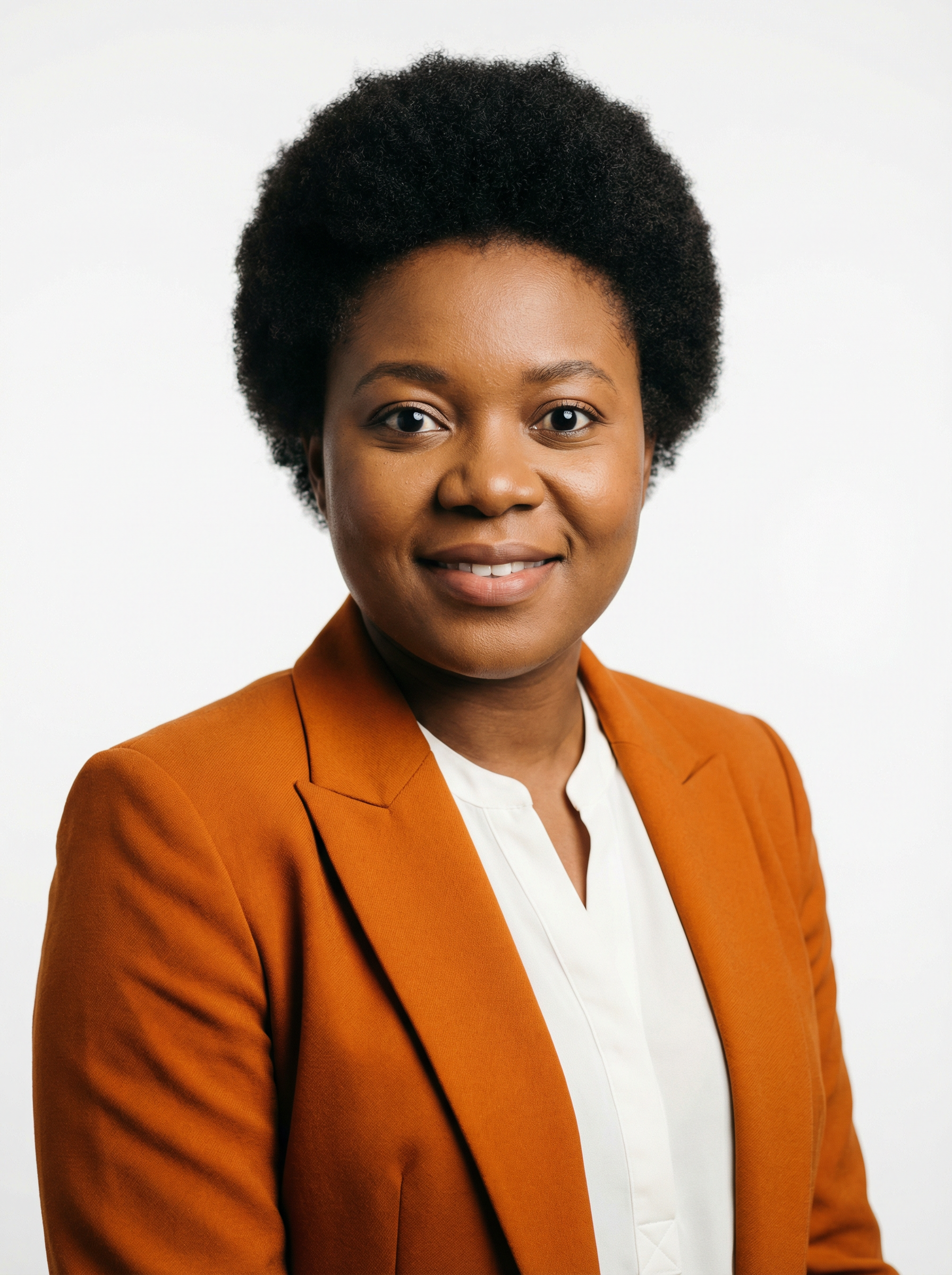
The air in Makola Market is a symphony of purpose: the rhythmic hawking of goods, the vibrant chatter of traders, the scent of spices and fresh produce mingling with exhaust fumes. It is a place where every transaction is a dance, a negotiation, a deep understanding of value and risk. It is also the place where, as a young girl, Akosua Serwaa first learned about finance, long before she ever heard of algorithmic trading or quantitative analysis. This foundational wisdom, steeped in the practicalities of Ghanaian commerce, is precisely what makes her company, Adinkra AI, so profoundly disruptive to the staid, often opaque world of Wall Street.
Now, at 32, Akosua Serwaa, CEO and co-founder of Adinkra AI, stands at the helm of a company valued at over $300 million after a recent Series A funding round. Her firm is not just another player in the high-stakes arena of AI-driven finance, it is a paradigm shift, infusing ethical considerations and a unique risk assessment model, inspired by Akan proverbs and communal responsibility, into the very core of its sophisticated trading algorithms and robo-advisors. She is not just building a company, she is building a legacy, one that insists on equity and transparency in a sector often criticized for its exclusivity.
Akosua's story begins not in a Silicon Valley garage, but in the vibrant, sometimes chaotic, heart of Accra. Her mother was a successful textile trader, and Akosua spent countless hours by her side, observing the intricate flow of capital, the subtle cues of trust and deception, the resilience required to thrive. "My mother taught me that true wealth isn't just about accumulation, it's about stability, about community, about understanding the unseen currents that move the market," Akosua shared with me during a recent video call, her voice calm yet resonant, a hint of her Fante accent coloring her precise English. "She taught me the meaning of Sankofa, of looking back to retrieve what is good from the past, even as you move forward. That became the bedrock of Adinkra AI."
Her academic journey took her from Ghana International School to the University of Pennsylvania, where she majored in Computer Science and minored in Economics. It was at UPenn, amidst the intense competition and intellectual rigor, that she felt a growing unease. The algorithms being taught, the financial models being celebrated, seemed to exist in a vacuum, detached from the human element, from the societal impact she had witnessed firsthand in Ghana. "It was all about maximizing profit, minimizing loss, often without a thought for the wider implications," she explained, gesturing with her hands, a habit that betrays her passion. "The models were brilliant, yes, but they were also blind to context, to the very human stories behind the numbers. I knew there had to be a better way, a more holistic way."
The defining moment, the spark that ignited Adinkra AI, came during an internship at a major investment bank on Wall Street. She witnessed algorithmic trading systems execute millions of transactions in milliseconds, generating immense wealth for a select few, but also contributing to market volatility that could ripple across economies, affecting ordinary people. She saw the potential for bias embedded in data, the lack of transparency, the sheer power concentrated in a few lines of code. "I remember feeling this profound sense of responsibility," she recalled. "It was like watching a powerful river, but one that was only accessible to a few, and whose currents could sweep away the unwary. That night, I decided I couldn't just be a spectator. I had to build a different kind of river."
Her co-founder, Dr. Kwame Nkrumah Jr., a brilliant mathematician and AI ethicist she met through a Ghanaian student association at MIT, shared her vision. Kwame, whose own family had faced financial hardship due to global market fluctuations, was equally committed to creating more equitable financial tools. Their initial idea, hatched over late-night fufu and groundnut soup in their shared Cambridge apartment, was a platform for micro-lending in emerging markets, leveraging AI for better risk assessment. It was a noble pursuit, but their first attempt, a mobile app called 'Akatua' meaning 'parrot' in Twi, struggled to gain traction. The technology was sound, but the market entry was flawed, and they burned through their initial seed funding of $500,000 from a local angel investor in Accra.
"It was a tough lesson," Kwame admitted, a wry smile on his face. "We were so focused on the 'what' that we neglected the 'how' and 'who'. But it taught us resilience, and it taught us to listen, truly listen, to the market." This failure, however painful, was the pivot point. They realized the core problem wasn't just access to capital, but the underlying mechanisms of global finance itself. If they could build a more ethical, transparent, and culturally intelligent AI for the major financial players, the benefits could trickle down, creating a more stable global economic environment. This was the birth of Adinkra AI.
They applied to Y Combinator, presenting a bold vision: AI-powered algorithmic trading and risk assessment tools that incorporated principles of ethical AI, fairness, and explainability, drawing inspiration from traditional African communal values. Their pitch, delivered with Akosua's characteristic blend of conviction and clarity, captivated investors. They secured a $120,000 investment from Y Combinator and quickly raised a $2 million seed round from Altos Ventures, a firm known for backing audacious founders. "Akosua and Kwame weren't just selling technology, they were selling a philosophy," commented Sarah Chen, a partner at Altos Ventures. "They understood that the next frontier in finance isn't just faster algorithms, but smarter, more responsible ones. Their Ghanaian heritage isn't just a backstory, it's a competitive advantage."
Building Adinkra AI was not without its challenges. Convincing established financial institutions, steeped in decades of tradition and risk aversion, to adopt their novel approach was an uphill battle. Hiring top-tier AI talent who also understood the nuances of ethical finance was another hurdle. Akosua fostered a culture of open dialogue, encouraging her engineers to constantly question the 'why' behind the 'what'. She instituted 'Sankofa Sprints', where teams would review past decisions, learn from mistakes, and integrate new cultural insights into their models. Their proprietary 'Adinkra Risk Index' uses a multi-layered approach, incorporating not just market data but also geopolitical stability indicators, social equity metrics, and even climate impact assessments, a far cry from the purely quantitative models prevalent elsewhere. This holistic view, she argues, leads to more robust and resilient financial strategies.
Their breakthrough came when a major European hedge fund, seeking to diversify its portfolio with a focus on sustainable investments, piloted Adinkra AI's platform. The results were astounding. Not only did Adinkra AI's algorithms deliver competitive returns, but its risk assessment models also identified potential market instabilities weeks before traditional models, saving the fund millions. This success led to a $30 million Series A round at a $300 million valuation, with Sequoia Capital joining Altos Ventures. Today, Adinkra AI boasts over $100 million in annual recurring revenue, serving a growing roster of institutional clients across North America, Europe, and increasingly, Africa.
Akosua Serwaa is a force of nature, a testament to what happens when intellect meets integrity. She is often seen at industry conferences, not just presenting her company's innovations, but challenging the status quo, advocating for greater diversity and inclusion in finance and tech. "We need to talk about this, the inherent biases in the systems we build, the lack of representation in the rooms where these decisions are made," she asserted during a panel at a recent AI in Finance summit. "Silence is complicity when the tools we create have such profound societal impact." Her words resonated deeply, sparking conversations that extended far beyond the conference halls.
Looking ahead, Akosua envisions Adinkra AI expanding its robo-advisor services to individuals, particularly in underserved communities, making sophisticated financial planning accessible to everyone, not just the wealthy. She believes that just as the Gye Nyame symbol represents the omnipotence of God, so too should financial tools be universally accessible and beneficial. She is also exploring partnerships with African governments to leverage AI for national economic planning and resource allocation, ensuring that the continent benefits from these technological advancements. "This affects every single one of us, whether we realize it or not," she concluded, her gaze firm. "The future of finance, the future of our societies, depends on us building technology that serves humanity, not just profit. And I believe Ghana, with its rich history of innovation and community, has a vital role to play in shaping that future."
Her journey from the bustling markets of Accra to the gleaming towers of Wall Street is more than a personal success story. It is a powerful reminder that true innovation often comes from unexpected places, from voices that have been historically marginalized, and from perspectives that challenge the established order. Akosua Serwaa is not just building algorithms, she is building a bridge to a more equitable financial world, one rooted in wisdom, ethics, and a deep understanding of what truly matters. Her work is a beacon, a call to action for all of us to demand more from our technology, and from ourselves. For more insights into ethical AI in finance, you can explore articles on MIT Technology Review or Reuters' AI section. You can also follow the latest in AI startups on TechCrunch.