
Let me be clear from the start: when I see the videos of Tesla's Optimus humanoid robot, moving with its almost human grace, I feel a mix of awe and a profound unease. Elon Musk and his vision for automating manufacturing, for replacing repetitive human labor with tireless machines, sounds like progress on paper. But from where I stand, here in Colombia, a nation that has fought tooth and nail for every step of its development, this vision feels incomplete, even dangerous, if we do not center humanity in its application.
The narrative coming from Silicon Valley often paints a picture of inevitable technological advancement, where robots like Optimus will simply slot into factories, boosting efficiency and freeing humans for more 'creative' work. They say it will solve labor shortages, reduce costs, and make production faster and more precise. And yes, I can see the allure for large, established industrial powers. Imagine a factory floor where robots handle the most physically demanding or hazardous tasks, reducing injuries and increasing output. It sounds like a utopia for some, a necessary evolution for others.
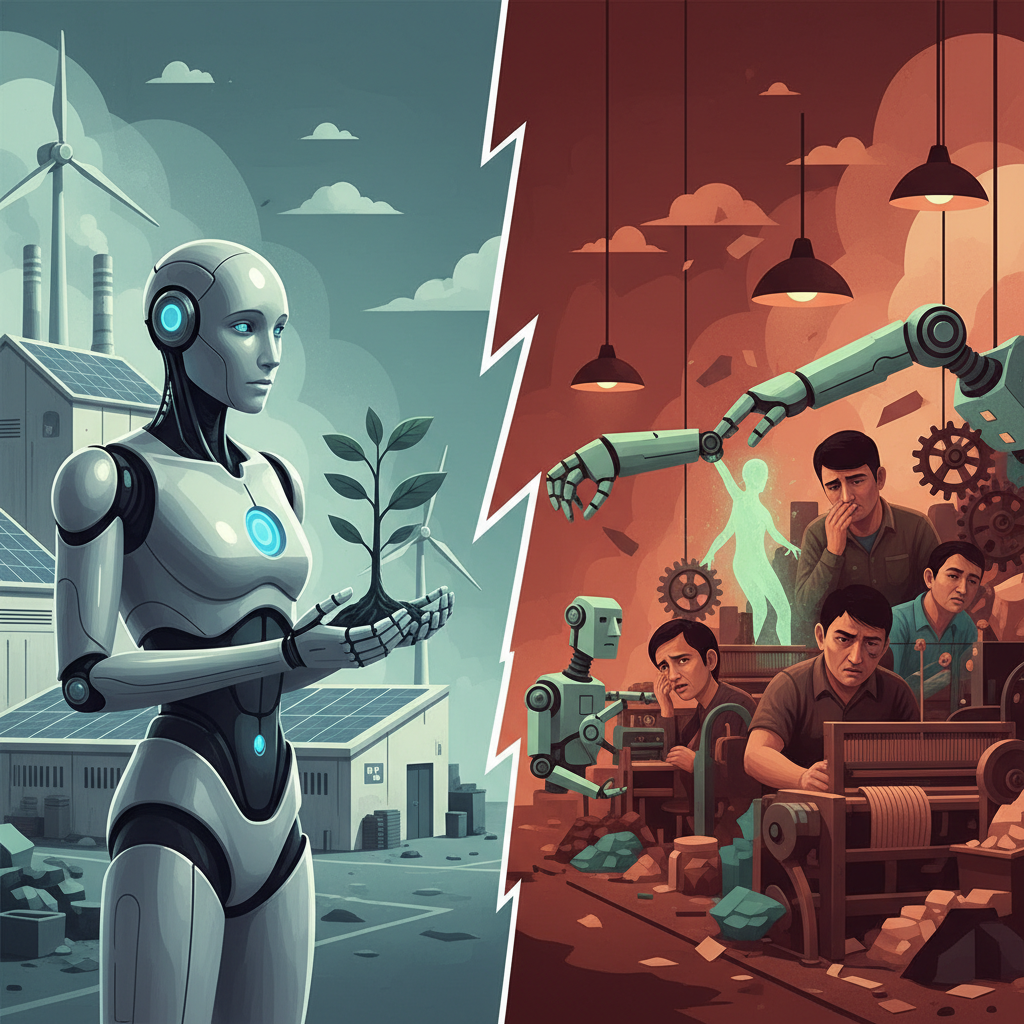
But let's peel back the layers, shall we? For countries like Colombia, where the scars of conflict are still fresh and the urgent need for dignified employment is paramount, the introduction of widespread robotic automation in manufacturing presents a complex challenge. We are not just looking for efficiency; we are looking for equity, for stability, for opportunities that empower our people, especially those who have been marginalized for too long. We are building a future, brick by human brick, and we must ask: where do the hands that lay those bricks go when the robots arrive?
My argument is this: while the technological marvel of Optimus is undeniable, its uncritical adoption in emerging economies could exacerbate existing inequalities, displace vulnerable populations, and undermine the very social fabric we are striving to mend. This is about more than technology because it's about justice. We cannot simply import solutions designed for different contexts without profoundly understanding their impact on our unique social and economic realities.
Consider our manufacturing sector. While not as large as some global players, it provides vital jobs, from textiles to food processing, from artisanal crafts to emerging tech assembly. These jobs are often the first step out of poverty for many families. "The promise of automation must be balanced with a robust plan for human transition, retraining, and job creation in new sectors," says Dr. Elena Vargas, a labor economist at the Universidad Nacional de Colombia. "Without it, we risk creating a new class of technologically displaced workers, fueling social unrest and widening the gap between the privileged and the struggling." Her words echo a sentiment I hear often in our communities.
Some will argue, of course, that this is simply the march of progress. They will say that resisting automation is futile, that it will ultimately create new, higher-skilled jobs, and that countries must adapt or be left behind. They might point to the potential for Optimus to handle tasks that are too dangerous or repetitive for humans, improving working conditions. And yes, there is truth to the idea that technology can elevate human work. But the transition is rarely smooth, rarely equitable, and almost never without significant social cost, especially when implemented without careful consideration for local contexts.
"We cannot afford to repeat the mistakes of past industrial revolutions, where entire communities were left behind in the name of efficiency," states Ricardo Montoya, director of the Colombian Ministry of Labor's Future of Work initiative. "Our focus must be on how AI and robotics can augment human capabilities, not simply replace them. We need policies that incentivize companies to invest in their human capital alongside their technological capital." He believes that a 70/30 split, where 70% of investment goes to human development and 30% to automation, could be a sustainable model for our region.
My rebuttal is simple: the 'inevitable march of progress' is often dictated by those with the most capital and power, not by the needs of the most vulnerable. We have a choice in how we integrate these technologies. We can demand that companies like Tesla, and the governments that regulate them, prioritize social impact alongside profit. We can advocate for policies that mandate investment in education, reskilling programs, and social safety nets before widespread displacement occurs. We can foster our own innovation ecosystem that builds AI solutions tailored to our specific challenges, rather than passively consuming those developed elsewhere.
Colombia's AI story deserves to be heard, and it is a story of resilience, innovation, and a deep commitment to human flourishing. Our startups are already exploring how AI can aid in post-conflict reconciliation, improve agricultural yields for small farmers, and enhance access to education in remote areas. We are not afraid of technology; we are simply demanding that it serve humanity, not the other way around. We are asking for a seat at the table, not just a place on the assembly line.
Imagine if Optimus, or robots like it, were deployed not just to maximize profits in mega-factories, but to rebuild infrastructure in areas devastated by conflict, to assist in humanitarian efforts, or to provide specialized care in underserved communities. Imagine if the intellectual property and manufacturing capabilities for these robots were shared, allowing countries like Colombia to adapt and build their own versions, creating local industries and high-skilled jobs.
This is not a call to halt technological progress. It is a call to infuse it with conscience, with a deep understanding of human dignity, and with a commitment to equity. Latin America is rising, and we are not content to be mere consumers of global tech trends. We want to be co-creators, shaping a future where technology uplifts everyone, leaving no one behind.
We must ask ourselves, and demand answers from the tech giants: are we building a future where robots serve all of humanity, or just the bottom line? The answer will define not just the future of manufacturing, but the very soul of our societies. For more on the global implications of AI in industry, you can read analyses from MIT Technology Review or follow industry trends on TechCrunch. The conversation needs to be global, inclusive, and urgent. We cannot afford to wait until the robots are already here to decide what kind of future we want to build. Our future is too important to be left to algorithms alone.