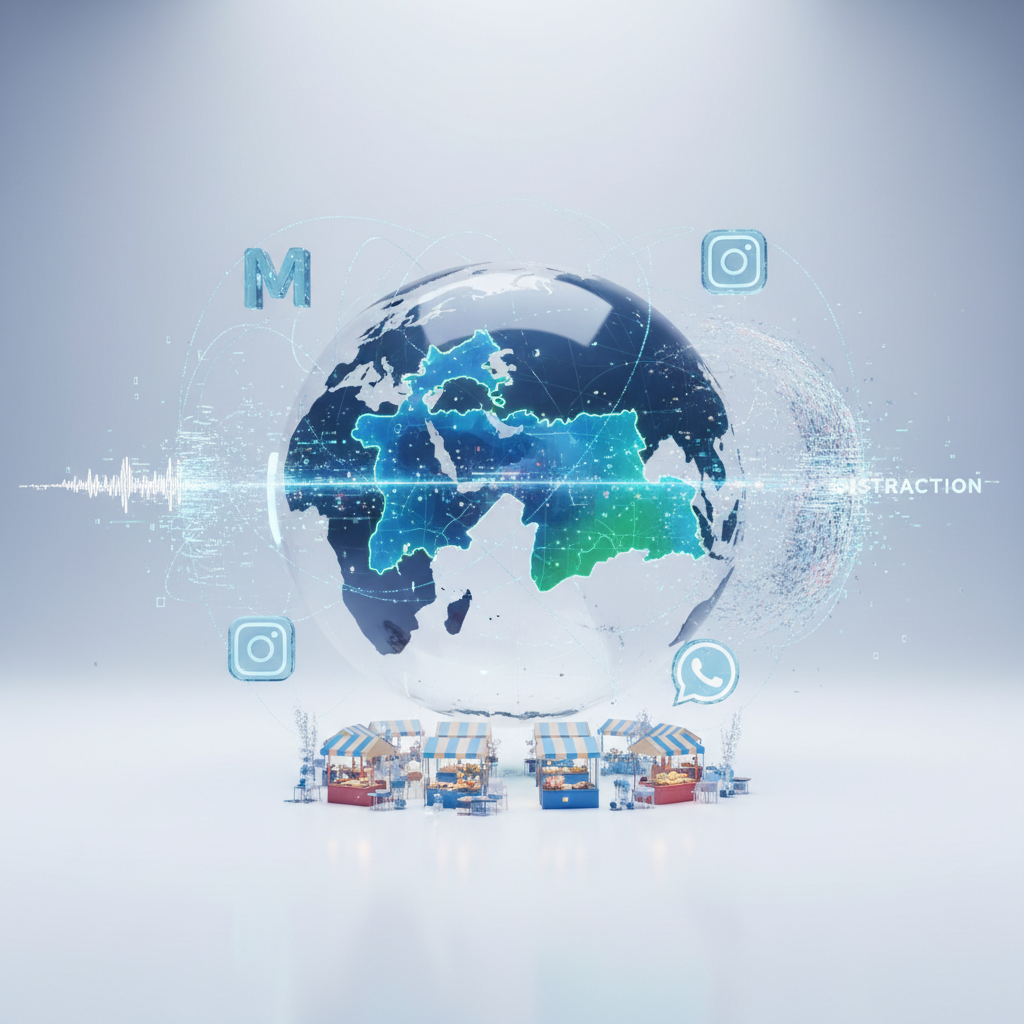

Let's be brutally honest. When ElevenLabs announced its latest funding round, pushing its valuation past the $1 billion mark, the tech world erupted in predictable applause. Another AI unicorn, another triumph for Silicon Valley's relentless innovation machine. But here in Seoul, looking at the same news, I can only shake my head. Everyone's wrong about this. They are missing the forest for the venture capital trees, celebrating a technological marvel without truly grappling with its cultural and economic fallout, particularly for nations like ours that thrive on unique creative output.
For too long, AI voice cloning was a novelty, a party trick for deepfakes and quirky text-to-speech apps. Now, ElevenLabs has polished it into a commercial juggernaut, promising everything from hyper-realistic audiobook narration to personalized customer service voices. Their technology is undeniably impressive, capable of replicating human intonation, emotion, and even regional accents with uncanny accuracy. This isn't just about convenience; it's about control, and the commodification of one of our most intimate forms of expression: the human voice.
The narrative spun by ElevenLabs and its cheerleaders is one of efficiency and accessibility. Imagine, they say, a world where every piece of digital content can speak to you in a voice you prefer, where language barriers dissolve, and content creation becomes infinitely scalable. On the surface, it sounds utopian. But beneath that gleaming facade lies a profound threat to the very essence of human artistry and identity. What happens to voice actors, to narrators, to the unique sonic tapestry of our media, when an algorithm can mimic perfection at a fraction of the cost?
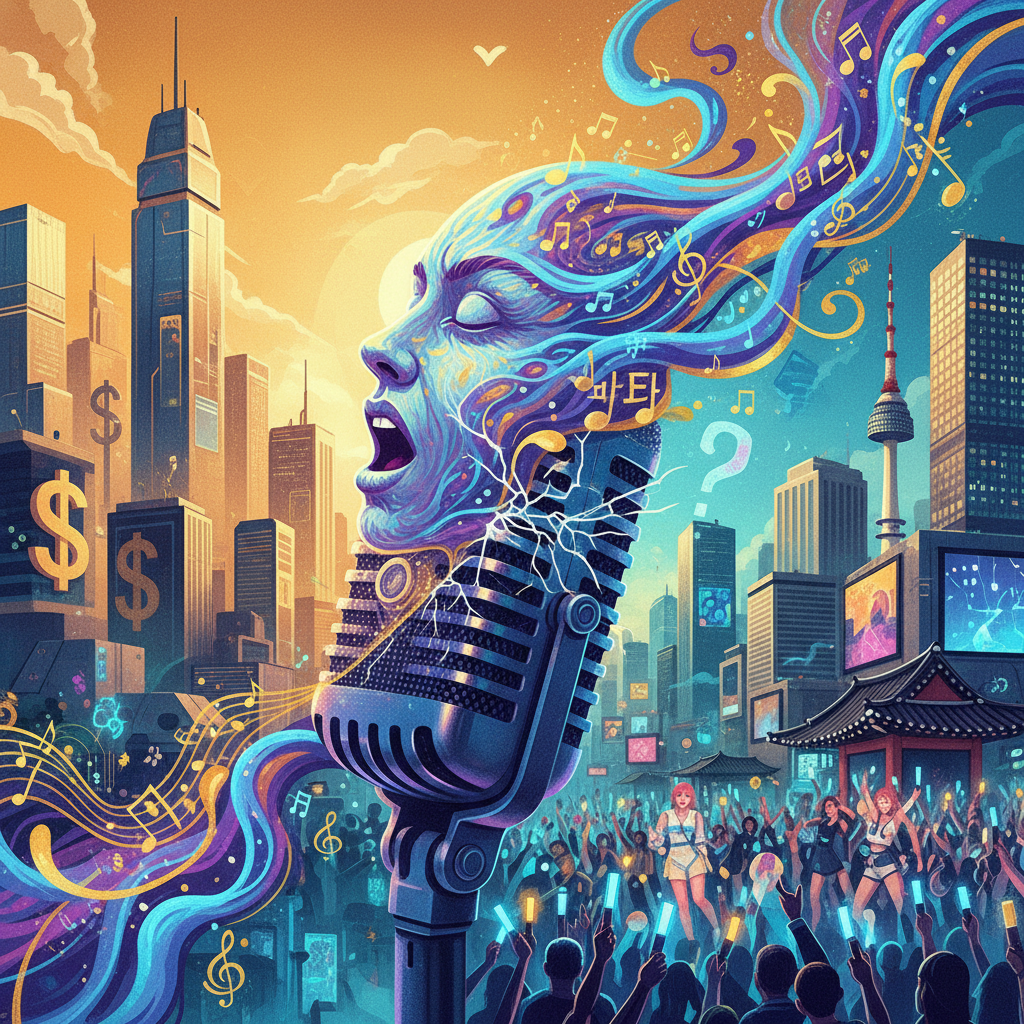
Consider the K-pop industry, a global phenomenon built on the distinct voices and personalities of its idols. Or our thriving K-drama scene, where the nuanced delivery of dialogue is paramount. Will agencies start licensing AI versions of their stars' voices, or worse, creating entirely synthetic ones? The potential for exploitation, for the erosion of human talent, is immense. "This isn't just about replacing a job here or there," warns Dr. Min-jun Kim, a professor of media ethics at Korea University. "It's about fundamentally altering the value proposition of human vocal performance. When the supply becomes infinite and cost-free, what happens to the demand for the original?" His concern is not hyperbole; it is a stark reality we must confront.
Of course, the counterarguments are already being rehearsed. Proponents will argue that AI voice will open new avenues for creativity, allowing independent creators to produce high-quality audio content without prohibitive costs. They will say it democratizes voice work, making it accessible to those who couldn't afford professional talent. They will point to the sheer volume of content being produced globally, suggesting that AI is merely filling a void that human voice actors could never hope to meet. They might even claim that this technology will elevate human voice actors, pushing them towards more specialized, high-value roles that AI cannot replicate, such as live performance or highly nuanced character work.
But let's not be naive. This is a classic Silicon Valley playbook: disrupt an industry, capture market share, and then redefine the terms of engagement. The "democratization" often translates into a race to the bottom for human labor. While ElevenLabs might claim its technology is a tool for empowerment, the reality is that it concentrates power. The companies that own the most convincing AI voices, or the platforms that integrate them most seamlessly, will wield enormous influence over who gets heard and how. This isn't about empowering the individual creator; it's about empowering the platform, the algorithm, and ultimately, the venture capitalists who funded it.
Seoul has a different answer, or at least, it should. Our cultural industries have always understood the intrinsic value of authenticity and human connection. We've seen how the K-wave has captivated the world not just with catchy tunes or compelling storylines, but with the genuine talent and relentless dedication of its artists. We've built a global brand on the back of human creativity, not its algorithmic imitation. To embrace AI voice cloning uncritically is to risk undermining the very foundation of that success.
"The K-wave is coming for AI too," proclaimed Ms. Ji-yeon Park, CEO of a prominent Korean entertainment agency, just last year. She wasn't wrong, but perhaps not in the way she imagined. The K-wave's influence on AI should be about setting ethical standards, about prioritizing human artistry, and about finding ways to augment, not replace, our unique voices. We should be investing in technologies that help artists protect their vocal identities, that provide transparent provenance for AI-generated audio, and that ensure fair compensation for original human work, even when it inspires an algorithm.
Consider the legal quagmire. Who owns an AI-generated voice that sounds exactly like a famous actor? What if it's used to spread misinformation or hate speech? The current legal frameworks are woefully inadequate. "We are entering uncharted territory," states Attorney Lee Hyun-woo, a specialist in intellectual property law at Kim & Chang. "The legal battles over voice rights, deepfake liability, and algorithmic originality are going to be monumental. Companies like ElevenLabs are moving at light speed, and the law is struggling to keep pace." This isn't just a theoretical concern; it's a ticking time bomb for creators and consumers alike.
The real innovation should lie in building robust ethical guardrails and fostering a symbiotic relationship between human and AI, not a parasitic one. Samsung, LG, and our other tech giants have the opportunity to lead here, to develop AI voice technologies that champion human creators, perhaps even creating platforms where artists can license their voices under strict, transparent controls, ensuring they retain ownership and receive fair royalties. This is not about halting progress; it is about guiding it responsibly. We must demand transparency and accountability from these billion-dollar entities. Who trained the models? What data was used? How are they preventing misuse? These are not trivial questions; they are fundamental to the future of our digital soundscape.
The global conversation around AI voice needs to shift from awe at its capabilities to a critical examination of its consequences. A $1 billion valuation is impressive, but it tells us nothing about the human cost. We need to ask ourselves: are we building a future where every voice is unique and cherished, or one where every voice is a digital commodity, easily replicated and ultimately devalued? My money is on the former, and I believe South Korea has a vital role to play in ensuring that future. Let the West celebrate its unicorns; we will focus on cultivating the human talent that truly makes the world sing. The time for passive observation is over; it is time to demand a voice in this new, sonically altered world. For more on the broader implications of AI in creative industries, you can follow discussions on The Verge or TechCrunch. We must not let the allure of efficiency blind us to the value of authenticity. This isn't just about technology; it's about humanity. And that's a conversation worth having, loudly and clearly. Perhaps even with our own voices, not just cloned ones. The stakes are too high to remain silent. For further reading on the ethical challenges posed by AI, consider articles on MIT Technology Review.
We are at a crossroads. We can allow the unbridled pursuit of profit to dictate the future of human expression, or we can leverage our cultural strength, our technological prowess, and our collective will to shape an AI future that respects and elevates the human voice. The choice, as always, is ours. And I, for one, choose humanity.