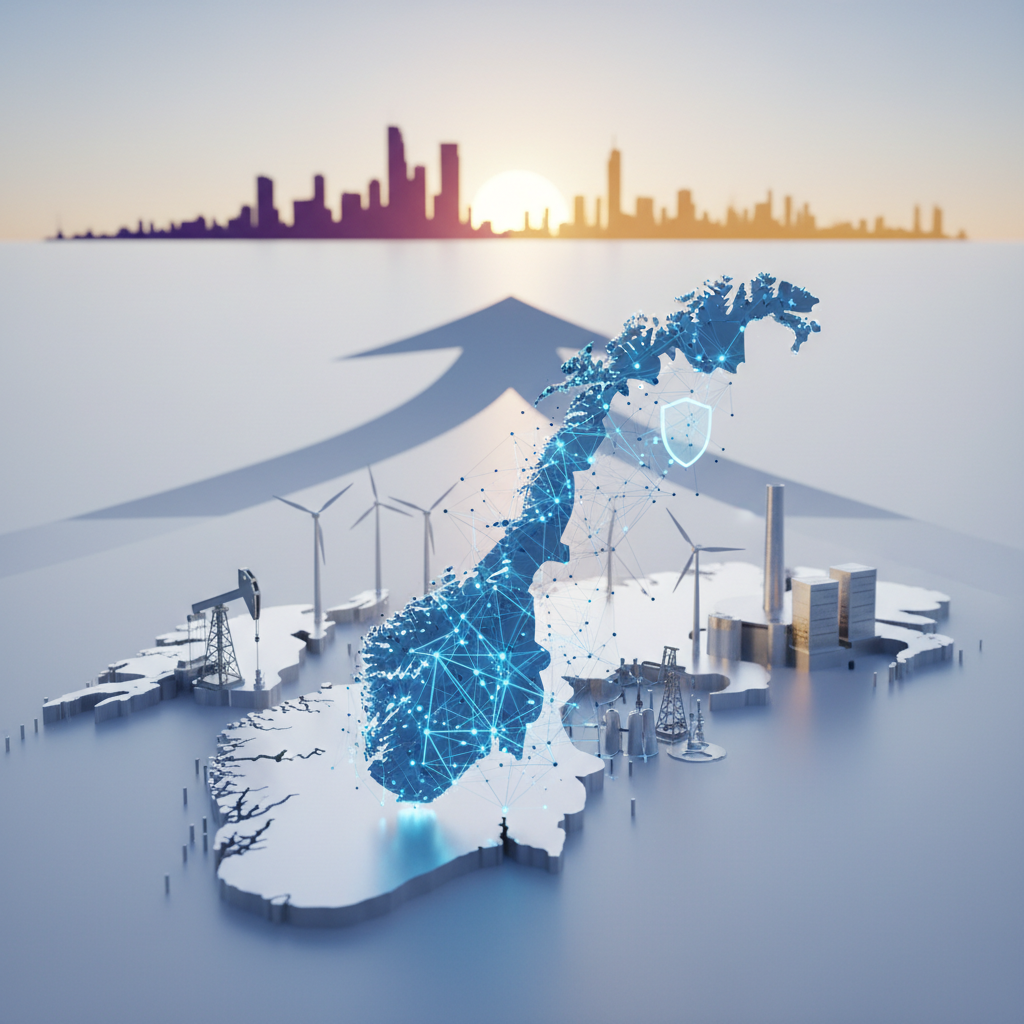

The digital landscape, much like the Norwegian coastline, is defined by its fjords and mountains, its deep channels and towering peaks. In this terrain, the emergence of large language models, or LLMs, has created new navigational challenges and opportunities. While the public discourse often centers on consumer-facing applications, a quieter, yet profoundly significant, battle is unfolding in the enterprise sector. At the heart of this contest is Cohere, a company that has positioned itself not as a purveyor of generalist AI, but as a specialist in secure, customizable models for businesses. For a nation like Norway, where data sovereignty and ethical considerations are paramount, Cohere's trajectory warrants close examination.
Cohere, founded by former Google Brain researchers, has consistently emphasized its enterprise-first strategy. Unlike some competitors that began with consumer products and then adapted for business, Cohere built its foundation specifically for the complexities of corporate environments. This means a focus on data privacy, the ability to fine-tune models on proprietary datasets, and robust security protocols. This approach is not merely a technical preference; it is a strategic alignment with the needs of industries where intellectual property and sensitive information are the lifeblood of operations. According to a recent report by Reuters, the enterprise AI market is projected to reach hundreds of billions of dollars within the next few years, a testament to the urgent demand for these specialized solutions.
Let me explain the engineering behind this distinction. A general-purpose LLM, while impressive in its breadth, is akin to a magnificent cruise ship designed to traverse any ocean. It is versatile, but perhaps not optimized for the precise navigation required in a narrow, data-sensitive fjord. Enterprise LLMs, particularly those offered by Cohere, are more like specialized ice-strengthened vessels. They are built for specific conditions, capable of handling unique data structures and operating within strict regulatory frameworks. This specialization allows companies to integrate AI into their workflows without the inherent risks associated with exposing sensitive data to models trained on vast, unregulated internet datasets.
This distinction is particularly resonant in Norway. Our nation's approach to AI is rooted in trust, a principle that extends from our social contract to our technological adoption. Companies here, particularly in sectors like energy, finance, and maritime, operate under stringent data governance rules. The Norwegian Petroleum Directorate, for instance, manages vast quantities of geological and operational data, which are invaluable for optimizing energy extraction but also highly confidential. Introducing AI into such environments requires absolute certainty regarding data handling and model integrity. Cohere's promise of on-premise deployment options and virtual private cloud solutions directly addresses these concerns, offering a level of control that many generalist models cannot.
"The ability to maintain control over our data, even when leveraging advanced AI, is non-negotiable," stated Dr. Solveig Kristiansen, Chief Technology Officer at Equinor, Norway's leading energy company. "Solutions that allow us to fine-tune models on our proprietary seismic data, without it ever leaving our secure environment, are what truly drive value for us. This is not just about efficiency; it is about safeguarding our competitive edge and national interests." Such sentiments underscore the pragmatic, security-conscious mindset prevalent in Norwegian industry.
Cohere's recent collaborations highlight its strategic focus. Its partnerships with major cloud providers like Amazon Web Services and Google Cloud Platform, alongside its direct enterprise engagements, demonstrate a clear path to market. The company reportedly raised over $400 million in its Series C funding round in 2023, attracting significant investment from companies like NVIDIA and Salesforce. This capital infusion allows Cohere to further develop its foundational models, enhance its customization capabilities, and expand its global footprint. The competition is fierce, with giants like OpenAI and Anthropic also vying for enterprise contracts, but Cohere's singular focus on business needs provides a compelling differentiator.
The Nordic model extends to technology, emphasizing collaboration, transparency, and a long-term perspective. For AI adoption, this translates into a demand for solutions that are not only powerful but also ethically sound and transparent in their operation. Cohere's emphasis on explainability and control aligns well with these values. When an AI system makes a decision impacting critical infrastructure or financial markets, understanding why it made that decision is paramount. This is a far cry from a black-box approach, which is often met with skepticism in regulated European markets.
Consider the maritime sector, a cornerstone of the Norwegian economy. From optimizing shipping routes to predicting equipment failures on offshore platforms, AI holds immense potential. However, the data involved, including sensitive operational logs and proprietary vessel designs, cannot be handled lightly. A company like Kongsberg Maritime, a global technology leader, requires AI solutions that can be integrated seamlessly into complex systems, trained on specific operational data, and deployed with absolute reliability. Cohere's tailored models offer a pathway to leverage AI's power while adhering to strict industry standards and national security considerations.
However, the path is not without its challenges. The rapid pace of AI development means that even specialized models require continuous updates and significant computational resources. For Norwegian companies, the cost of implementing and maintaining these sophisticated systems can be substantial. Furthermore, while Cohere offers a compelling narrative of control, the underlying foundational models still carry inherent biases and limitations. Rigorous testing and validation are essential, a task that requires significant in-house expertise or trusted external partners.
As the enterprise LLM market matures, the differentiation between providers will become increasingly critical. Cohere's early focus on privacy, customization, and security has given it a strong foothold in markets that prioritize these attributes. For Norway, where the digital future is being built upon a foundation of trust and meticulous engineering, Cohere's continued evolution will be a key indicator of how advanced AI can be integrated responsibly into the very fabric of industry. The question remains whether its 'trust-first' model can truly set a new global standard, or if the sheer scale of generalist AI will eventually overshadow even the most specialized solutions. The answer will likely be found in the careful navigation of both the technological fjords and the open seas of innovation. For further insights into how Europe is grappling with AI regulation, one might consider the ongoing discussions around the EU AI Act, which will undoubtedly shape the operational landscape for companies like Cohere across the continent, as explored by MIT Technology Review. The demand for secure, specialized AI is not a fleeting trend; it is a fundamental requirement for the next generation of industrial innovation, and Norway, with its pragmatic approach, is poised to be a significant proving ground for these advancements.