The dusty winds of the Sahel carry more than sand these days; they carry whispers of algorithms, of surveillance, and of promises from far-off lands. In Ouagadougou, as in many capitals across Africa, the conversation around artificial intelligence often feels distant, an echo from Silicon Valley or Beijing. Yet, the push for AI safety, particularly the establishment of government-backed testing institutes, is a development that demands our immediate attention, not just a casual glance.
For years, the narrative has been about the dizzying pace of AI development, the incredible capabilities of models like OpenAI's GPT-4 or Anthropic's Claude. But beneath the hype, a more sober reality has emerged: these powerful systems, if not properly understood and controlled, could pose significant risks. This is where the idea of AI safety institutes comes in, a concept gaining traction from Washington to London, and even finding resonance in the halls of the African Union.
The core idea is simple: before advanced AI systems are deployed, especially in sensitive areas like defense, critical infrastructure, or public services, governments want to test them rigorously. They want to understand their failure modes, their biases, their potential for misuse, and their overall reliability. This isn't just about preventing a rogue AI from taking over the world, a fantasy often peddled in movies; it's about preventing real-world harm, from discriminatory outcomes in resource allocation to unintended consequences in conflict zones.
The Breakthrough in Plain Language: Beyond the Lab Walls
What's actually happening on the research front is a shift from theoretical safety discussions to practical, empirical testing methodologies. Researchers are moving past abstract ethical frameworks to develop concrete benchmarks and red-teaming exercises. Think of it like crash-testing a car, but for an algorithm. Instead of just debating if a car is safe, you put it through a series of controlled impacts to see how it performs under stress. For AI, this means creating adversarial scenarios, probing for vulnerabilities, and systematically evaluating performance against defined safety metrics.
One significant area of research comes from institutions like Stanford University's Center for Research on Foundation Models, or Crfm. Their work focuses on developing comprehensive evaluations for large language models, assessing everything from factual accuracy and toxicity to reasoning capabilities and resistance to adversarial attacks. They are not just looking for what the models can do, but what they should not do, and how they might fail. Another notable effort is the work being done at Google DeepMind, where researchers are exploring methods for robust alignment, ensuring that AI systems act in accordance with human values and intentions, even in novel situations. This involves techniques like reinforcement learning from human feedback, but also more formal verification methods to mathematically prove certain safety properties.
Why It Matters: A Sahelian Perspective
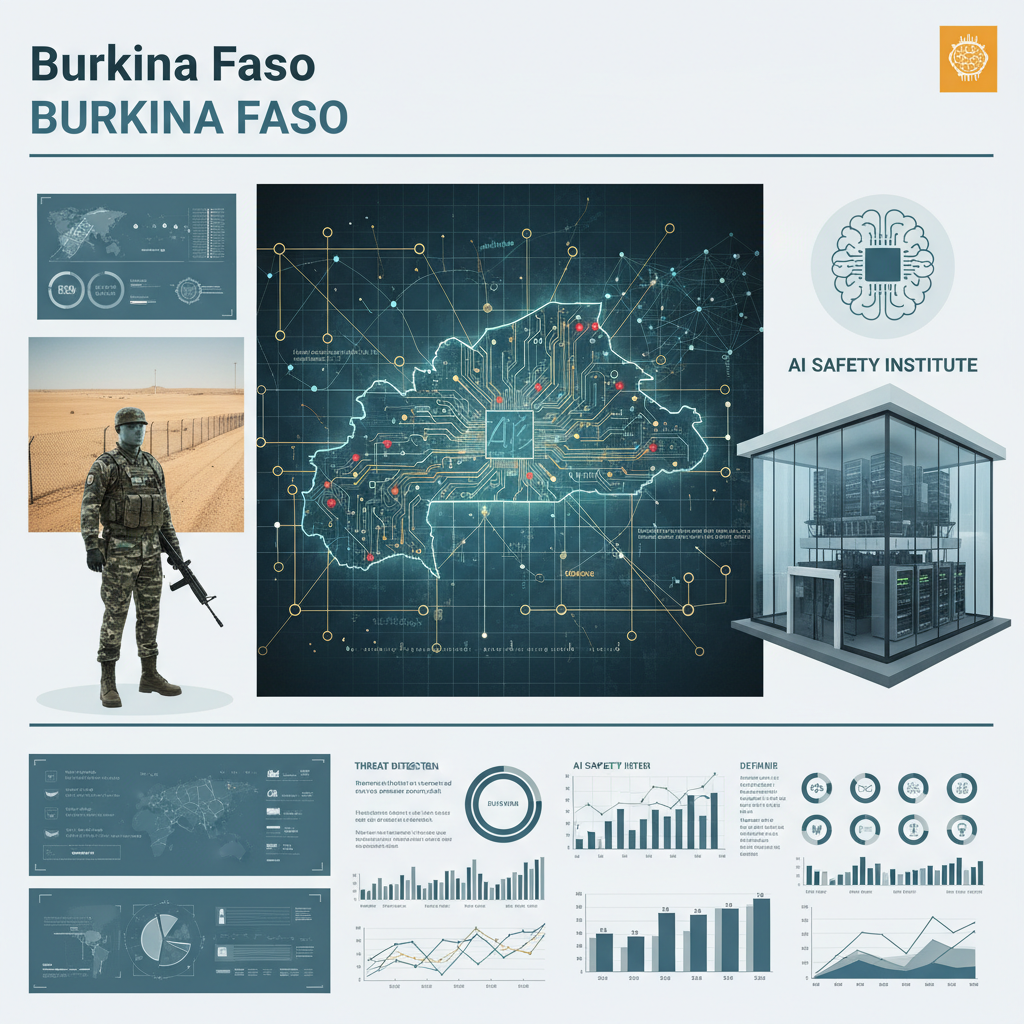
For a country like Burkina Faso, nestled in the heart of the Sahel, these developments are not academic exercises. They are critical for our very survival and stability. We are on the front lines of climate change, resource scarcity, and complex security challenges. AI is already being pitched as a solution for everything from optimizing agricultural yields to enhancing border surveillance. But if these AI systems are flawed, biased, or easily manipulated, they could exacerbate existing problems, leading to catastrophic outcomes.
Imagine an AI-powered early warning system for drought, trained on data that doesn't adequately represent the nuances of our local climate patterns or traditional farming practices. Or an AI-driven surveillance system intended to monitor our vast, porous borders, but which misidentifies innocent civilians or is vulnerable to spoofing by bad actors. The reality on the ground is that the stakes are incredibly high. We cannot afford to deploy systems that have not been thoroughly vetted for our specific contexts.
As Dr. Mame Diagne, a Senegalese expert in AI for development and a research fellow at the African Institute for Mathematical Sciences, recently stated, “The global North’s AI safety concerns often focus on existential risks, but for us in Africa, the immediate risks are about bias, discrimination, and the potential for these systems to undermine our already fragile social fabrics. We need safety mechanisms tailored to our realities.” Her words resonate deeply here, where the consequences of algorithmic failure can mean the difference between life and death, between stability and further displacement.
The Technical Details: Beyond the Hype
At a technical level, the research involves several key components:
-
Adversarial Testing and Red Teaming: This is where researchers intentionally try to break the AI system. For large language models, this might involve crafting prompts designed to elicit harmful, biased, or nonsensical responses. For computer vision systems, it could mean subtly altering images to trick the AI into misidentifying objects or people. The goal is to find the system's weaknesses before malicious actors do. The UK's AI Safety Institute, for example, has been actively recruiting 'red teamers' to probe the latest frontier models for dangerous capabilities, including those related to cybersecurity and chemical weapons design, as reported by Reuters.
-
Benchmarking and Metrics: To quantify safety, researchers are developing standardized benchmarks. These are sets of tasks and associated metrics that an AI system must pass to be considered 'safe' or 'reliable' for a given application. For instance, a benchmark for an agricultural AI might include its ability to accurately detect crop diseases across diverse plant varieties and lighting conditions, without false positives that lead to unnecessary pesticide use.
-
Interpretability and Explainability (XAI): A crucial aspect of trust is understanding why an AI makes a particular decision. XAI techniques aim to make complex AI models more transparent. This is vital when an AI is making decisions that impact human lives, such as in medical diagnostics or security assessments. If an AI flags a certain area as high-risk, we need to know the underlying data and reasoning, not just the conclusion.
-
Formal Verification: For highly critical systems, researchers are exploring mathematical methods to formally prove that an AI system will behave within specified safety parameters under all possible conditions. This is extremely challenging for complex neural networks but is a holy grail for ensuring absolute reliability in certain applications.
Who Did the Research: A Collaborative Effort
This push for AI safety is a global, multi-stakeholder effort. Governments, academic institutions, and even leading AI companies are all involved. The US AI Safety Institute, established under the National Institute of Standards and Technology, is collaborating with companies like Google, Microsoft, and OpenAI to test their most advanced models. Similarly, the UK's AI Safety Institute is working closely with researchers from universities like Cambridge and Oxford, and with companies like Anthropic, to develop robust testing protocols. Academic labs, such as the Future of Humanity Institute at the University of Oxford, have long been at the forefront of thinking about AI safety, exploring long-term risks and mitigation strategies.
Here in Africa, institutions like the African Institute for Mathematical Sciences, with campuses across the continent, are also contributing, focusing on localized data and context-specific safety challenges. They understand that what works in a well-resourced data center in London might not be appropriate for a village in the Sahel with intermittent connectivity and unique socio-cultural dynamics.
Implications and Next Steps: Building Our Own Capacity
The implications for Burkina Faso and other developing nations are profound. First, we must advocate for and contribute to the development of AI safety standards that are globally relevant, not just reflective of Western priorities. Our unique challenges, from data scarcity to linguistic diversity, must be factored into these testing regimes. Second, we need to build our own capacity for AI safety research and deployment. Relying solely on external entities to vet the AI systems we use is a dangerous path. We must train our own engineers, data scientists, and policymakers in AI ethics, interpretability, and robust testing methodologies. This is not just about adapting foreign technology; it is about building our own digital sovereignty, our own ability to assess and manage these powerful tools.
Consider the example of the faso dan fani, our traditional woven cloth, each pattern telling a story, each thread carefully placed. We wouldn't accept a cloth woven haphazardly, without care for its strength or meaning. The same must be true for the AI systems we integrate into our society. We need to ensure they are woven with integrity, tested for resilience, and understood for their true nature.
Forget the hype, this is what matters: ensuring that the AI tools we adopt are safe, equitable, and truly serve the needs of our people. The establishment of AI safety institutes is a step in the right direction, but their success, particularly in regions like the Sahel, will depend on how effectively they bridge the gap between abstract research and the immediate, tangible realities of our communities. We must demand transparency, accountability, and a seat at the table where these critical decisions are made. Our future depends on it.