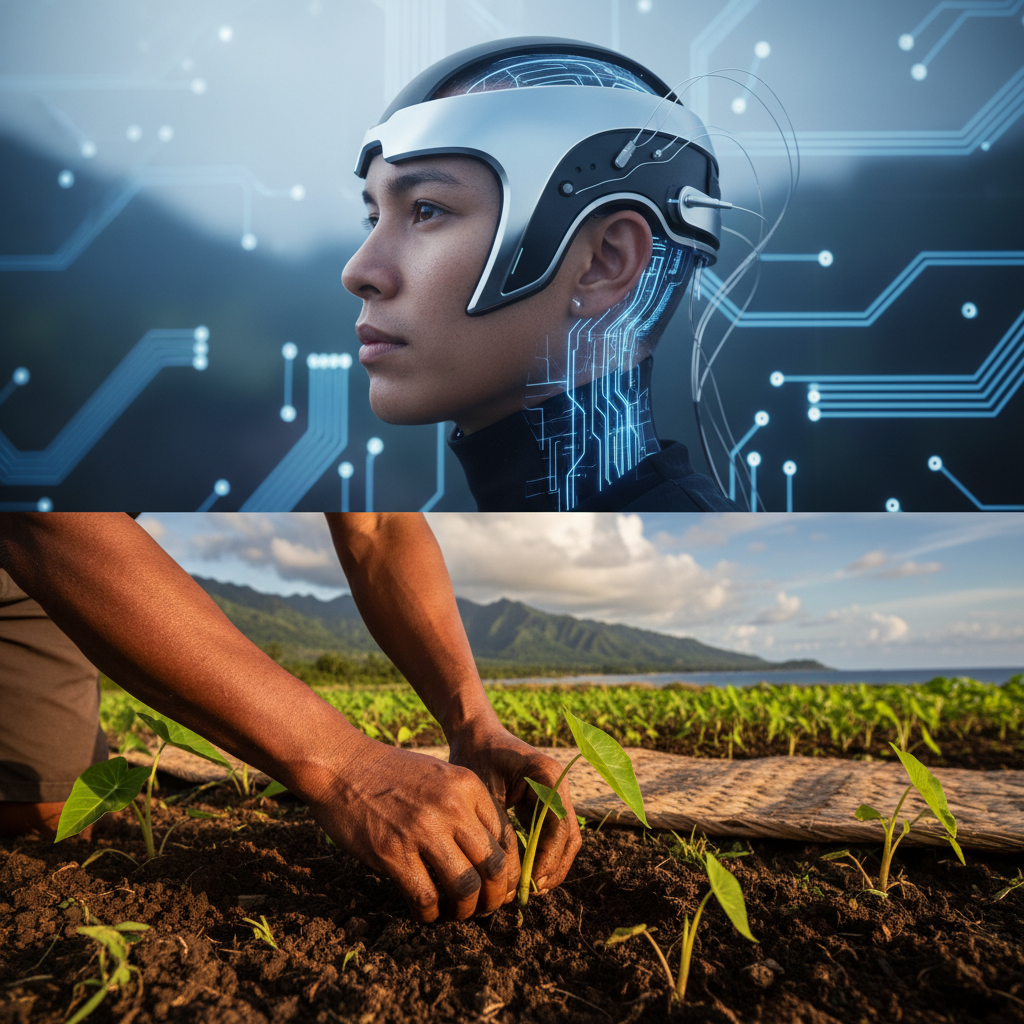

The world is abuzz, yet again, with a new technological marvel: brain-computer interfaces, or BCIs. Companies like Neuralink and Synchron are making headlines, demonstrating how AI can translate thoughts into action, or even restore communication to those who cannot speak. It is a powerful vision, one that promises to redefine human interaction with technology and even our own biology. But here in Fiji, where the rhythm of life is often dictated by the tides and the wind, my first thought is always: what does this mean for us, the people of the Pacific?
Global tech giants are pouring billions into this field. Elon Musk's Neuralink recently showcased a patient playing chess with his mind, a feat that captured imaginations worldwide. Synchron, another prominent player, has implanted its BCI in patients, allowing them to control digital devices just by thinking. These are not science fiction fantasies anymore; they are happening, right now, in labs and operating rooms across the developed world. The market for BCIs is projected to reach over 6 billion US dollars by 2030, with a compound annual growth rate exceeding 15 percent, according to recent industry reports. This isn't just about medical breakthroughs; it is about a fundamental shift in how we interact with the digital realm, how we learn, and perhaps even how we define ourselves.
But let us be clear. While the potential for medical applications, particularly for those with severe disabilities, is undeniably profound and compassionate, the broader implications demand a grounded, critical look. When we talk about AI interpreting our thoughts, or even influencing them, we are stepping into territory far more complex than predicting weather patterns or optimizing shipping routes. We are talking about the very core of human autonomy.
In Fiji, we face the future with clear eyes. We are not immune to global trends, but our priorities are often different. While Silicon Valley dreams of uploading consciousness, we are still grappling with the immediate realities of climate change, ensuring our children have access to quality education, and building resilient infrastructure against rising seas. The idea of brain implants feels distant, almost alien, when our daily focus is on sustainable livelihoods and protecting our ancestral lands.
I spoke with Dr. Alumita Tuivaga, a senior lecturer in ethics and technology at the University of the South Pacific. She shared a vital perspective: "The ethical frameworks for BCI development are largely being shaped in Western contexts, by Western values. We need to ensure that the voices and concerns of indigenous communities, particularly those in the Pacific, are not just heard, but actively integrated into these global conversations. Data sovereignty, mental privacy, and the potential for cognitive manipulation are not abstract concepts for us; they are real threats to our cultural integrity and individual freedom." Her point is well taken. The digital colonialization of data is already a concern; imagine the implications when that data is directly from your mind.
Consider the data. A typical BCI system, even in its current rudimentary form, generates terabytes of neural data daily. Who owns this data? How is it secured? What happens if it is breached, or worse, weaponized? These are not hypothetical questions for a distant future. These are questions that need answers today, before the technology becomes ubiquitous. The global tech industry, with its rapid pace of innovation, often outstrips regulatory bodies. We have seen this with social media, with generative AI, and we will undoubtedly see it again with BCIs unless proactive steps are taken.
For small island nations, the challenges are magnified. We often lack the robust legal frameworks, the technical expertise, and the financial resources to engage meaningfully in these high-stakes global discussions. We are often recipients of technology, rather than co-creators or even equal partners. This power imbalance is a critical concern. As I have written before, the Pacific way of problem-solving emphasizes community, consensus, and long-term sustainability. These principles must be applied to emerging technologies like BCIs, not just to climate adaptation.
Mr. Jone Vakaloloma, Director of Innovation at the Fiji Ministry of Communications, acknowledged the rapid pace. "We are closely monitoring BCI developments. Our immediate focus is on digital literacy and ensuring equitable access to basic internet connectivity across our islands. However, we also recognize the need to prepare for technologies that might seem far off. We are exploring partnerships with regional organizations and international bodies to develop ethical guidelines that reflect our cultural values and protect our citizens from potential exploitation." This proactive approach, even when resources are stretched thin, is commendable.
Indeed, the medical potential cannot be ignored. Imagine a future where a Fijian elder, paralyzed by a stroke, could communicate with their family through thought, or a young person who lost a limb could control a prosthetic with their mind. These are powerful visions of hope and improved quality of life. However, the path to achieving these benefits must be paved with careful consideration, not just technological ambition.
There is a significant investment gap. While billions flow into BCI research in North America and Europe, very little is directed towards understanding the unique needs and challenges of Pacific populations. Clinical trials, for instance, are overwhelmingly conducted on specific demographics, raising questions about the generalizability and safety of these technologies for diverse populations. According to a recent analysis published in MIT Technology Review, over 90 percent of BCI research participants are from high-income countries, predominantly of European descent. This lack of diversity could lead to systems that are not optimized, or even unsafe, for other populations.
So, what is the practical path forward for Fiji and other small island developing states? First, active participation in international forums on BCI ethics and governance is crucial. Our voices, though small in number, carry immense moral weight. Second, investing in local expertise in bioethics and technology law is paramount. We need our own people, grounded in our culture, to interpret and respond to these complex issues. Third, fostering regional collaboration, perhaps through organizations like the Pacific Community SPC, to collectively develop shared positions and advocate for our interests on the global stage. This is a classic example of small island, big challenges, smart solutions.
Finally, we must always ask: who truly benefits? If BCIs become a tool for cognitive enhancement, will it exacerbate existing inequalities, creating a new digital divide between the 'enhanced' and the 'unenhanced'? Will it lead to new forms of surveillance or control? These are the questions that keep me grounded, even as the global tech narrative spins dizzyingly fast. The promise of BCIs is immense, but so are the perils. For Fiji, the focus must remain on ensuring that any technological advancement serves humanity, respects sovereignty, and aligns with our deeply held values, rather than becoming another force we must simply adapt to. The future of our minds, quite literally, depends on it. For more on the broader implications of AI, you can read articles like The Digital 'Rukun Negara' Dilemma: Malaysia's AI Surveillance Rollout Ignites Privacy Firestorm [blocked], which touches on similar themes of privacy and state control.
We need to ensure that as this technology matures, it does so with a global conscience, not just a global market. The conversations happening now, about data ownership, privacy, and ethical guidelines, will define the future of our relationship with our own minds. It is a future we must help shape, not just observe from afar. The stakes are too high for anything less. For more on the latest in AI innovation, check out TechCrunch's AI section.