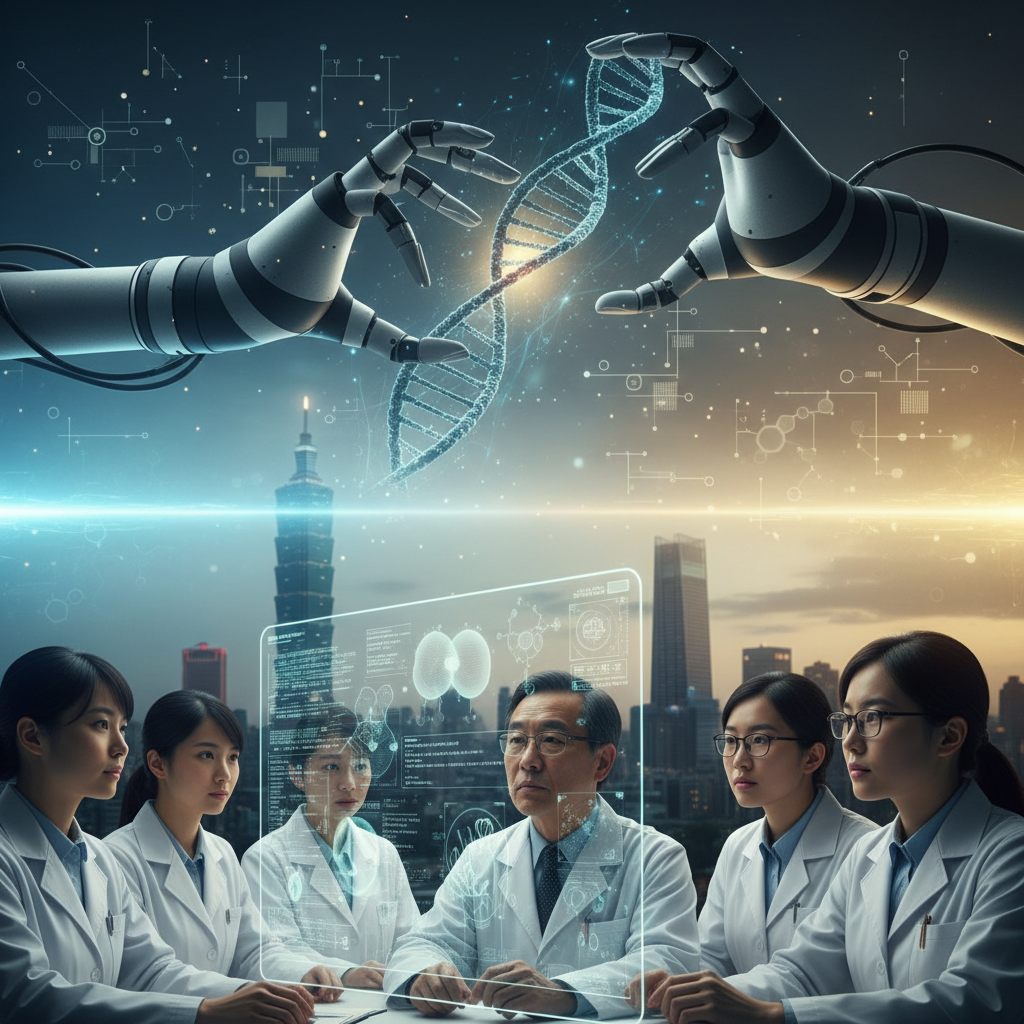
The drumbeat for AI-powered gene editing grows louder with each passing quarter, heralding a new era of precision medicine. The narrative is compelling: machine learning algorithms, sifting through vast genomic datasets, will pinpoint optimal Crispr targets with unprecedented accuracy, accelerating drug discovery and curing intractable diseases. For a region like Asia, with its diverse genetic landscape and significant healthcare disparities, this promise resonates deeply. However, as a journalist based in Taiwan, I have learned to approach such grand pronouncements with a healthy dose of skepticism. The data tells a more nuanced story, one that intertwines scientific breakthrough with profound societal questions.
The synergy between artificial intelligence and Crispr technology is undeniably powerful. Crispr, Clustered Regularly Interspaced Short Palindromic Repeats, has already revolutionized genetic engineering by providing a relatively simple and efficient way to edit DNA. Yet, its application is not without challenges: off-target edits, delivery mechanisms, and the sheer complexity of identifying the most effective therapeutic targets. This is where AI, particularly advanced machine learning and deep learning models, enters the fray. Companies like Google DeepMind, with its AlphaFold protein structure prediction capabilities, and various biotech startups are leveraging AI to predict Crispr guide RNA efficiency, minimize off-target effects, and even design novel gene therapies. The goal is to move from a trial-and-error approach to a data-driven, predictive one.
Consider the sheer volume of genomic data now available. Projects like the Taiwan Biobank, which collects genetic and health information from hundreds of thousands of Taiwanese citizens, represent a goldmine for AI algorithms. These datasets, when combined with clinical outcomes, allow machine learning models to identify genetic markers associated with disease susceptibility or drug response. For instance, researchers at Academia Sinica, Taiwan's premier research institution, are exploring how AI can optimize Crispr applications for prevalent diseases in the region, such as hepatitis B or specific cancers. Dr. Chen Chih-Ming, a leading geneticist at National Taiwan University Hospital, recently stated, "AI's ability to analyze complex genomic patterns far surpasses human capacity. This is not just an incremental improvement; it is a paradigm shift in how we approach therapeutic design." His optimism is shared by many in the scientific community, but the practical implementation remains a formidable hurdle.
One of the most significant advancements lies in the prediction of Crispr guide RNA activity. Traditional methods involve extensive laboratory testing, which is time-consuming and expensive. AI models, trained on large datasets of successful and unsuccessful gene edits, can now predict the efficacy and specificity of guide RNAs with remarkable accuracy. This accelerates the design phase, reducing the time from concept to clinical trial. Furthermore, AI is being deployed to optimize delivery systems, such as adeno-associated viruses (AAVs), ensuring that the gene-editing machinery reaches the intended cells without triggering adverse immune responses. This is a critical area of research, particularly for systemic genetic disorders.
However, the enthusiasm must be tempered by reality. Taiwan's position in this burgeoning field is more complex than headlines suggest. While we possess world-class semiconductor manufacturing capabilities, crucial for the advanced computing required by AI, our biotech sector, while growing, still faces challenges in scaling up clinical trials and navigating stringent regulatory pathways for novel gene therapies. The cost of developing and deploying these AI-powered Crispr treatments is astronomical. Who will bear this cost? Will these therapies be accessible to the average citizen in Kaohsiung or only to the privileged few in Taipei? This is not merely a technical question, but a profound ethical and economic one.
The global landscape for AI-driven precision medicine is highly competitive. Major pharmaceutical companies, in collaboration with AI powerhouses, are pouring billions into research and development. NVIDIA, for example, is heavily investing in its BioNeMo platform, providing researchers with AI models and computing infrastructure specifically tailored for drug discovery and genomics. This integration of hardware and software accelerates the entire pipeline, from target identification to molecular design. Reuters has reported extensively on these strategic partnerships, highlighting the race to dominate this lucrative market.
Yet, the ethical considerations are immense. The ability to edit the human germline, while currently restricted in most jurisdictions, raises profound questions about unintended consequences and societal equity. Who decides which genes are 'edited' and for what purpose? The potential for designer babies, or for therapies to be exclusively available to those who can afford them, risks exacerbating existing health inequalities. For many in Asia, where traditional medicine still plays a significant role and access to basic healthcare can be challenging, the concept of AI-powered gene editing feels distant, almost futuristic.
Moreover, the data privacy implications are substantial. Genomic data is arguably the most personal information an individual possesses. Ensuring its secure collection, storage, and ethical use is paramount. Taiwan has robust data protection laws, but the global nature of AI research means that data often crosses borders, necessitating international cooperation and standardized ethical frameworks. Without these safeguards, public trust, which is essential for the adoption of such transformative technologies, could easily erode.
Let's separate fact from narrative. While the scientific promise of AI and Crispr is undeniable, the journey from laboratory breakthrough to widespread clinical application is long and arduous. It requires not only technological prowess but also robust regulatory frameworks, equitable access policies, and a deep societal dialogue about the ethical boundaries of human intervention. For Taiwan and other Asian nations, the opportunity is clear: to leverage our strengths in technology and healthcare to contribute meaningfully to this field. However, we must ensure that this revolution serves all of humanity, not just a select few. The true measure of success will not be in the sophistication of the algorithms, but in the equitable and ethical distribution of their life-saving potential.
The discussions around these issues are not confined to academic journals. Policy makers are grappling with how to regulate these powerful tools. The European Union, for instance, has been proactive in developing ethical guidelines for AI, and similar efforts are underway in Asia. The potential for AI-powered Crispr to transform medicine is real, but its impact will ultimately be judged by how responsibly and inclusively it is deployed. The future of precision medicine, particularly in a diverse region like Asia, hinges on our ability to navigate these complex intersections of science, ethics, and societal equity. For further insights into the broader implications of AI in healthcare, one might consider the ongoing debates surrounding data privacy and algorithmic bias, as explored by MIT Technology Review. The path forward requires vigilance, critical analysis, and a commitment to ensuring that technological progress benefits everyone.