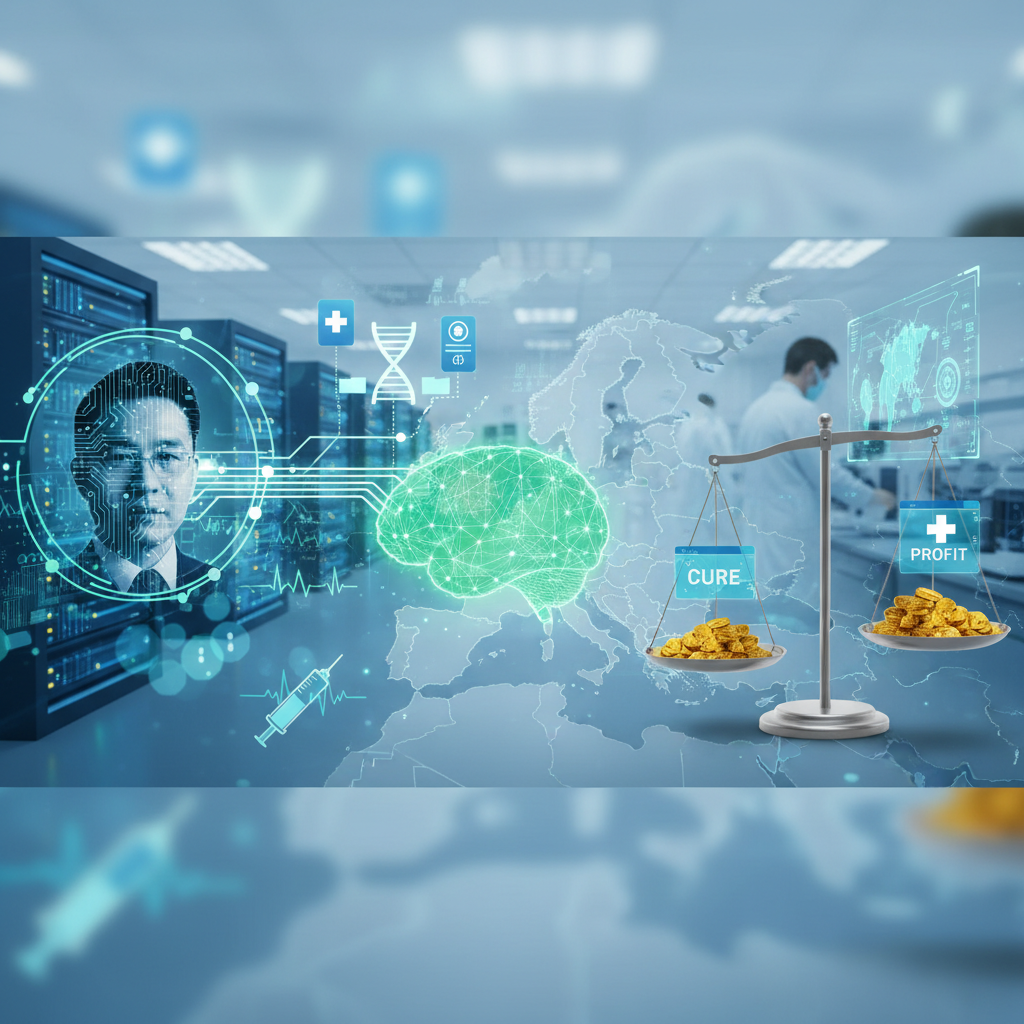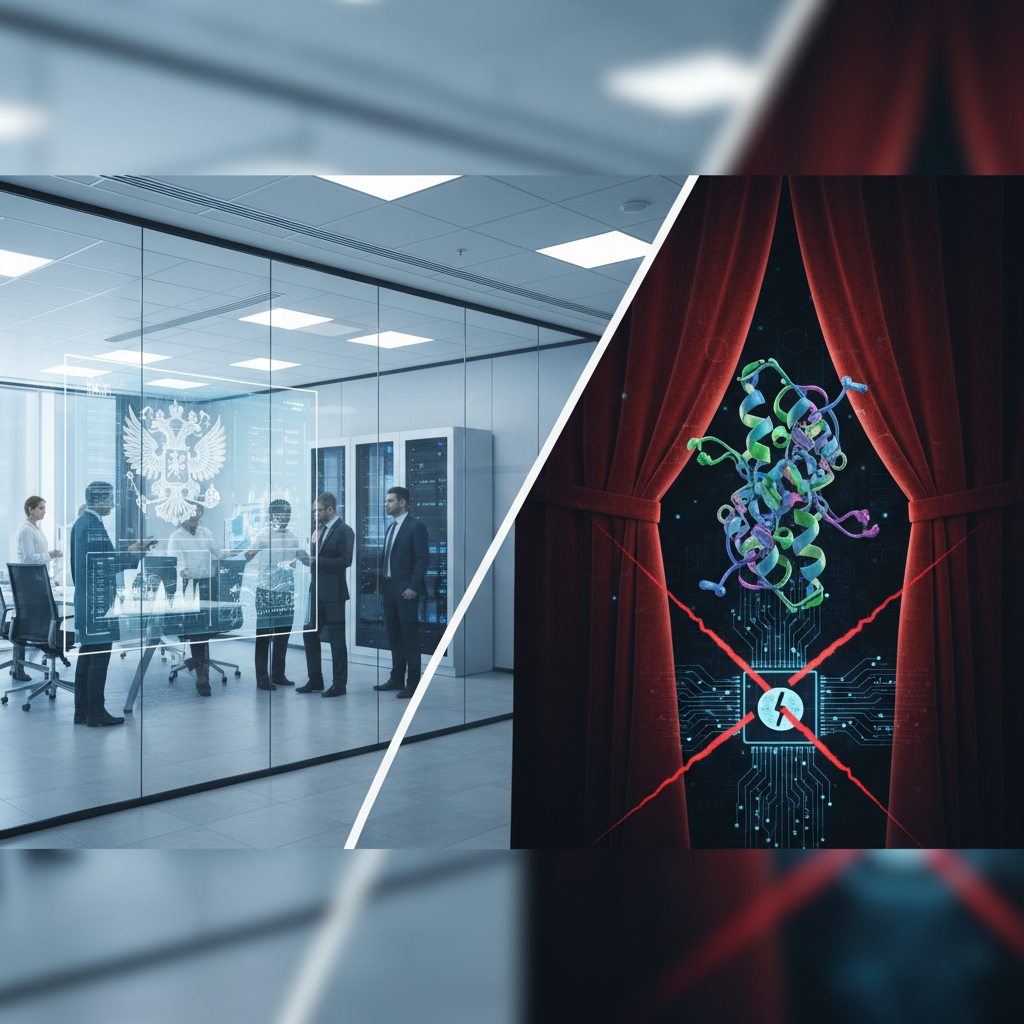
The flickering fluorescent lights of a Moscow laboratory cast long shadows across the screens of young scientists, their faces illuminated by intricate protein structures rendered in vibrant digital hues. This scene, replicated in countless biotech hubs across the globe, now carries a new weight, a new urgency, thanks to Google DeepMind's AlphaFold 3. The announcement of its enhanced capabilities in predicting protein structures and interactions, extending even to DNA and RNA, was not merely a scientific triumph; it was a seismic event, promising to accelerate drug discovery and fundamentally reshape the pharmaceutical industry. But here, in Russia, the official story doesn't add up to a straightforward narrative of progress. The question is not just how AlphaFold 3 works, but how it will work, or fail to work, in a nation grappling with geopolitical isolation and a persistent struggle to retain its brightest minds.
Globally, the impact is undeniable. Pharmaceutical giants like Pfizer and Novartis are reportedly re-evaluating entire research pipelines, with some analysts at McKinsey suggesting a potential reduction of early-stage drug development timelines by as much as 20-30 percent within the next five years. This translates into billions of dollars in saved R&D costs and, theoretically, faster access to life-saving medicines. The adoption rates for AI in drug discovery, even before AlphaFold 3, were on an upward trajectory. A 2023 Gartner report indicated that nearly 40 percent of large pharmaceutical companies had already integrated some form of AI into their discovery processes, a figure projected to exceed 65 percent by 2027. AlphaFold 3, with its unprecedented accuracy and broader scope, is poised to accelerate this trend dramatically.
Yet, for Russia, the picture is considerably more nuanced. The nation possesses a deep well of scientific talent, particularly in mathematics and theoretical physics, disciplines foundational to AI development. Institutions like the Skolkovo Institute of Science and Technology, often referred to as Skoltech, and the Moscow Institute of Physics and Technology, Mipt, continue to produce world-class researchers. However, the practical application of cutting-edge foreign technology, particularly proprietary tools from companies like Google DeepMind, is fraught with challenges. Sanctions, export controls, and the general chilling effect on collaboration make direct access to and seamless integration of such platforms incredibly difficult.
Consider the case of Biocad, one of Russia's leading biotechnology companies. While they have invested heavily in their own bioinformatics capabilities and AI-driven drug discovery platforms, the sheer computational power and proprietary datasets underpinning AlphaFold 3 remain a formidable barrier. "We recognize the immense potential of tools like AlphaFold 3," stated Dmitry Morozov, CEO of Biocad, in a recent interview with a local business publication. "Our strategy involves developing analogous in-house solutions and leveraging open-source alternatives where possible. However, the gap in resources, both computational and human, remains significant when compared to global leaders." This candid admission highlights a critical dilemma: Russian AI talent deserves better access to the tools that could truly unlock their potential.
Indeed, the brain drain is a constant, gnawing concern. Bright young scientists, often trained at state expense, frequently find themselves drawn to opportunities abroad where access to advanced infrastructure, collaborative environments, and competitive salaries are more readily available. "The allure of working with the latest advancements, unburdened by bureaucratic hurdles or resource constraints, is powerful," observed Dr. Elena Petrova, a computational biologist who recently relocated from Novosibirsk to a research institution in Germany. "Many of my former colleagues are now contributing to projects that directly benefit from technologies like AlphaFold 3, while back home, we are often forced to reinvent the wheel, or work with less sophisticated instruments." This exodus, while not always publicly acknowledged, is a tangible cost of isolation, hindering Russia's ability to capitalize on global scientific leaps.
Behind the sanctions curtain, a parallel ecosystem is attempting to emerge. Russian universities and research institutes are intensifying efforts to develop their own protein folding prediction models, often relying on open-source frameworks and locally sourced computational resources. Sberbank, for instance, through its AI initiatives, has been a notable investor in domestic AI research, including applications in life sciences. Their efforts, while commendable, often face the hurdle of scale. Training models on the magnitude of AlphaFold 3 requires astronomical datasets and computing power, resources that are difficult to amass independently under current conditions.
The worker perspective is equally complex. For those within Russian biotech, the arrival of AlphaFold 3 is a double-edged sword. On one hand, it inspires, showcasing the pinnacle of what AI can achieve in their field. On the other, it underscores the limitations they face. A recent informal survey among bioinformatics specialists in St. Petersburg revealed a mix of admiration and frustration. Approximately 60 percent expressed a desire to work with such advanced tools, while nearly 80 percent felt that current geopolitical realities significantly impede their ability to do so effectively within Russia. This sentiment is not unique to biotech; it permeates many high-tech sectors.
Expert analysis from abroad often overlooks these localized struggles. Dr. Anya Singh, a prominent AI ethics researcher at the University of Cambridge, recently commented on the global implications of AlphaFold 3, stating, "This technology has the potential to democratize drug discovery, making it accessible to more researchers worldwide, not just the well-funded few." While conceptually true, this statement assumes a level playing field of access and infrastructure that simply does not exist for nations like Russia. The very mechanisms that allow for global dissemination, such as cloud access to Google's platforms, are often restricted.
What is coming next for Russia in this landscape? The path forward involves a delicate balancing act. Continued investment in domestic AI research, fostering open-source collaborations where possible, and nurturing local talent are paramount. There is also a strong push to develop homegrown hardware capabilities, reducing reliance on foreign semiconductors and computing infrastructure, a long-term and capital-intensive endeavor. The Russian Academy of Sciences, for example, has announced increased funding for computational biology projects, aiming to create a robust national infrastructure for AI-driven drug discovery. This includes initiatives to build larger, more diverse biological datasets relevant to the Russian population.
Ultimately, AlphaFold 3 serves as a stark reminder of the interconnectedness of global science and the profound impact of political divisions on technological progress. While the world celebrates a monumental scientific leap, Russia finds itself in a familiar position: possessing immense intellectual capital, yet constrained by external forces. The challenge is not merely to replicate the technology, but to create an environment where Russian scientists can contribute to and benefit from such breakthroughs without constant impediment. Whether this can be achieved, or if the gap will only widen, remains an open question, one that will define the future of Russian biotech for years to come. For further context on global AI developments, readers may find insights on TechCrunch's AI section to be informative, and for a broader perspective on AI's societal impact, Wired's AI coverage often provides valuable analysis.