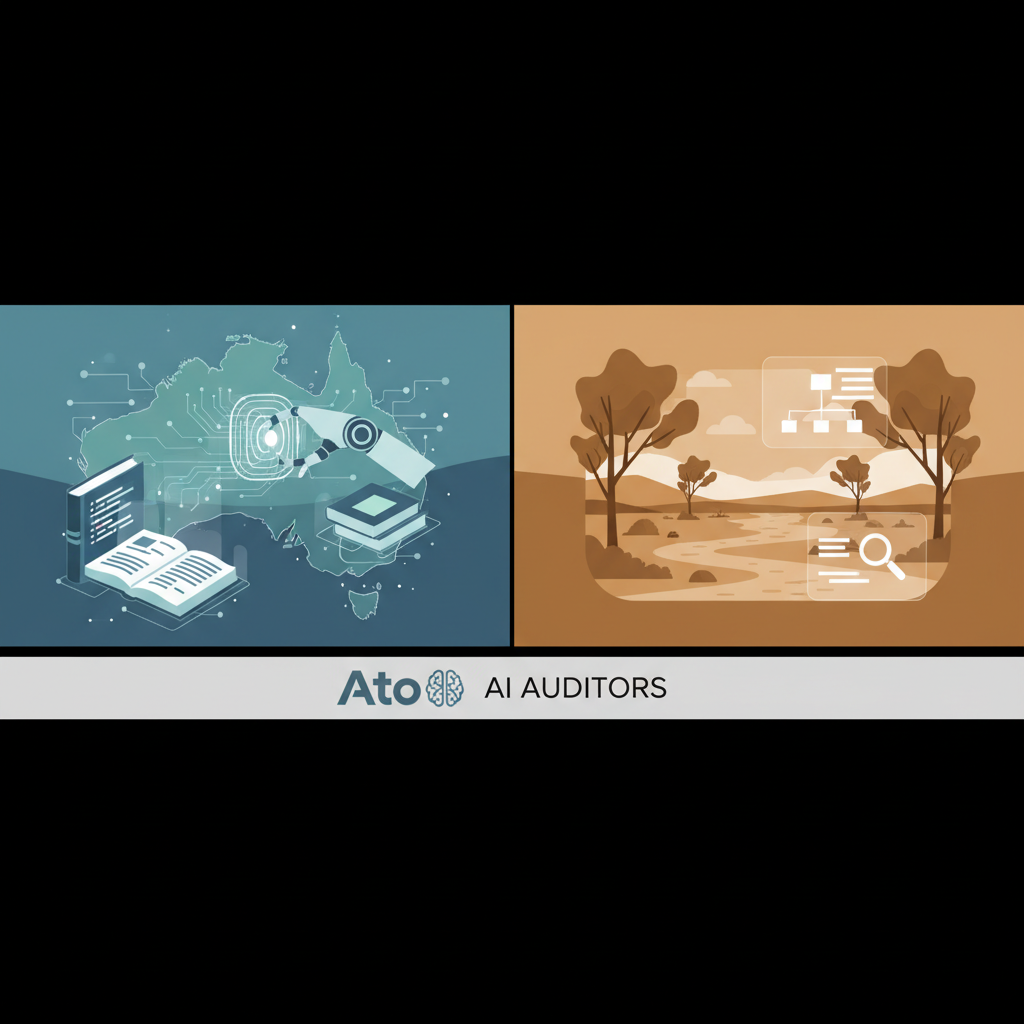

Right, so the Australian Tax Office, bless their cotton socks, has decided to get all fancy with artificial intelligence. You heard that right, the ATO, an organisation usually associated with the delightful thrill of tax season, is now dabbling in automated bookkeeping, anomaly detection, and compliance checks. It’s like they’ve swapped their dusty ledgers for a supercomputer, and frankly, I’m not sure if I should be impressed or just a bit wary. Mate, this AI thing is getting interesting, especially when it comes to who’s watching our wallets.
The policy move itself, while sounding like something straight out of a sci-fi flick, is pretty straightforward on paper. The ATO is investing in advanced AI systems to streamline their operations, with a particular focus on identifying discrepancies in financial reporting, flagging potential fraud, and generally making sure everyone is paying their fair share. The idea is to move beyond traditional, often manual, audit processes to a more proactive, data-driven approach. They reckon it will make life easier for compliant businesses and harder for those trying to pull a fast one. A noble goal, I suppose, but the devil, as always, is in the digital details.
So, who’s behind this grand technological leap, and why now? Well, the ATO itself, naturally, is the driving force. They’ve been under pressure for years to increase efficiency and improve their audit hit rate. The official line is that AI will free up human auditors to focus on more complex cases, while the algorithms handle the grunt work. Think of it as a digital sniffer dog for dodgy transactions. They’re reportedly working with a mix of in-house data scientists and external consultants, including some of the big tech players who are always keen to get their algorithms into government contracts. While specific company names are kept under wraps for competitive reasons, you can bet your bottom dollar that firms like Microsoft with their Azure AI services, and Google Cloud with its formidable data analytics tools, are hovering around the periphery, offering their shiny new toys. The 'why now' is simple: the tech is finally mature enough, and the data volume is so immense that humans simply can’t keep up. It’s a classic case of needing a bigger, faster brain to sort through the digital haystack.
What does this mean in practice for your average Aussie business, from the local tradie to the ASX-listed behemoth? For starters, expect a more intense level of scrutiny, even if it’s automated. The AI systems are designed to ingest vast amounts of financial data, cross-reference it with industry benchmarks, historical patterns, and publicly available information, and then spit out alerts for anything that looks out of place. This could be anything from unusually high expense claims for a particular industry, to sudden, unexplained fluctuations in revenue. Automated bookkeeping, which many small businesses already use through platforms like Xero or Myob, will become even more critical, as the AI will be directly interfacing with these digital records. The promise is faster processing of legitimate claims and quicker identification of issues. The fear, for many, is that a cold, unfeeling algorithm might misinterpret a perfectly legitimate business practice as an anomaly, leading to unnecessary audits and headaches. It’s a bit like having a robot umpire in cricket, technically accurate, but sometimes missing the human nuance of the game.
The industry reaction has been, shall we say, a mixed bag, like a bag of mixed lollies where half are your favourites and the other half are blackcurrant. On one hand, the major accounting firms are embracing it. PricewaterhouseCoopers, Deloitte, Kpmg, and EY are all heavily investing in their own AI capabilities, seeing it as an inevitable shift. They’re already using AI tools for everything from predictive analytics in audits to automating tax compliance for their larger clients. “AI is not just a tool, it’s a transformation of our entire profession,” stated Mark Mclaughlin, Head of Digital Audit at Kpmg Australia, in a recent industry webinar. “We see it enhancing accuracy, efficiency, and allowing our professionals to focus on strategic insights rather than data entry.” Reuters has been tracking this global trend, noting the significant investment by firms worldwide. However, smaller accounting practices and individual businesses are a bit more apprehensive. The concern is the cost of upgrading their own systems to be AI-compatible, and the potential for increased compliance burden if the ATO’s AI starts flagging minor discrepancies that would previously have been overlooked. There’s also the question of who bears the responsibility if an AI makes an error that leads to an incorrect audit finding.
Civil society, particularly privacy advocates and small business associations, are watching this space like a hawk. Their main beef is with transparency and accountability. How do these algorithms work? What data are they trained on? How do we appeal an AI’s decision? “The black box nature of some AI systems is deeply concerning when it comes to something as fundamental as tax compliance,” said Samantha Jones, a spokesperson for the Australian Privacy Foundation. “Citizens have a right to understand how decisions affecting their financial lives are being made, and there needs to be a clear, human-led appeals process.” This isn’t just about the ATO, it’s about the broader trend of government agencies deploying AI. The Australian Small Business and Family Enterprise Ombudsman has also raised concerns about ensuring small businesses aren’t unfairly targeted or disproportionately burdened by these new systems. Down Under, we do things differently, and that includes a healthy dose of scepticism when the government gets too clever for its own good.
So, will it work? That’s the million-dollar question, isn’t it? On the one hand, the potential for efficiency gains is undeniable. Imagine a world where tax returns are processed almost instantly, and fraudulent activities are nipped in the bud before they become major problems. The ATO estimates that AI could identify billions in undeclared income and reduce the tax gap significantly over the next decade. That’s a lot of extra cash for schools and hospitals, which sounds pretty good. On the other hand, the implementation is fraught with challenges. Data quality is paramount; garbage in, garbage out, as they say. There’s also the risk of algorithmic bias, where historical data might inadvertently lead the AI to unfairly target certain demographics or business types. Australia’s tech scene is like a good flat white, better than you’d expect, but still has its quirks. The regulatory framework around AI, while slowly evolving, still feels a bit like chasing a kangaroo across the Nullarbor, always a bit behind. The federal government has released some general AI ethics principles, but specific, legally binding regulations for AI in sensitive areas like taxation are still in their infancy. Without robust oversight, clear appeal mechanisms, and a commitment to transparency, the ATO’s AI auditors could become a source of frustration rather than a beacon of efficiency. It’s a balancing act, and like a good Aussie Rules game, the outcome is far from certain. The goal should be a system that is not only efficient but also fair, transparent, and ultimately, serves the public good, not just the bottom line of government coffers. We’ll be watching, spreadsheets in hand, to see how this plays out. For more on how AI is shaping policy globally, you can check out MIT Technology Review's coverage.