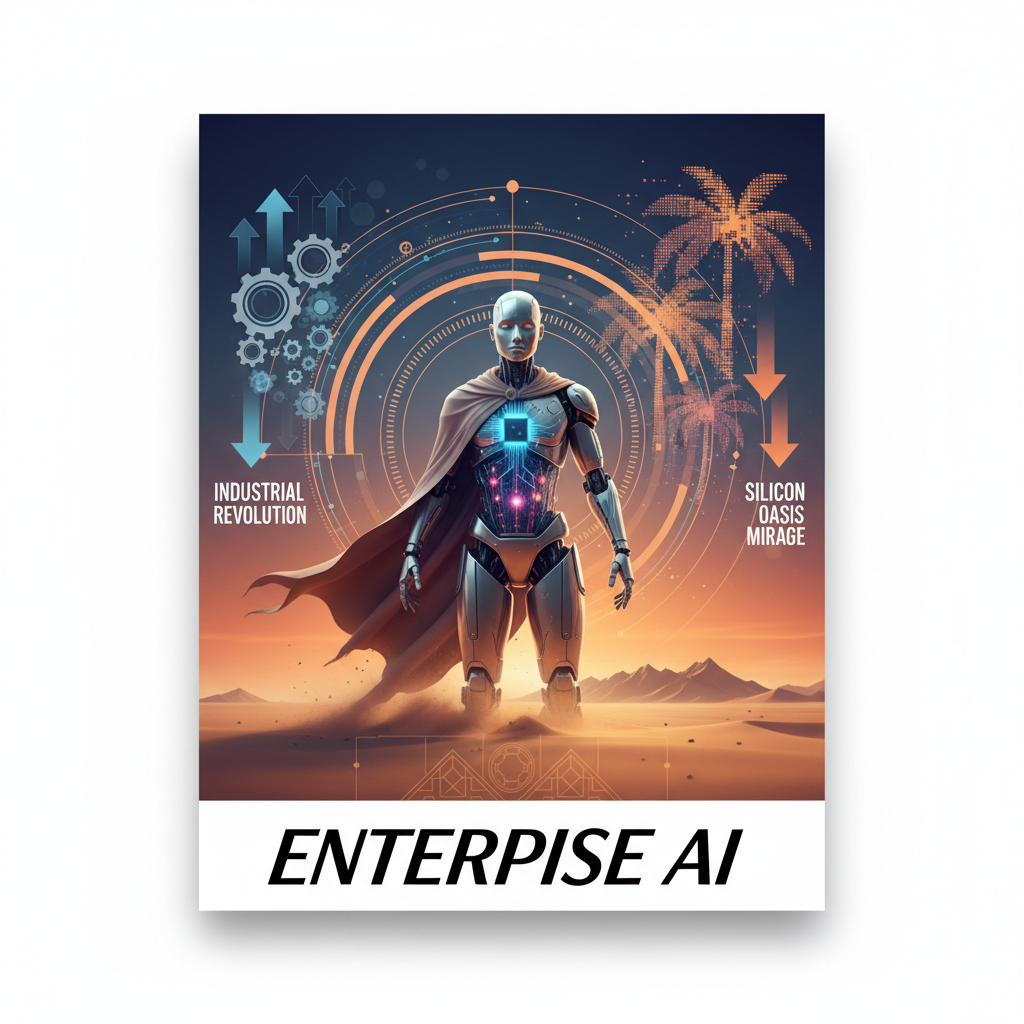

Walk through any major tech conference today, from Marrakech to Munich, and you will inevitably encounter them: sleek, often unnervingly human-like machines, performing tasks with a grace that belies their complex internal workings. The question on everyone's lips, whispered in hushed tones or debated loudly over mint tea, is this: are humanoid robots the inevitable future of labor, or merely an expensive, elaborate showpiece, a technological mirage shimmering on the horizon of our collective imagination?
My friends, we are not talking about the clunky industrial arms of yesterday, nor the vacuum cleaners that navigate our living rooms. We are witnessing the emergence of truly bipedal, often multimodal, AI-powered robots designed to operate in environments built for humans. This is a profound shift, one that demands we look beyond quarterly reports and consider the decades ahead, especially here in Morocco, a nation poised at the confluence of continents and cultures.
To understand where we are going, we must first acknowledge where we have been. Robotics, in its modern form, dates back to the mid-20th century, primarily in manufacturing. Think of the automotive assembly lines of the 1960s and 70s, where programmed arms performed repetitive, dangerous tasks with tireless precision. These were tools, extensions of human will, devoid of true autonomy or the ability to adapt. The first wave of AI, largely symbolic and rules-based, began to imbue these machines with a semblance of decision-making, but their physical forms remained largely utilitarian, fixed to the factory floor.
The real inflection point arrived with the advent of deep learning and vastly improved sensor technology in the last decade. Suddenly, robots could not only perceive their environment with unprecedented detail but also learn from it. This cognitive leap, coupled with advances in battery technology and lightweight, durable materials, made the dream of a truly general-purpose humanoid robot seem less like science fiction and more like an engineering challenge. Companies like Boston Dynamics, Agility Robotics, and Figure AI have become household names in tech circles, showcasing robots that can run, jump, and even perform delicate manipulations. The investment pouring into this sector is staggering, with billions of dollars fueling research and development.
Consider the numbers. According to a recent report by the International Federation of Robotics, global robot installations reached a new high in 2023, with a significant portion of this growth attributed to service robots, a category that increasingly includes humanoid form factors. Projections suggest the humanoid robot market alone could exceed 20 billion dollars by 2030, a tenfold increase from current figures. This is not pocket change, my friends, this is serious capital betting on a future where robots are not just in factories, but in our warehouses, our hospitals, and perhaps even our homes. Data from PitchBook indicates that venture capital funding for humanoid robotics startups surged by over 300 percent between 2021 and 2023, a clear signal of investor confidence, or perhaps, a speculative bubble in the making.
But is this enthusiasm justified? I spoke with Dr. Amina Benali, a leading expert in human-robot interaction at Mohammed VI Polytechnic University in Benguerir. “The engineering challenges are immense, not just in hardware, but in the AI that orchestrates their movement and decision-making,” she explained. “We are moving from robots that perform specific, pre-programmed tasks to robots that need to understand context, anticipate human actions, and adapt to unforeseen circumstances. This requires a level of embodied intelligence that is still very much in its infancy.” Dr. Benali emphasized that while impressive demonstrations capture headlines, the leap to widespread, reliable deployment in complex, unstructured environments is a chasm, not a step.
Indeed, the data supports her caution. While a robot might flawlessly pick up an object in a controlled lab setting, the variability of a real-world warehouse, with its unpredictable spills, misplaced items, and human co-workers, presents a far greater challenge. The error rates, even for seemingly simple tasks, can still be high, leading to costly downtime and frustration. The cost of these advanced humanoids, often exceeding 100,000 dollars per unit, also remains a significant barrier to mass adoption, particularly in emerging markets.
Yet, the potential benefits are too great to ignore. The global labor shortage, exacerbated by demographic shifts in many developed nations, presents a compelling economic case for automation. Sectors like logistics, elder care, and hazardous materials handling are desperate for solutions. “We are seeing a convergence of necessity and capability,” stated Jean-Luc Dubois, CEO of Robotics France, a prominent European robotics firm. “The demand for automated solutions is rising, and the technology is finally catching up. It is not just about replacing human labor, it is about augmenting it, freeing people from dull, dirty, and dangerous jobs. The return on investment for companies facing chronic labor shortages will become undeniable within the next five to ten years.”
Here in Morocco, we are watching this trend with keen interest. Our nation, with its ambitious industrialization plans and a growing focus on renewable energy and automotive manufacturing, stands to gain immensely from advanced robotics. Morocco sits at the crossroads of Africa, Europe, and the Arab world and that's our AI superpower. This unique position allows us to observe, adapt, and innovate, drawing lessons from both the East and the West. Our automotive sector, for example, is already highly automated, but the introduction of more agile, AI-driven robots could further enhance efficiency and flexibility, allowing for greater customization and quicker adaptation to market demands.
Moreover, the Sahara is vast, but the data flowing across it is vaster. Our commitment to solar energy, with projects like Noor Ouarzazate, creates unique opportunities for robotics. Imagine humanoid robots performing maintenance checks on vast solar panel arrays, navigating challenging terrains, and identifying faults with AI-powered vision. This is not a distant dream, but a tangible application that could revolutionize our energy infrastructure.
However, the ethical and societal implications cannot be swept under the rug. The fear of job displacement is real, and it is a conversation we must have openly and proactively. Governments and educational institutions must collaborate to re-skill workforces and prepare for a future where human-robot collaboration is the norm. “The key is not to view robots as replacements, but as partners,” argued Fatima Zahra El Fassi, a labor economist based in Rabat. “We need robust policies that support lifelong learning and ensure a just transition for workers. If we do not address these concerns head-on, the societal backlash could impede technological progress.”
My verdict? Humanoid robots are far from a fad. They represent a fundamental, albeit gradual, shift in the landscape of labor and industry. We are past the point of simple automation; we are entering an era of intelligent, embodied agents. The current hype is perhaps a little ahead of the practical realities of widespread deployment, but the underlying technological trajectory is undeniable. The billions being invested are not just for show, they are building the foundational technologies for the next industrial revolution.
Casablanca is becoming the AI capital nobody expected, with its burgeoning tech scene and a growing pool of talent in AI and robotics. Our universities are producing engineers and data scientists who are not just consumers of technology, but creators. The challenges of cost, reliability, and ethical integration are significant, but they are engineering problems, not conceptual impossibilities. The next decade will see these machines move from impressive prototypes to indispensable tools, transforming industries and societies in ways we are only just beginning to comprehend. The future, my friends, is not just automated, it is embodied, and it is walking on two legs.